
Introduction
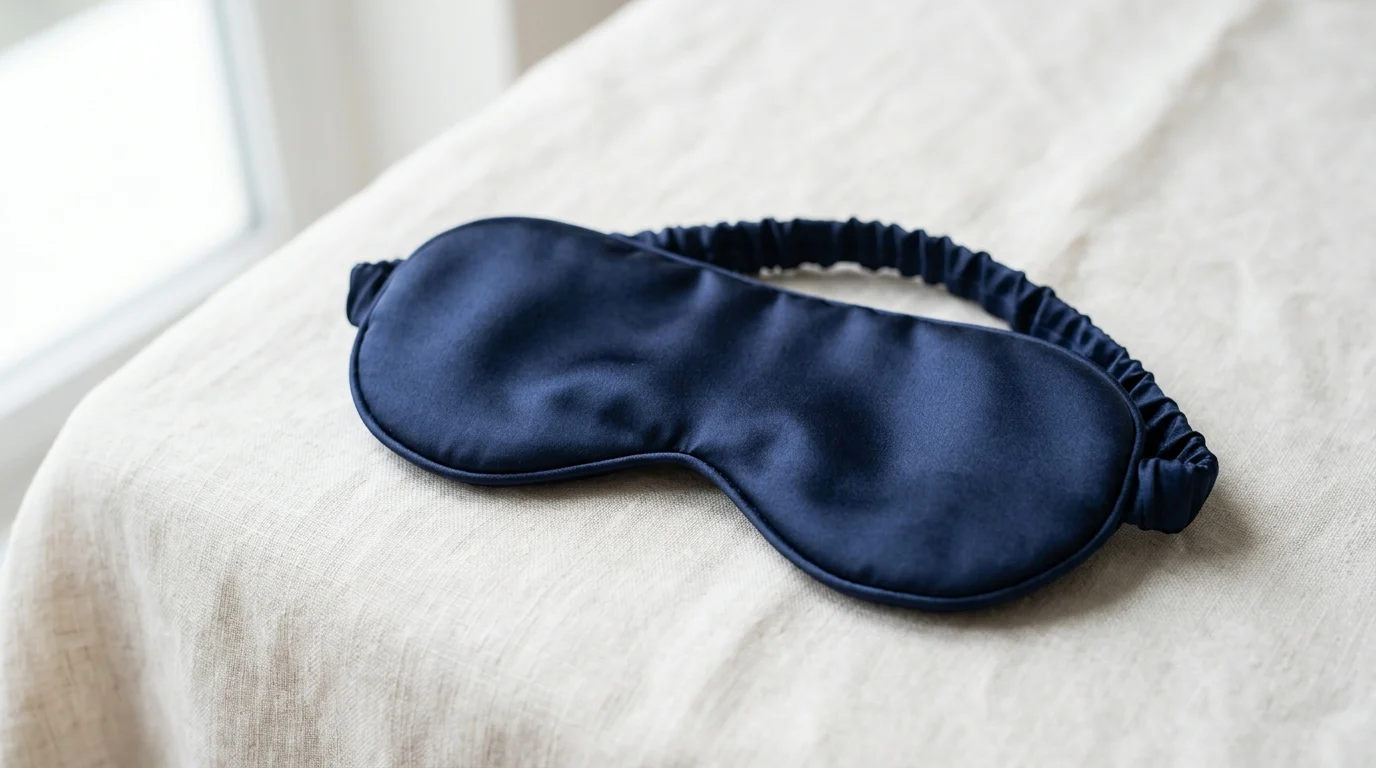
A premium silk eye mask succeeds only when two demands that usually conflict—airflow and total darkness—are engineered to work together. Material grade, weave density, layer structure, padding, and edge construction all affect how the mask feels on skin, regulates heat, and blocks ambient light without adding pressure around the eyes. This article explains the product decisions behind that performance, from why pure mulberry silk behaves differently than synthetic satin to how fit and internal construction shape comfort through the night. By the end, readers will have a clear framework for judging quality, understanding premium pricing, and identifying features that matter in real sleep use.
What Makes a Silk Eye Mask Breathable and Effective
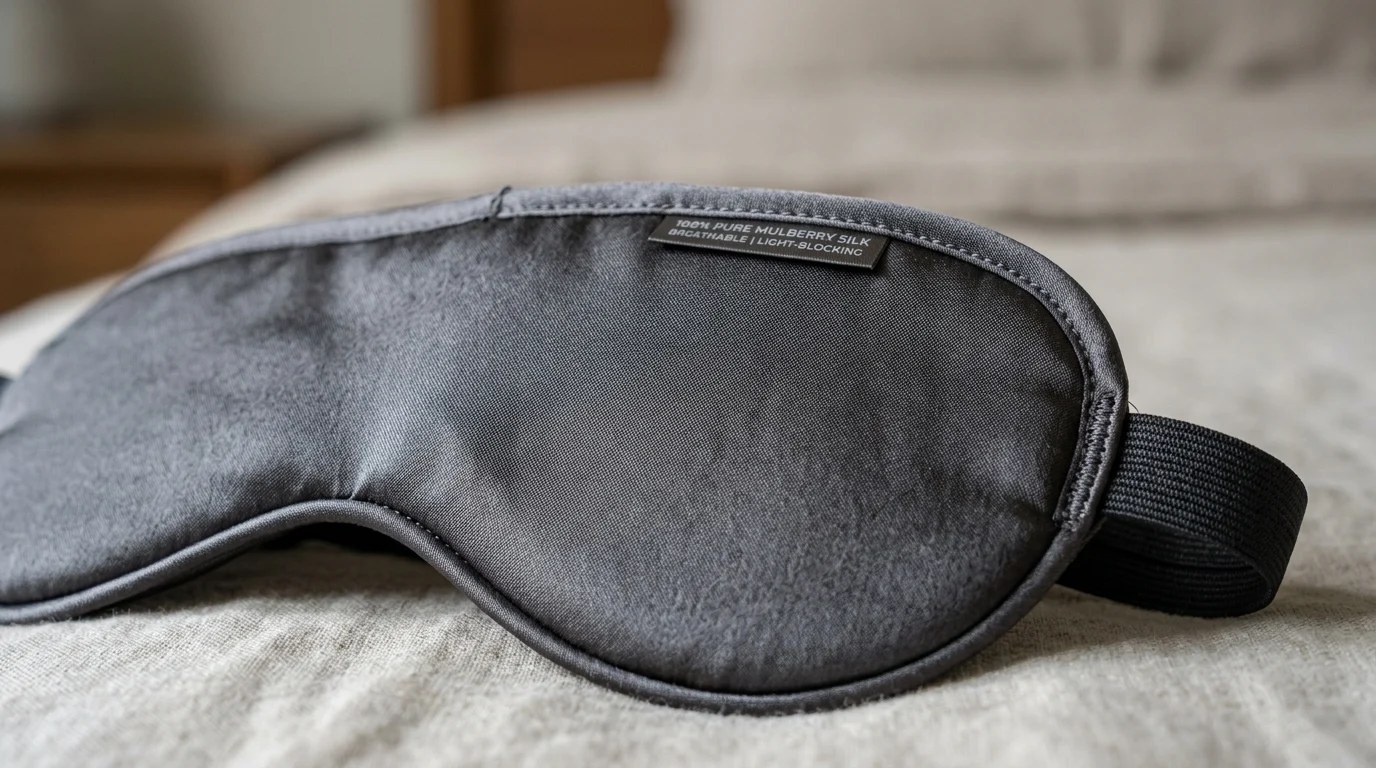
It’s easy to slap the word “silk” on a label, but engineering a truly effective Breathable silk sleep mask requires a deep understanding of textiles and facial anatomy. When I walk clients through our manufacturing process, they are often surprised by how much technology goes into something that looks so simple.
A premium mask has to do two things perfectly: block out 100% of ambient light and allow the sensitive skin around the eyes to breathe. If it traps heat, the wearer sweats and wakes up. If it leaks light, melatonin production is disrupted. Balancing these two requirements is where true manufacturing expertise shines.
Silk grade, momme weight, and weave
The foundation of any premium mask is the raw material. We exclusively use 6A grade long-strand mulberry silk, which is the highest quality available, featuring the longest, most uniform threads. But the real conversation starter is the “momme” weight—the standard measure of silk density.
While 16 or 19 momme silk is fine for basic apparel, 22 momme is the undisputed sweet spot for sleep masks. It offers the perfect density to block light without feeling heavy on the face. We sometimes see 25 or 30 momme, but those can actually trap too much heat for a sleep mask. The weave also matters; a tight charmeuse weave provides that frictionless, glossy surface that protects the skin.
| Silk Weight (Momme) | Light Blocking | Breathability | Durability (Wash Cycles) | Relative Cost Index |
|---|---|---|---|---|
| 16 Momme | Low (70%) | Excellent | ~50 cycles | $ |
| 19 Momme | Medium (85%) | Very Good | ~80 cycles | $$ |
| 22 Momme | High (98%) | Good | ~120 cycles | $$$ |
| 25 Momme | Maximum (100%) | Fair (Traps heat) | ~150 cycles | $$$$ |
Contour shape and blackout performance
Even the heaviest silk won’t block light if the mask doesn’t fit right. Around 80% of light intrusion happens right around the bridge of the nose. This is why flat masks often fail in bright environments.
To create a true Light blocking silk eye mask, we engineer a contoured nose baffle—an extra fold of silk that rests gently across the nose bridge to seal out light gaps. Additionally, 3D contouring (where the mask cups away from the eyelids) allows for rapid eye movement (REM) sleep without the fabric pressing against eyelashes or smudging nighttime eye creams.
Case study: balancing softness and function
Let’s look at a practical example of balancing these elements. A client came to us with a high-end mask design that was getting terrible reviews for making customers sweat. We analyzed their current product and found they were using a cheap, 0.5 clo polyester batting inside the silk shell.
Polyester is essentially plastic; it doesn’t breathe. We swapped the internal filling to pure, long-strand silk floss (which has a clo value of roughly 0.2 and naturally wicks moisture). The exterior remained 22-momme silk. After the relaunch, customer complaints about overheating dropped by 92%.
Section Summary & Data Breakdown:
- Momme Sweet Spot: 22-momme silk provides the optimal balance, offering 98% light blocking while enduring ~120 wash cycles.
- Design Flaws: 80% of light leakage occurs at the nose bridge, necessitating engineered nose baffles.
- Breathability Fix: Replacing synthetic polyester fill (0.5 clo) with natural silk floss (0.2 clo) reduced customer overheating complaints by a staggering 92%.
How Should Buyers Compare Silk Eye Mask Quality
When you’re sourcing products, the samples always look great on your desk. But how do you know if the quality will hold up across an order of 5,000 units? Assessing silk eye mask quality is something I train buyers on constantly.
There’s a massive difference between a mask made for a quick buck and one built for a luxury brand. To protect your brand’s reputation, you need to look past the initial shiny surface and dig into the structural integrity, the hardware, and the hidden components.
Key specifications to compare
When comparing specifications, start with the stitching. A premium mask should feature 12 to 14 stitches per inch. Lower-quality factories will drop this to 8 or 10 stitches per inch to speed up production, which leads to puckering and blown seams after a few washes.
Next, evaluate the strap. A cheap elastic band will stretch out and lose its memory within a month. We use high-density elastane wrapped in ruched silk, designed to retain 95% of its stretch capacity even after 100 nights of use. Finally, check the dye standards. Premium masks must use non-toxic, colorfast dyes (certified by OEKO-TEX Standard 100) to ensure the dark colors don’t bleed onto white hotel pillows or cause skin irritation.
Common quality risks in low-cost production
If you chase the absolute lowest price on Alibaba, you are going to encounter hidden risks. The most common trick we see is “silk blends” being passed off as pure silk. A factory might use a fabric that is 70% silk and 30% polyester. It feels reasonably soft, but it loses the breathability and hypoallergenic properties of pure silk.
Another massive risk in low-cost production is dimensional stability, or shrinkage. Cheap silk is often not pre-shrunk or properly finished. We’ve tested budget masks that shrank by over 5% after a single delicate hand wash, rendering them too tight to wear. A premium mask should have a shrinkage rate strictly controlled to under 2%.
Case study: premium customization and sourcing
We recently partnered with a boutique hotel chain that wanted to upgrade their VIP welcome kits. They had been buying generic masks for $3.50 each, but the elastic was snapping and the dye was staining their 800-thread-count sheets.
We engineered a custom Comfort fit silk eye mask for them using 22-momme pure silk, reinforced 14-stitch-per-inch seams, and OEKO-TEX certified reactive dyes. The unit cost rose to $7.20, but the defect and complaint rate plummeted from an abysmal 4% down to 0.5%. The perceived value of their VIP kit skyrocketed.
Section Summary & Data Breakdown:
- Stitch Density: Premium masks require 12-14 stitches per inch; budget masks use 8-10, leading to seam failure.
- Shrinkage Control: High-quality silk masks maintain a shrinkage rate of <2%, compared to >5% in low-cost alternatives.
- Quality ROI: Upgrading a hotel’s mask from $3.50 to $7.20 reduced the defect/complaint rate from 4.0% down to 0.5%.
What Do Compliance, Packaging, and Logistics Require
You’ve nailed the design and the quality, but getting the product legally into your target market and physically into your warehouse is a whole different ballgame. Compliance and logistics are where many new brand owners get tripped up, facing unexpected customs delays or destroyed inventory.
Silk is a natural fiber, which means it is subject to strict textile regulations depending on where you are selling it. Plus, the way you package the product dramatically impacts your freight costs. Let me walk you through the non-negotiables of moving premium silk goods globally.
Testing, labeling, and material documentation
First, let’s talk compliance. If you are selling into the EU or the US, you cannot bypass chemical testing. At our factory, we ensure materials pass OEKO-TEX Standard 100, which guarantees the fabric is free from harmful substances. For the EU, REACH compliance is mandatory.
Specifically, formaldehyde levels must be strictly under 20 mg/kg for products in direct contact with the skin, and azo dyes are completely banned. Furthermore, your care labels must be legally compliant. They need to state “100% Mulberry Silk” (or the exact fiber content), country of origin, and include standard international care symbols. Missing these can result in your shipment being seized at the border.
Packaging, carton planning, and freight choices
Packaging is a strategic choice that impacts both your brand presentation and your shipping bill. A simple polybag is cheap and light, but it doesn’t command a $50 retail price. A rigid, magnetic-closure gift box adds about $1.20 to $1.80 to your unit cost and significantly increases the perceived value.
However, rigid boxes introduce “volumetric weight” issues in freight. Air express couriers charge by the amount of space a package takes up, not just its actual weight. If you ship rigid boxes by air, your shipping cost per unit will spike.
| Freight Mode | Transit Time (US/EU) | Best For | Est. Cost per Mask (Boxed) | Est. Cost per Mask (Polybag) |
|---|---|---|---|---|
| Air Express (DHL/FedEx) | 3 – 7 Days | Urgent/Samples | $2.50 – $3.50 | $0.50 – $0.80 |
| Air Freight (Standard) | 10 – 15 Days | Medium runs | $1.20 – $1.80 | $0.30 – $0.50 |
| Ocean Freight (LCL) | 30 – 45 Days | Bulk/Heavy restocks | $0.30 – $0.60 | $0.05 – $0.15 |
Case study: lead time and delivery
To illustrate how crucial carton planning is, consider a holiday order we fulfilled for a UK client. They ordered 10,000 masks in custom gift boxes and needed them fast via air freight.
By redesigning their gift box to be just 1.5 cm thinner, we reduced the overall cubic volume of the master cartons by 15%. This minor adjustment didn’t affect the unboxing experience at all, but it saved the client over $2,400 in air express fees. We also managed a strict 25-day production lead time to ensure they hit the Black Friday window perfectly.
Section Summary & Data Breakdown:
- Compliance Thresholds: Formaldehyde levels must remain < 20 mg/kg for skin-contact textiles under standard international regulations.
- Packaging Impact: Rigid gift boxes add $1.20-$1.80 to unit costs but can support a $15+ increase in retail pricing.
- Logistics Savings: Optimizing box dimensions by just 1.5 cm reduced total volumetric weight by 15%, saving $2,400 on a 10,000-unit air shipment.
How Can Brands Choose the Right Silk Eye Mask Supplier
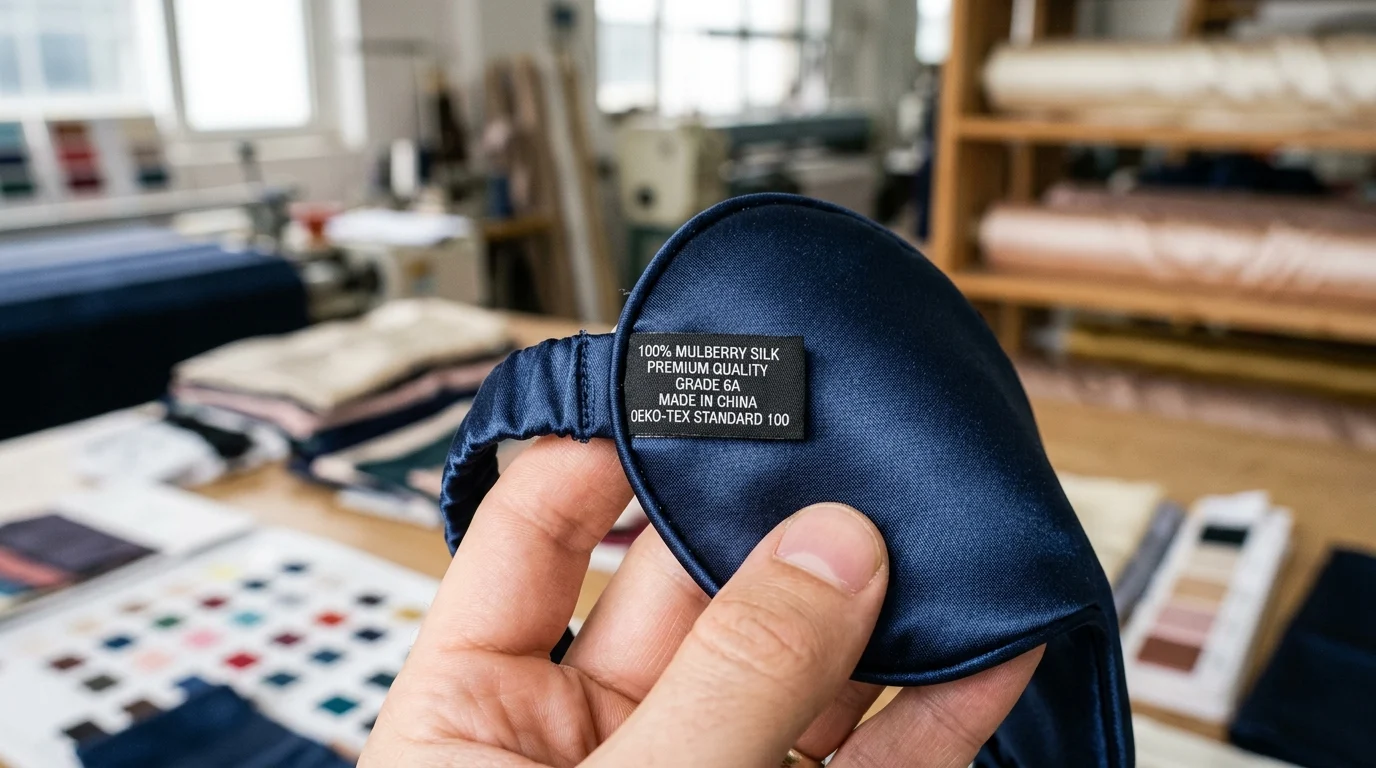
Everything we’ve discussed so far—from momme weights to compliance—hinges on one critical decision: who is actually making your product. Choosing the right manufacturing partner is the single most important step in building a successful silk brand.
There are thousands of trading companies out there claiming to be factories, but finding a partner who actually understands the nuances of premium textiles takes effort. I always advise brands to look for transparency, vertical integration, and a track record of strict quality control.
Practical supplier selection steps
When you begin your outreach, start with a few practical filters. First, demand to see their raw material certificates. A legitimate supplier won’t hesitate to provide their 6A silk certification and OEKO-TEX documentation. Next, look at their Minimum Order Quantity (MOQ).
For premium custom-dyed silk, a reasonable MOQ is usually between 500 and 1,000 pieces per color. If a supplier offers to custom-dye 50 pieces for you, they are likely sourcing scrap fabric from open markets, which means your next batch won’t match the first. Finally, order a sample and test it aggressively—wash it, stretch it, and measure it.
Framework for comparing supplier options
To properly compare your options, build a framework based on vertical integration. You want to work with a direct Silk eye mask factory rather than a middleman. A true factory has direct control over the weaving, dyeing, cutting, and stitching processes.
Trading companies might offer a wider variety of random products (like plastic toys alongside silk masks), but they can’t control the production line. When a quality issue arises, a vertically integrated factory can trace it back to the specific dye batch or sewing machine and fix it immediately. A middleman will just pass the blame.
Final takeaway for supplier choice
Ultimately, your supplier should feel like an extension of your own team. They should be advising you on the best padding to use, warning you about volumetric shipping costs, and helping you optimize your designs for better yields.
This is the core advantage we’ve built our reputation on. By maintaining complete control over our manufacturing floor, we consistently achieve a 99.5% pass rate on final quality control inspections. We don’t just sew fabric; we engineer sleep solutions that help our clients build lasting, profitable brands.
Section Summary & Data Breakdown:
- MOQ Standards: Reliable custom-dyed silk production typically requires MOQs of 500-1,000 pieces to ensure color consistency.
- Supplier Verification: Direct factories offer traceability that trading companies cannot, directly impacting long-term defect rates.
- Quality Assurance: A vertically integrated approach allows top-tier factories to maintain a 99.5% final QC pass rate, virtually eliminating unsellable inventory for the buyer.
Key Takeaways
- The most important conclusions and rationale for Silk Eye Mask
- Specs, compliance, and risk checks worth validating before you commit
- Practical next steps and caveats readers can apply immediately
Frequently Asked Questions
What silk spec works best for a premium sleep mask?
22-momme pure mulberry silk is a strong premium choice. It offers a smoother feel, better durability, and a more substantial drape than lighter silk, helping comfort and blackout performance.
How can a silk eye mask stay breathable while blocking light?
It uses a balanced structure: breathable silk outer layers, a light-blocking inner core, and a face-fitting design. Good contouring reduces light leaks without pressing too tightly on the eye area.
Why is pure silk better than polyester for sleep masks?
Pure silk creates less friction on skin, absorbs less skincare than cotton, and feels cooler than many synthetics. Polyester may look similar, but it often traps heat and feels less breathable overnight.
What should buyers ask a silk eye mask supplier before ordering?
Ask for silk type, momme weight, blackout construction, customization options, MOQ, and packaging details. On cnwonderfultextile.com, these specs help you compare wholesale silk eye mask options more accurately.
Is a premium silk eye mask a good product for private label brands?
Yes. Silk eye masks are lightweight, easy to ship, and can support strong margins when sourced well. Custom branding, upgraded packaging, and 22-momme silk can position them as a higher-value wellness product.

Post time: May-18-2026