
Custom Headband Branding for Scalable Private Label Growth
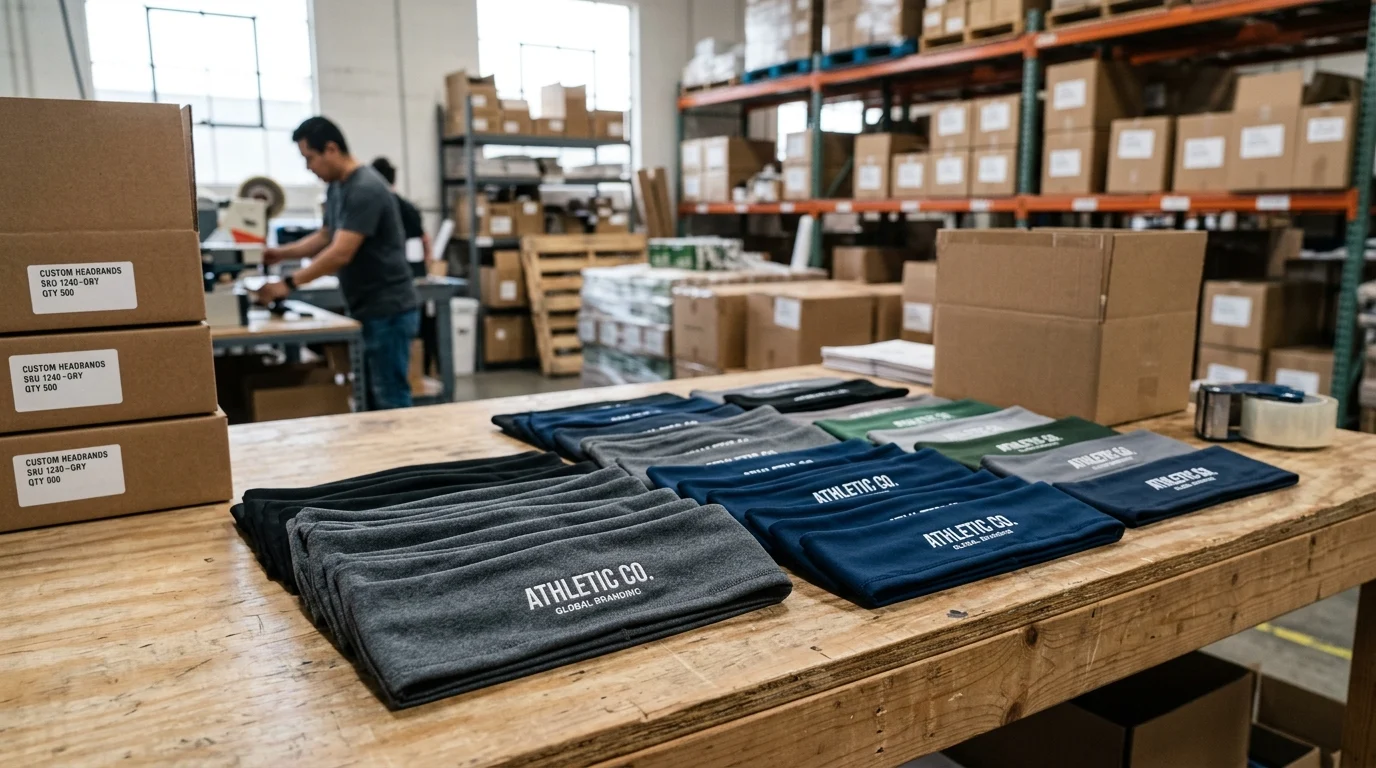
Why Custom Headband Branding Scales in Private Label
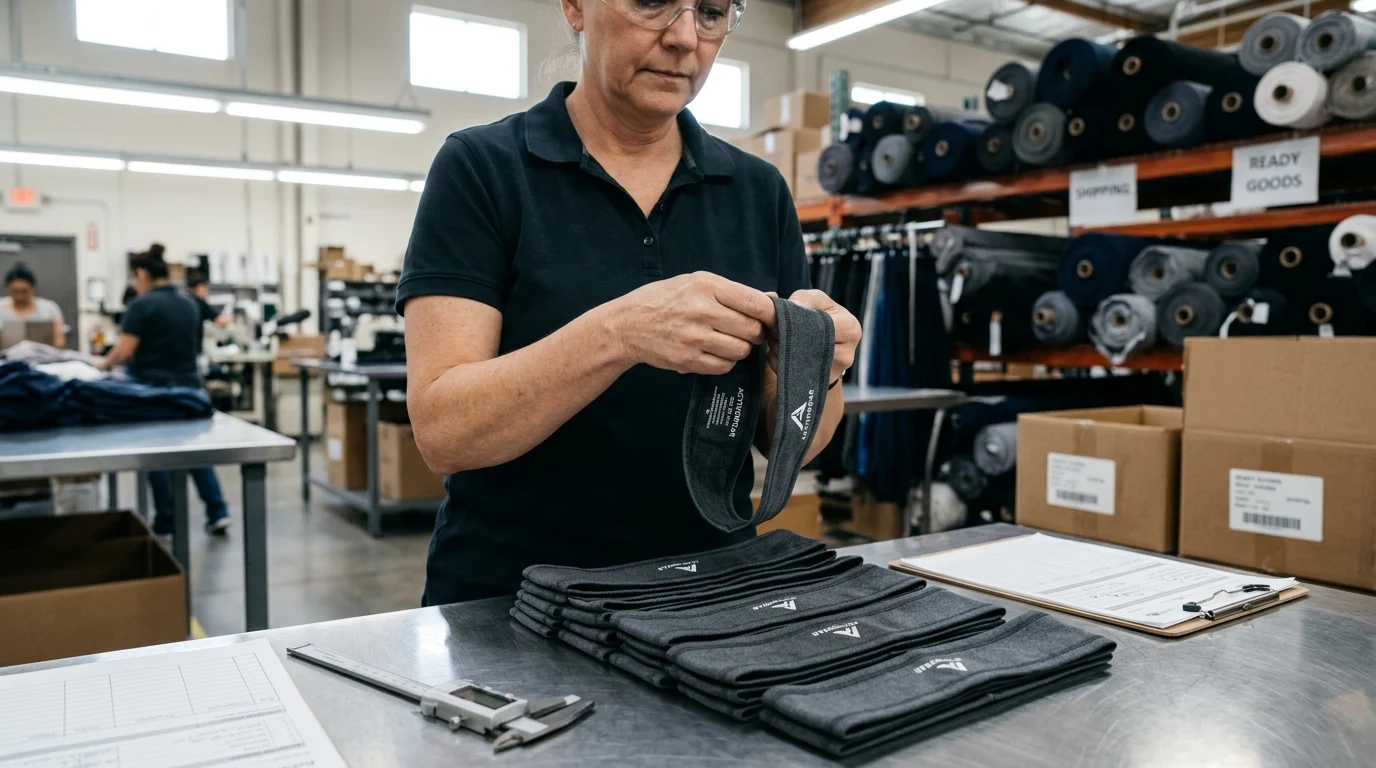
If you’re in the B2B wholesale or procurement space, you already know that finding a product with high margins, low shipping volume, and strong brand visibility is the ultimate trifecta. Headbands fit this profile perfectly. I’ve seen countless brands—from fitness apparel distributors to beauty supply wholesalers—scale their catalogs rapidly by integrating Custom Headbands into their offerings. Because they are lightweight and universally sized, they eliminate the sizing-return nightmare associated with standard apparel.
The real magic, however, happens when you move from generic off-the-shelf goods to a formalized private label strategy. By controlling the branding, material specs, and packaging, you transition from competing on price to competing on brand equity. Let’s break down exactly why this accessory is a scalable powerhouse for your procurement pipeline.
Margin and differentiation advantages
The unit economics on a headband are incredibly favorable. The raw material cost (whether it’s a moisture-wicking polyester blend or an eco-friendly bamboo cotton) is relatively low, but the perceived value skyrockets when you apply premium branding. By adding custom jacquard weaving, silicone grip linings, or reflective logos, you can source a unit for under $1.50 and easily see it retail for $15 to $20. That kind of margin gives B2B distributors plenty of room to offer aggressive wholesale discounts while staying highly profitable.
Best-fit B2B buyer segments
Not every buyer needs the same headband. In my experience, the most lucrative B2B segments for these products are fitness franchises (gyms and boutique studios wanting retail merchandise), beauty and spa distributors (requiring soft, terry-cloth bands for skincare routines), and corporate promotional buyers. Each of these segments buys in bulk but expects a product tailored specifically to their end-users’ daily habits.
Core business goals before supplier onboarding
Before you even start reaching out to factories, you need to lock down your core business objectives. Are you aiming for a high-volume, low-cost promotional giveaway, or a premium retail-ready accessory? Define your target landed cost, your maximum acceptable lead time, and your initial volume projections. Having these metrics finalized ensures you don’t waste time vetting suppliers who can’t meet your specific scale or price requirements.
How to Build a Private Label Headband Product Brief
You can’t just email a factory asking for “a branded headband” and expect good results. The secret to a smooth sourcing process is a bulletproof product brief or tech pack. When you hand a supplier a detailed brief, you immediately signal that you are a professional buyer, which often results in better pricing and more accurate sampling right out of the gate.
A comprehensive brief removes the guesswork. It forces you to think through every physical attribute of the product before the factory cuts a single piece of fabric.
Key specifications: material, width, stretch, grip, stitching, logo placement
Your brief needs precise measurements and material callouts. Specify the fabric composition (e.g., 88% Polyester, 12% Spandex), the exact width in centimeters, and the required stretch recovery rate. If it’s a sports headband, mandate an interior silicone grip strip to prevent slipping. Demand flatlock stitching to prevent chafing on the wearer’s head. Finally, clearly map out your logo placement—whether it’s a centered heat transfer or a subtle side-seam Logo Embroidery.
Use-case segmentation by channel
Your brief should explicitly state the product’s use case. A yoga headband requires buttery-soft, high-stretch fabrics like modal or brushed nylon. A running headband needs lightweight, moisture-wicking mesh with reflective elements for night safety. A spa headband needs thick, absorbent microfiber. Segmenting by use case helps the factory recommend the right stock fabrics if you aren’t developing a custom textile from scratch.
Packaging, labeling, barcode, and carton requirements
Don’t treat packaging as an afterthought. Detail your polybag requirements (e.g., eco-friendly compostable bags or standard PE with suffocation warnings). Specify hangtag dimensions, placement, and the exact UPC/EAN barcode formats required by your retail partners. Finally, outline your master carton requirements, including maximum weight limits to ensure warehouse workers can handle them safely.
How to Compare Manufacturing Options and Supplier Models
Finding a factory is easy; finding the right factory model for your specific growth stage is the real challenge. I always tell procurement teams to align their supplier choice with their immediate cash flow and customization needs. You don’t need a fully custom OEM factory if you’re just testing a promotional concept.
Understanding the difference between supplier types will save you thousands of dollars in tooling fees and months of wasted sampling time.
OEM vs ODM vs stock-with-logo vs fully custom
OEM (Original Equipment Manufacturer) means the factory produces your unique design from scratch. ODM (Original Design Manufacturer) means you select an existing factory design and slap your brand on it. “Stock-with-logo” is the fastest route—factories take blank inventory and apply a heat-pressed logo, ideal for rapid promo orders. Fully custom involves weaving custom fabrics, dyeing to exact Pantone matches, and custom tooling, which is best for established brands scaling up.
MOQ, sampling lead time, tooling, and unit cost comparison
Here is a quick breakdown of what you can typically expect across different models:
| Manufacturing Model | Typical MOQ | Sampling Time | Tooling/Setup Fees | Unit Cost |
|---|---|---|---|---|
| Stock-with-logo | 100 – 500 pcs | 3 – 5 days | Low (Print setup) | Medium |
| ODM (Factory Design) | 500 – 1,000 pcs | 7 – 10 days | Medium | Low |
| OEM / Fully Custom | 2,000+ pcs | 14 – 21 days | High (Custom molds/dyes) | Lowest (at scale) |
Factory capabilities for decoration and labeling methods
You need to vet a factory’s in-house decoration capabilities. Do they outsource embroidery, or do they have their own multi-head machines? Ask about their Branding Solutions, including sublimation printing for all-over patterns, 3D silicone heat transfers for a premium raised look, and woven labels. A factory that controls these processes in-house will offer much better quality control and faster lead times.
How to Evaluate Pricing, MOQ, and Margin
When you’re buying B2B, the FOB (Free on Board) price the factory quotes you is only half the story. To build a sustainable private label business, you have to obsess over landed costs and how Minimum Order Quantities (MOQs) impact your cash flow.
I’ve seen buyers get lured in by a $0.50 unit cost, only to realize the MOQ is 10,000 pieces per colorway, tying up their capital in dead stock. Balancing unit cost with realistic volume is the key to healthy margins.
Main cost drivers
The primary cost drivers for headbands include fabric weight (GSM), the complexity of the decoration, and specialized additions like anti-slip silicone strips or antimicrobial treatments. Custom Pantone dyeing is also a major cost driver; if you can use the factory’s stock fabric colors, you will significantly reduce both your unit cost and your lead time.
MOQ strategy for colors, sizes, and SKUs
Negotiating MOQs is an art. If a factory asks for 3,000 pieces, try to negotiate splitting that across three different colorways (1,000 pieces each) using the same base fabric. Because headbands are usually “one size fits most,” you don’t have to worry about size grading, which allows you to funnel your entire MOQ budget into color and pattern variety, reducing your inventory risk.
Landed cost and reorder margin modeling
Always model your landed cost. Take the FOB price and add freight, customs duties (check the specific HS code for synthetic hair accessories in your country), insurance, and 3PL handling fees. A $1.00 headband might land at $1.45. If you wholesale it for $6.00, your margin is strong. Calculate this for both your initial test order (often shipped via expensive air freight) and your bulk reorders (shipped via cheaper ocean freight) to forecast your true profitability.
How to Manage Quality Control and Compliance
Quality control is non-negotiable. Headbands are high-stretch items that deal with sweat, friction, and frequent washing. If the elasticity dies after three washes, or the dye bleeds onto a customer’s forehead, your brand’s reputation will tank.
Procurement teams must implement strict QC protocols before the goods ever leave the country of origin. Relying on the factory’s internal QC is a rookie mistake.
Quality checkpoints and tolerances
Define strict tolerances in your brief. Key checkpoints include stretch recovery (e.g., the band must return to its original size within 2% after being stretched to 150% of its width), seam strength (pull-testing the flatlock stitches), and colorfastness to water and sweat. Specify that any variance in width greater than 0.5 cm is a defect.
Testing and regulatory requirements
Depending on your market, Private Label Hairbands must meet specific regulatory standards. If you are selling into the EU, ensure the dyes comply with REACH regulations (no banned azo dyes). For premium positioning, require OEKO-TEX Standard 100 certification to guarantee the product is free from harmful substances, especially since it sits directly against the skin and face.
Inspection planning and claim handling
Implement third-party pre-shipment inspections based on AQL (Acceptable Quality Limit) standards—usually AQL 2.5 for major defects and 4.0 for minor defects. Outline your claim handling process in your manufacturing agreement. If a batch fails inspection, the factory must rework or remake the goods at their expense before authorizing the final balance payment.
How to Plan Logistics and Packaging for Scale
Logistics can easily eat up your margins if you aren’t careful. Fortunately, headbands are highly compressible, meaning you can fit thousands of units into a single cubic meter. But maximizing this advantage requires strict instructions on carton setup and packaging rules.
I always advise buyers to think about the warehouse workers who will be receiving these goods. Retail-ready packaging saves immense time and labor costs on the domestic side.
Carton setup, polybag rules, and retail-ready packaging
Dictate the exact master carton dimensions to avoid “dead space” that you end up paying to ship. Require standard double-walled corrugated cartons. If you are shipping to retail distributors, mandate that the headbands be packed in retail-ready inner boxes (e.g., 20 units per display box, 10 display boxes per master carton) so they can be placed directly on store shelves without repackaging.
Shipping mode selection by lead time and cash flow
Match your shipping mode to your cash flow and urgency. Air express (DHL/FedEx) is great for first-run test orders where time-to-market is critical, but it will add $0.30 to $0.60 per unit in freight costs. For scale and replenishment, ocean freight (LCL or FCL) is the only way to maximize margins, bringing freight costs down to pennies per unit, though you must account for 30-45 day transit times.
Incoterms, carton markings, and replenishment planning
Define your Incoterms clearly—FOB (Free on Board) is standard, giving you control over the freight forwarder, while DDP (Delivered Duty Paid) is easier for smaller teams but often more expensive. Ensure master cartons are marked on at least two sides with your company name, PO number, SKU, gross weight, and carton number (e.g., 1 of 50). Build a replenishment calendar based on your factory’s lead time plus ocean transit time to avoid stockouts.
How to Choose Sales Channels and Positioning
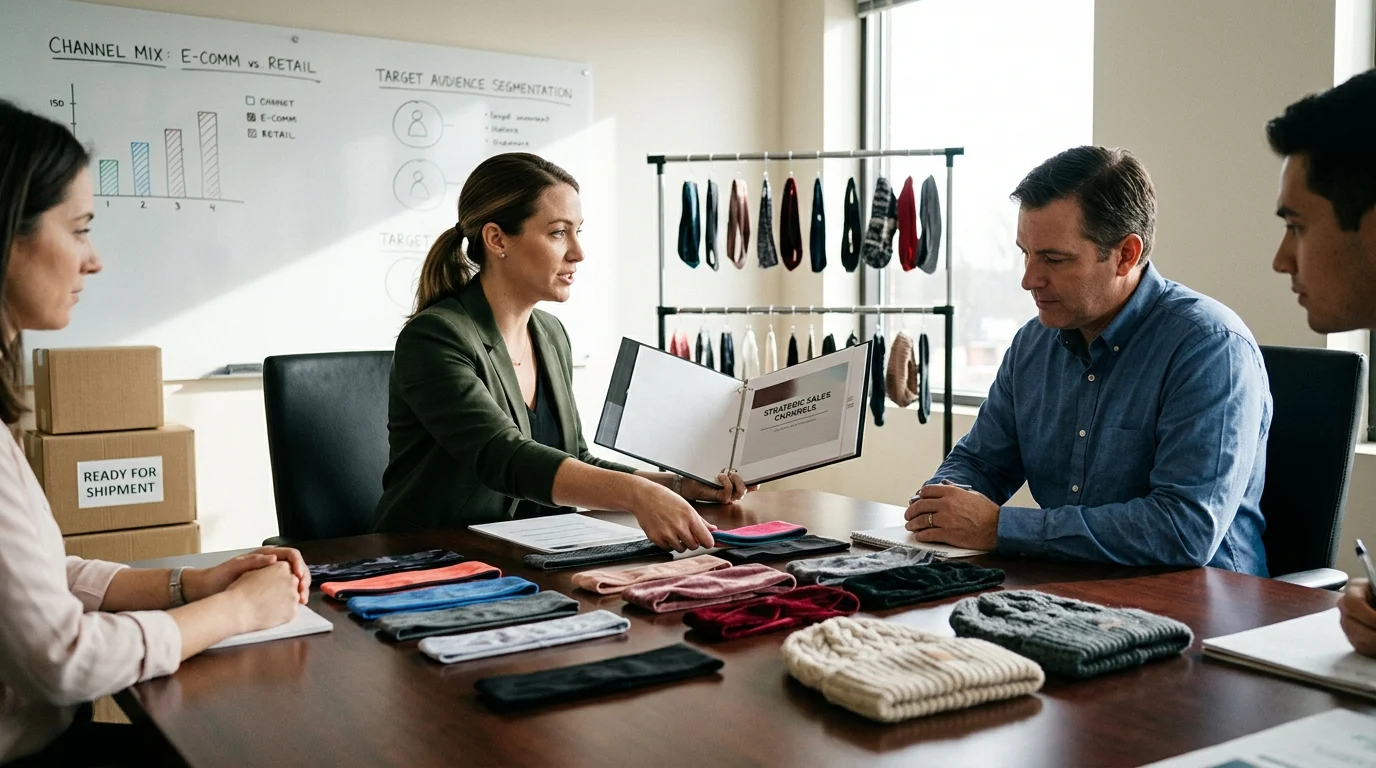
Once your product lands, where does it go? The beauty of customized headbands is their versatility across multiple B2B sales channels. Your positioning strategy will dictate how you pitch the product and what price tier you target.
You can pivot the exact same core product into different markets simply by changing the packaging and the marketing narrative.
Channel fit across wholesale, distributor, gym, teamwear, beauty, and promotional
A moisture-wicking synthetic band is perfect for gym wholesalers and teamwear distributors. A soft microfiber band fits the spa and beauty supply channel. If you are targeting the promotional products industry (ASI/PPAI), focus on low-cost, high-visibility logo placements. Tailor your sell-sheets to highlight the specific benefits that matter to each channel’s buyers.
Assortment strategy by price tier
Develop a “Good, Better, Best” assortment strategy. Your “Good” tier might be a basic single-layer poly-spandex band. The “Better” tier adds an interior silicone grip and a hidden key pocket. The “Best” tier uses premium, sustainable fabrics like recycled polyester (rPET) with intricate 3D logos. This allows you to capture buyers across different budgetary constraints.
When to expand SKUs or negotiate exclusivity
Once you have a proven seller, look to expand your SKUs by introducing seasonal color palettes or complementary items like wristbands. If you are moving serious volume, negotiate exclusivity agreements with your factory for specific custom patterns or molds so your competitors can’t source the exact same product from your supplier.
Key Takeaways and FAQ
Scaling a private label accessory brand requires treating simple items with deep procurement respect. By locking down your specs, negotiating smart MOQs, and managing your logistics, building out a line of Personalized Accessories can become one of your most reliable revenue streams.
Supplier fit and unit economics checklist
Always verify: Can the factory meet your target FOB price? Do they have in-house branding capabilities? Are their MOQs aligned with your cash flow? Have you modeled the fully landed cost including duties and freight? If you can check all these boxes, you have a viable partner.
Realistic MOQ expectations
For standard stock fabrics with custom logos, expect an MOQ of 300 to 500 pieces. For custom-dyed fabrics (matching your exact brand Pantone), expect MOQs to jump to 1,000 to 3,000 pieces per color to cover the fabric mill’s minimums.
Sampling and bulk production timelines
A standard sampling process takes 7 to 14 days, depending on the complexity of the logo and fabric availability. Once you approve the sample, bulk production typically takes 25 to 35 days. Always add a 10-day buffer to your calendar for unexpected delays.
Most durable logo methods
For athletic use, jacquard weaving (where the logo is woven directly into the fabric) is the most durable, as it will never peel or crack. For complex, multi-color designs, sublimation printing is highly durable because the ink fuses with the fabric. Avoid cheap surface-level screen printing if the headband requires high stretch, as the ink will crack over time.
Related reading: Custom Headbands
Key Takeaways
- Wholesale sourcing and supply-chain implications for Headband
- Specifications, compliance, and commercial terms buyers should validate
- Actionable recommendations for distributors and procurement teams