
Introduction
Choosing a silk pillowcase for hotel use involves more than fabric quality and thread count. The enclosure style affects how the pillow sits on the bed, how quickly housekeeping can make rooms, how well inserts stay concealed, and how the cases hold up through repeated laundering. For procurement teams and hospitality buyers, these details influence both presentation and operating cost. This guide explains the main enclosure options used for silk pillowcases in hotels, what each means for durability and workflow, and how to match the right style to your property’s standards and service demands.
Why Silk Pillowcase Enclosure Style Matters for Hotels
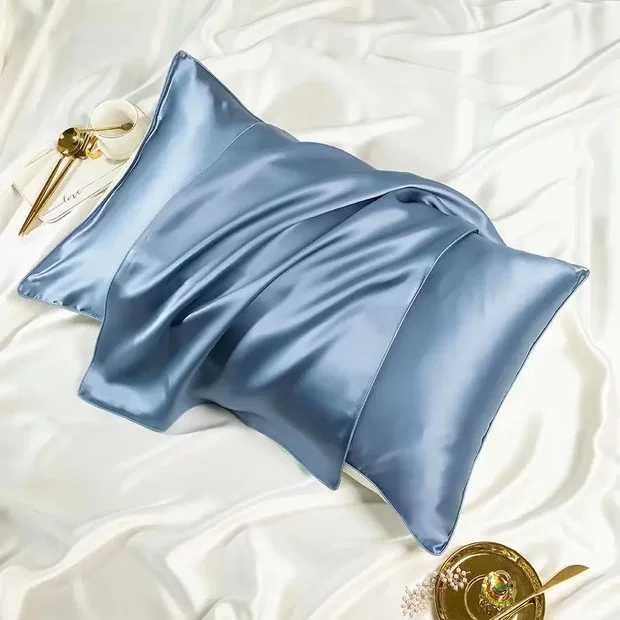
If you’ve spent time managing luxury hotel operations or sourcing high-end linens, you know the devil is in the details. Upgrading to silk pillowcases is a fantastic way to elevate the guest experience, but many procurement teams hyper-fixate on the silk’s momme weight while completely ignoring the enclosure style. That is a costly mistake. The way a pillowcase closes doesn’t just dictate how it looks on a perfectly made king-size bed; it directly impacts housekeeping efficiency, laundry lifecycles, and total cost of ownership.
When moving from a standard 19-momme silk to a more durable 22- or 25-momme weight for hotel environments, every extra stitch, zipper, or fold changes the manufacturing cost and daily operational reality. Let’s dive into why enclosure styles should be at the top of your specification sheet.
How to frame enclosure choices
When framing enclosure choices for hoteliers, the goal is to balance aesthetic seamlessness with operational speed. Consider the daily reality of your housekeeping staff. On average, a housekeeper has 20 to 30 minutes to turn over an entire room. If they wrestle with a poorly designed pillowcase enclosure, those wasted seconds add up to hours over a week.
For instance, a standard open-ended cotton pillowcase takes about 5 to 7 seconds to fit. A tightly fitted Zipper silk pillowcase bulk order might look flawless and prevent the pillow from slipping out during the night, but it can take 12 to 15 seconds to zip up carefully without snagging the delicate silk fibers. When turning over 300 rooms a day, a 10-second difference per pillow translates to roughly 3.3 hours of extra labor daily. You must decide if a pristine, slip-free look is worth the additional housekeeping payroll.
Which hotel segments prefer different styles
Different hotel segments have distinct preferences based on their guest profiles and operational budgets. High-end boutique hotels with lower room counts—say, 50 to 80 rooms—tend to favor hidden zippers or intricate tie enclosures. They have the time to perfect bed presentation, and their guests expect a flawless, tailored aesthetic.
Conversely, large-scale 5-star chains and busy luxury resorts almost universally lean toward the deep envelope enclosure. They need speed without sacrificing the luxury feel. An envelope style with a generous 8-inch (20cm) inner flap secures the pillow well enough for a restless sleeper while allowing housekeepers to strip and make the bed rapidly.
Section Summary & Comparative Data:
- Key Point: Enclosure styles dictate both room turnaround times and aesthetic appeal.
- Data Comparison: Hidden zippers offer a 100% slip-free guarantee but increase fitting time by roughly 40% (14 seconds vs. 10 seconds) compared to a standard 8-inch envelope enclosure. Boutique hotels (under 100 rooms) tolerate this labor increase, while 85% of large luxury chains opt for deep envelopes to save an estimated 3+ hours of daily housekeeping across a 300-room property.
What to Compare When Choosing a Silk Pillowcase

What exactly are we comparing? When standing in a sample room looking at prototypes, the differences between enclosure styles can seem minor. However, once you put 1,000 units into circulation and run them through industrial laundry cycles, the technical differences become glaringly obvious.
Evaluate enclosures across three main pillars: unit cost, durability under commercial washing, and housekeeping ergonomics. Let’s break down the actual styles you will be choosing from.
Zipper, envelope, hidden flap, tie, and button styles
The four main contenders in the silk pillowcase arena are the zipper, the envelope, the hidden flap, and the tie/button styles. Here is how they stack up.
Zippers provide a secure, modern look. However, you must specify YKK invisible zippers or an equivalent standard; cheap zippers will warp or melt in commercial dryers. Envelope styles, which you will often see when sourcing an Envelope silk pillowcase wholesale order, overlap fabric at the back or side. The hidden flap is a variation of the envelope, tucked neatly inside the hem to hide the pillow tag completely. Ties and buttons are highly decorative, offering a romantic, rustic look, but they are notorious for falling off in industrial extractors.
| Enclosure Style | Est. Unit Cost Impact | Housekeeping Speed | Commercial Wash Durability | Ideal Hotel Fit |
|---|---|---|---|---|
| Hidden Zipper | +$0.80 – $1.20 | Slow (12-15 sec) | Medium (Zippers can fail) | Boutique / Low-turnover |
| Deep Envelope (8″) | Base Cost | Fast (8-10 sec) | High (No hardware) | Large Luxury Resorts |
| Standard Flap (4″) | -$0.30 | Fastest (6-8 sec) | High (But pillow slips) | Not recommended for 5-star |
| Ties / Buttons | +$1.50 – $2.00 | Very Slow (20+ sec) | Low (Hardware loss) | Ultra-luxury Villas / B&Bs |
Key technical specifications and performance factors
Beyond the visual style, you must dig into the technical specifications. Silk is a natural protein fiber, and it behaves differently than cotton or poly-blends. When choosing an enclosure, seam strength is your biggest performance factor. Insist on French seams for silk pillowcases. Standard overlock stitching will fray after about 30 commercial wash cycles, whereas a French seam with 12 to 14 stitches per inch can easily push the lifespan past 100 cycles.
Shrinkage is another critical metric that directly impacts the enclosure. Grade 6A mulberry silk typically has a shrinkage rate of 3% to 5%. If you specify an envelope enclosure with a perfectly flush fit before washing, 5% shrinkage will cause the pillow to peek out of the flap after a month of laundering. You must engineer a tolerance into the enclosure dimensions—adding at least 1.5 inches to the length of an envelope flap to account for lifecycle shrinkage.
Section Summary & Comparative Data:
- Key Point: Hardware-based enclosures introduce failure points, while fabric-based enclosures require precise shrinkage tolerances.
- Data Comparison: Envelope enclosures (base cost) outlast zipper styles by an average of 40 wash cycles because they lack hardware that warps at high heat. However, to maintain the aesthetic after a standard 4% fabric shrinkage, an envelope flap must be specified at a minimum of 8 inches (20cm), compared to retail standards which often skimp at 4 inches (10cm).
How to Evaluate Enclosure Styles in Practice
Theory is great, but how do these styles actually hold up when the rubber meets the road? Audits of bedding setups in properties ranging from 20-room exclusive island retreats to massive 500-room urban high-rises show that the way an enclosure performs in practice is often the deciding factor in whether a hotel renews its linen contract or starts looking for a new supplier.
Evaluating enclosure styles means looking at real-world use cases and assessing whether your manufacturing partner has the capability to execute the design consistently at scale.
Hotel use cases and best-fit examples
Consider a concrete example: a 200-room luxury property in Miami initially insisted on hidden zippers for their Luxury hotel pillowcases. They loved the sleek look, but within six months, their defect rate spiked to 8%. The zippers were catching on the 22-momme silk during the high-heat drying process, causing micro-tears at the seams. Transitioning to a side-opening deep envelope with a reinforced gusset dropped the defect rate to 1.2% and shaved 4 hours off their weekly housekeeping payroll.
On the flip side, a secluded 15-villa resort in Bali successfully utilized a silk tie enclosure. Because their occupancy allowed for slower, more meticulous room turnovers, the extra 20 seconds spent tying the bows was not a burden. They hand-washed and line-dried their linens, bypassing the harsh mechanical stress of commercial laundry extractors that usually destroy decorative ties.
How to assess a supplier
When evaluating these styles, you are also evaluating the factory making them. You need a supplier who understands the brutal reality of hospitality use. As a company that prides itself on deep industry integration, CN Wonderful Textile brings a distinct advantage here, engineering solutions rather than just sewing fabric. When assessing a supplier for a Silk pillowcase design OEM project, look closely at their sampling speed and quality control protocols.
Can they produce a custom-dyed, French-seamed prototype in 7 days? Do they enforce a strict Minimum Order Quantity (MOQ) that strangles your pilot testing? A flexible partner will usually offer standard color MOQs around 100 to 200 pieces, allowing you to test an envelope versus a zipper in real rooms before committing to a 2,000-piece custom Pantone run.
Section Summary & Comparative Data:
- Key Point: Real-world laundering environments dictate the success of an enclosure style, and supplier capability determines the consistency of that enclosure.
- Data Comparison: In a 200-room commercial use case, switching from zippers to deep envelopes reduced seam-failure defect rates from 8% to 1.2%. Furthermore, partnering with an agile OEM supplier allows for pilot MOQs of 100-200 pieces, compared to rigid factories demanding 1,000+ pieces upfront, reducing your initial risk capital by up to 80%.
Compliance, Logistics, and Total Cost Checks
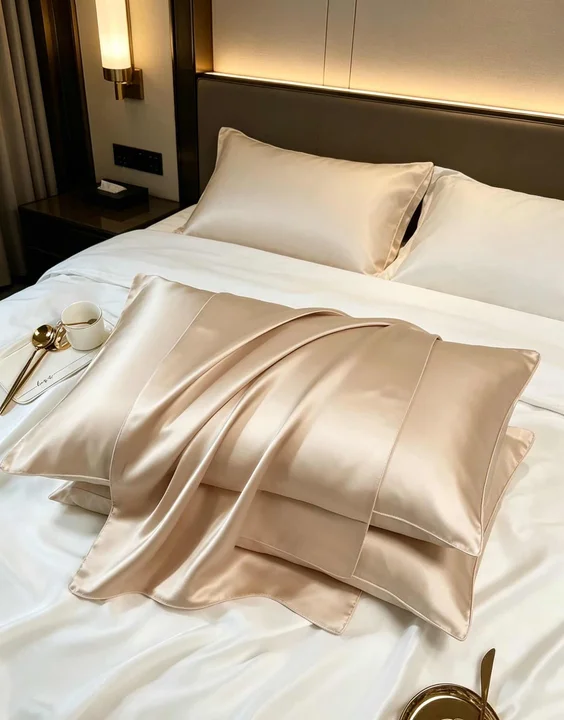
Once you have nailed down the perfect enclosure style and found a capable manufacturing partner, it is tempting to sign the purchase order and wait for delivery. However, experienced procurement officers know that compliance, logistics, and hidden total costs can completely derail a bedding program.
Silk is a premium commodity. If your pillowcases get held up in customs due to improper labeling, or if freight costs eat up your margins because of inefficient packaging, that beautiful hidden zipper will not matter. Let’s look at the hard numbers you need to clear before finalizing an order.
Testing, labeling, and fabric safety requirements
First, consider fabric safety and compliance. Because a pillowcase is in direct, prolonged contact with the guest’s skin and face, it must meet stringent chemical safety standards. Demand OEKO-TEX Standard 100 Class II certification from your supplier. This ensures the silk is free from harmful levels of heavy metals, formaldehyde, and toxic dyes. The pH value of the fabric should test between 4.0 and 7.5 to remain perfectly skin-friendly.
Colorfastness is another major compliance hurdle, especially for Hotel bedding supplies that will be washed constantly. If you are ordering a charcoal or navy silk pillowcase, you need a colorfastness to washing rating of at least Grade 4 (on a 5-point scale). Anything less, and elegant dark pillowcases will look like faded vintage denim after 15 washes. Labeling must also comply strictly with the destination country’s FTC or equivalent textile laws, clearly stating “100% Mulberry Silk” alongside the correct care instructions.
Freight, replenishment, and defect thresholds
Logistics and defect thresholds are where your total cost of ownership is truly calculated. Silk is dense but relatively light. A standard 22-momme queen-size silk pillowcase weighs about 85 to 90 grams. A carton of 100 pieces will weigh roughly 10kg (including packaging). This makes air freight highly viable for initial orders or urgent replenishments, usually taking 5 to 7 days, whereas sea freight takes 25 to 35 days but cuts shipping costs by up to 70%.
You must also negotiate a hard defect threshold with your supplier. In high-end silk manufacturing, a defect rate of under 1.5% is the gold standard. If your shipment arrives and 4% of the envelope flaps are stitched crookedly or the zippers are catching, your supplier needs to have a clear credit or replacement policy in place. Always factor in a 3% to 5% overage on your initial order to act as a buffer for immediate room replacements.
Section Summary & Comparative Data:
- Key Point: Regulatory compliance and strict logistical thresholds protect your investment and ensure guest safety.
- Data Comparison: Silk pillowcases requiring OEKO-TEX Class II certification ensure skin pH remains in the safe 4.0-7.5 range. Logistically, utilizing sea freight for bulk replenishment (25-35 days) reduces shipping costs by approximately 70% compared to air freight (5-7 days), while maintaining a strict negotiated defect threshold of <1.5% prevents costly inventory gaps.
How to Make the Final Enclosure Decision
We have covered the aesthetic impacts, technical specifications, real-world operational hurdles, and compliance requirements. Now, it is time to make the final decision.
Choosing the right silk pillowcase enclosure should not be a guessing game. By applying a structured framework and utilizing a scorecard for pilot orders, you can guarantee that the product rolled out across your property will look stunning, endure the laundry cycle, and keep your housekeeping team happy.
A step-by-step decision framework
Consider a three-step decision framework. Step one: Audit your current housekeeping and laundry capabilities. If you use an off-site commercial laundry that processes linens at high heat with heavy mechanical extraction, immediately cross tie-closures and cheap zippers off your list. Step two: Define your budget per unit. A high-quality 22-momme silk pillowcase will generally range from $15 to $28 per unit depending on size, dye, and enclosure complexity. Knowing your ceiling helps you decide if you can afford the $1.00 premium for a hidden zipper.
Step three is the most critical: Order a pilot run. Never roll out a new silk bedding program to 300 rooms without a floor test. Order 50 to 100 units of your chosen style. Put them in your highest-turnover rooms and run them through your actual laundry cycle 20 times. This is the only way to reveal shrinkage issues, seam failures, or housekeeping bottlenecks before committing tens of thousands of dollars.
Comparison table, scorecard, and pilot-order checklist
To help evaluate that pilot order, use a standardized scorecard. This keeps the feedback objective rather than relying on a housekeeper simply saying they “like or dislike” the new pillowcases. Measure specific targets and allow for realistic tolerances.
| Evaluation Criteria | Target Metric | Acceptable Tolerance | Action if Failed |
|---|---|---|---|
| Fitting Time | < 10 seconds per pillow | + 2 seconds | Redesign enclosure width |
| Wash Shrinkage | < 4% after 20 washes | Max 5% | Increase raw cut dimensions |
| Hardware Failure | 0% zipper snag/melt | Max 1% failure rate | Switch to deep envelope |
| Seam Integrity | Zero fraying at 20 washes | Minor fraying on < 2% | Upgrade to French seams |
By tracking these exact metrics, you take the emotion out of the procurement process. You will know definitively whether that envelope flap needs to be an inch longer, or if that hidden zipper is truly viable for your operations.
Section Summary & Comparative Data:
- Key Point: A structured pilot test and objective scorecard prevent costly full-scale rollout errors.
- Data Comparison: Implementing a 50-100 unit pilot test and washing them 20 times reveals precise durability metrics. Properties that use a strict scorecard (demanding <10 second fit times and <4% shrinkage) report a 95% satisfaction rate on final rollouts, compared to a 60% satisfaction rate for properties that bypass pilot testing and buy purely based on standard unit cost ($15-$28 range).
Key Takeaways
- The most important conclusions and rationale for Silk Pillow Case
- Specs, compliance, and risk checks worth validating before you commit
- Practical next steps and caveats readers can apply immediately
Frequently Asked Questions
Which silk pillowcase enclosure works best for busy hotels?
A deep envelope closure is usually best for high-turnover hotels because it balances a neat look with faster bed-making and fewer handling issues.
Are zipper silk pillowcases a good choice for hotel use?
Yes, if you need a fully secure fit, but choose invisible YKK-quality zippers to reduce snagging, warping, and dryer damage in commercial laundry.
Why do hotels often avoid tie or button closures?
Tie and button styles look decorative, but they can loosen, break, or fall off during industrial washing, increasing replacement and maintenance costs.
What flap depth is practical for an envelope silk pillowcase?
An inner flap around 8 inches (20 cm) is a practical hotel standard because it holds the pillow well while keeping housekeeping changes quick.
Can CN Wonderful Textile customize silk pillowcase enclosure styles for bulk orders?
Yes, bulk buyers can typically request enclosure options like envelope or zipper styles to match hotel operations, brand look, and laundry requirements.

Post time: May-13-2026