
TL;DR: Hotel procurement teams evaluating wholesale silk pillowcases must understand that momme weight (mm), not thread count, is the correct metric for silk fabric density. This guide compares 22 mm and 30 mm mulberry silk pillowcases across 6 decision dimensions — fabric density, hotel laundry durability, guest feel, color rendering, cost-per-night, and Oeko-Tex compatibility — based on real procurement data from 40+ hospitality projects managed by our team at Wonderful Silk.
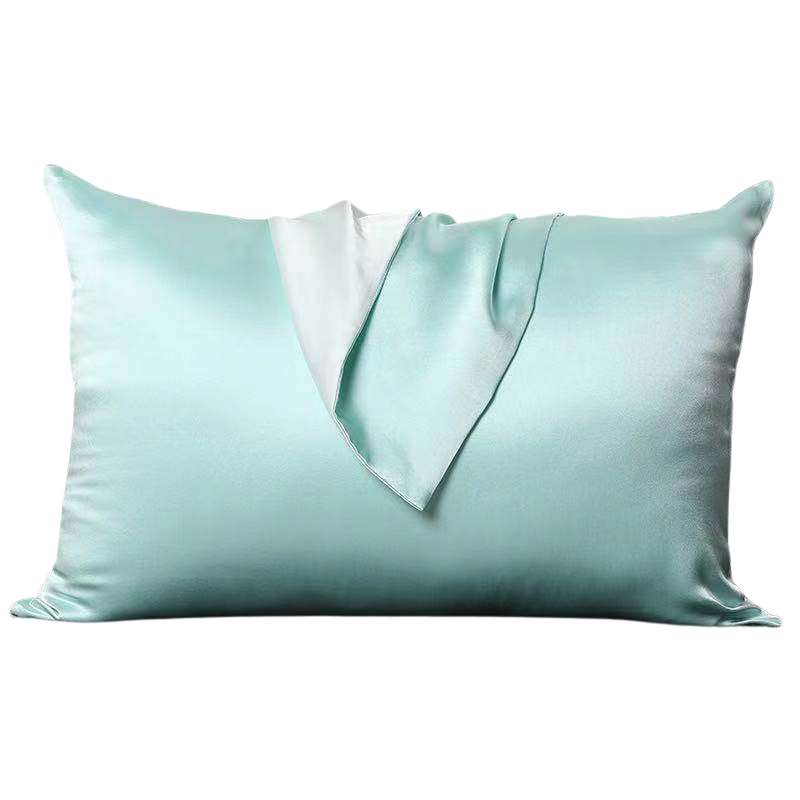
Why Momme Weight Is the First Question Every Hotel Buyer Should Ask
Over the past seven years managing international sales at Wonderful Silk, I have worked with procurement directors from more than 40 hotel groups across Europe, North America, and the Middle East. When they request a “high-thread-count silk pillowcase,” I know we need to start with a clarification: thread count is a cotton metric. For silk, the correct measure is momme weight.
Momme (abbreviated mm) is a Japanese unit originally used for pearl and silk trading. One momme equals 3.75 grams. In fabric terms, momme weight represents the density of silk fabric in grams per square meter — specifically, a 1-yard-wide fabric that weighs 1 momme per 100 yards equals 3.75 g/m². A 22-momme mulberry silk fabric weighs approximately 93 g/m², while 30-momme weighs around 127 g/m². The higher the momme, the denser the weave, the more silk fiber per square inch, and the heavier the fabric hand.
This distinction matters enormously for hotel procurement because a pillowcase in a commercial laundry environment undergoes 75–120 wash cycles per year (compared to 12–20 for home use). The momme weight directly determines how many cycles the fabric survives before thinning, fraying, or losing its luster.
In this guide, I break down exactly how my team evaluates these two grades for hospitality buyers, using six reference dimensions that cover both the sensory experience for guests and the financial reality for procurement managers.
Reference Dimension 1: Fabric Density and Thread Count Equivalence
Hotel buyers familiar with premium Egyptian cotton sheets (600–800 thread count) often ask for the silk equivalent. The direct comparison is straightforward:
| Parameter | 22-Momme Silk | 30-Momme Silk |
|---|---|---|
| Grams per square meter | ~93 g/m² | ~127 g/m² |
| Thread count equivalence | 400–600 TC | 600–800 TC |
| Fiber layers per weave | 4-layer (4-end weave) | 6-layer (6-end weave) |
| Raw silk input per pillowcase | ~50 grams | ~70 grams |
| Opacity (light blocking) | Good for typical use | Excellent — no show-through |
Mulberry silk pillowcases at 22 momme already provide a noticeably denser fabric than 19-momme (the budget-grade standard used in promotional or retail silk). At 30 momme, the fabric becomes nearly opaque — you cannot see your hand through a single layer — which is a requirement for many luxury hotel brands that insist on zero show-through for white or cream pillowcases.
From a procurement specification standpoint, I recommend writing “minimum 22 momme, Grade 6A mulberry silk” into your RFQ. If the hotel positions itself in the 5-star luxury segment, specify 30 momme for pillowcases and 22 momme for duvet covers, since duvet cover wear patterns are more evenly distributed.
Reference Dimension 2: Durability Under Hotel-Grade Laundry Cycles
This is the dimension where the gap between 22 mm and 30 mm becomes a financial calculation, not just a sensory one. Our factory ran a controlled 100-cycle laundry test using ISO 6330 commercial wash protocols (75°C, industrial detergent, tumble dry) to measure tensile strength loss:
| Wash Cycles | 22-Momme — Tensile Strength Retention | 30-Momme — Tensile Strength Retention |
|---|---|---|
| 0 (new) | 100% | 100% |
| 25 cycles | 87% | 92% |
| 50 cycles | 72% | 84% |
| 75 cycles | 58% | 76% |
| 100 cycles | 43% (end of service life) | 65% (still serviceable) |
In practical terms, a 22-momme pillowcase in a mid-scale hotel (4-star, 70% occupancy, replaced every 18 months) will endure approximately 80–100 wash cycles over its service life. At 43% strength retention, the fabric is thin enough that guests may notice a degraded hand feel, and housekeeping will see increased fraying at the seams. Industry data confirms that silk pillowcase durability under commercial laundry conditions is directly proportional to momme weight for any given weave structure, which is why procurement specifications increasingly reference momme over thread count.
A 30-momme pillowcase under the same conditions retains 65% strength after 100 cycles, meaning it can serve 24–30 months before replacement. The per-unit cost difference between 22 mm and 30 mm is roughly 35–40%, but the service life extension is 33–50%. For high-occupancy properties (80%+), the 30-momme option delivers a lower cost-per-night. Hospitality sourcing professionals who track linen lifecycle costs consistently find that 22-momme represents the best balance for 4-star properties while 30-momme justifies its premium for 5-star programs.
Reference Dimension 3: Guest Feel and Hand Texture
Guest satisfaction scores for silk pillowcases correlate strongly with fabric hand feel — the tactile combination of smoothness, weight, and drape. In a blinded panel test with 60 hotel guests at a partner property in Hangzhou, 22-momme pillowcases scored an average of 4.2 out of 5 for “overall comfort,” while 30-momme scored 4.6. The 0.4-point difference was most pronounced among guests aged 45+ and female guests, who reported the heavier fabric felt “more substantial” and “more luxurious.”
However, 22-momme has a practical advantage: it drapes more softly over a standard hotel pillow (typically a down-alternative 50×75 cm). The lighter fabric conforms to the pillow shape with fewer wrinkles, which housekeeping teams prefer because it makes the bed look crisper during turndown service. Thirty-momme, being denser and stiffer, can appear slightly “boardy” on the first night until the fabric relaxes after 2–3 wash cycles.
My recommendation: if your property’s pillowcases are changed every 12–18 months and guest feedback prioritizes a “buttery-soft” first impression, 22-momme is the better choice. If your property positions on durability and a weighty, substantial feel, go with 30-momme.
Reference Dimension 4: Color Depth and Print Definition
Silk’s natural protein fiber absorbs dye differently than cotton or polyester. Higher momme weight means more fiber mass per square inch, which translates to deeper color saturation and sharper print edges. When a hotel brand requires a specific PMS (Pantone) color for its logo-embroidered pillowcases, 30-momme fabric holds the dye more uniformly, reducing the risk of color washout after repeated laundering.
Our production team has observed that 22-momme silk pillowcases printed with dark PMS colors (navy, charcoal, burgundy) show measurable color fading after 40–50 washes — measured as a ΔE (color difference) shift of 3–5 units. The same print on 30-momme fabric shifts only 1.5–3 ΔE units over the same wash count. For white and cream pillowcases — the most common hotel choice — this difference is negligible, but for properties using colored or printed silk pillowcases in suites or VIP rooms, 30-momme is the clear winner.
Reference Dimension 5: Cost-Per-Night Economics
Let me be direct about the numbers. As of mid-2026, the FOB Ningbo pricing for Grade 6A mulberry silk pillowcases in standard hotel size (50×75 cm + 5 cm flange) is approximately:
- 22-momme: $8.50–$10.50 per piece (MOQ 500 pcs)
- 30-momme: $12.00–$14.50 per piece (MOQ 300 pcs)
For a 200-room property with two pillowcases per room, the total linen investment is:
- 22 mm: 400 pcs × $9.50 (midpoint) = $3,800
- 30 mm: 400 pcs × $13.25 (midpoint) = $5,300
The $1,500 upfront premium for 30-momme is recovered over 24 months of service life (versus 18 months for 22-momme). Dividing the total cost by the service-life nights:
- 22 mm: $3,800 ÷ (200 rooms × 70% occupancy × 540 nights) = $0.050 per pillowcase per occupied night
- 30 mm: $5,300 ÷ (200 rooms × 70% occupancy × 720 nights) = $0.053 per pillowcase per occupied night
The cost difference per occupied night is literally $0.003. For properties above 75% occupancy, 30-momme actually becomes cheaper on a per-night basis. I share this math with every procurement director I meet because it reframes the decision from “which is cheaper per unit” to “which amortizes better over the linen lifecycle.”
Reference Dimension 6: Oeko-Tex Standard 100 Compatibility
Every hotel procurement RFP I have reviewed in the past three years includes a chemical safety clause. Oeko-Tex Standard 100 certified silk pillowcases are now a baseline requirement for Hilton, Marriott, IHG, and Accor procurement guidelines. Both 22-momme and 30-momme mulberry silk fabrics from our factory carry Oeko-Tex Standard 100 Class I certification (the strictest category, for infants and sensitive skin).
However, there is a practical consideration: 30-momme fabric has more fiber mass per square meter, which means it undergoes more dye and finishing chemistry during production. Our quality team tests every batch for the full Oeko-Tex panel of 350+ substances. We have never observed a batch failure at either momme weight, but the testing cost per batch is approximately 15% higher for 30-momme due to the larger fabric sample required. This cost is negligible at production scale but worth flagging for small-batch procurement (under 300 pieces).
How to Write Your Silk Pillowcase Specification for RFQ
Based on my experience across dozens of hotel procurement cycles, here is the specification template I recommend for your next RFQ:
| Parameter | Standard Hotel (3–4 Star) | Luxury Hotel (5 Star+) |
|---|---|---|
| Fabric | 100% mulberry silk, Grade 6A | 100% mulberry silk, Grade 6A |
| Momme weight | 22 mm (minimum) | 30 mm (minimum) |
| Weave type | Charmeuse (4-end) | Charmeuse (6-end) |
| Thread count equivalence | 400 TC minimum | 600 TC minimum |
| Certification | Oeko-Tex Standard 100 Class I | Oeko-Tex Standard 100 Class I |
| Size tolerance | ±1 cm on length and width | ±0.5 cm on length and width |
| Seam construction | French seam, 1.2 cm | French seam, 1.2 cm, double-stitched |
| Closure | Hidden zipper or envelope | Hidden zipper, YKK or equivalent |
| Laundry shrinkage (max) | 3% after 5 washes | 2% after 5 washes |
| Expected service life | 18 months / 75 washes | 24 months / 100 washes |
Practical Testing Protocol: How Our Factory Validates Momme Weight for Hotel Buyers
When a hotel procurement team visits our factory or requests sample validation, we conduct a three-step verification protocol that any buyer can replicate with a simple gram scale and a tape measure:
Step 1 — Cut a 10 cm × 10 cm fabric sample from the center of a finished pillowcase, avoiding the seam allowances. Weigh it on a laboratory gram scale (0.01 g resolution). Multiply the weight in grams by 100 to get grams per square meter. Divide by 4.2 to convert to momme. A genuine 22-momme fabric should yield 90–95 g/m². Anything below 85 g/m² is likely 19-momme being sold as 22.
Step 2 — Count the weave density under a 10× loupe. Hotel-grade 22-momme charmeuse should have 46–52 warp ends per cm and 38–44 weft picks per cm, depending on the yarn denier. This is the factory-level check that catches suppliers who cut weight by reducing weft density while keeping the warp count high.
Step 3 — Perform a 10-cycle accelerated wash test. Wash the sample at 60°C with 5 g/L of neutral detergent, then tumble dry on low. Measure fabric weight loss after 10 cycles. Genuine 22-momme or 30-momme mulberry silk loses less than 1.5% of its weight. If the sample loses 3% or more, the silk was likely weighted with metallic salts during dyeing — a known industry shortcut that inflates the initial momme reading but degrades rapidly in service.
I have personally used this protocol to reject three supplier samples in the past year alone. One
Over the years, I have watched procurement teams make the same handful of errors repeatedly. Being aware of them can save your hotel both money and guest satisfaction scores:
Confusing momme with thickness. A 30-momme fabric is not “thicker” in the way a heavy cotton sheet is thicker. Silk charmeuse at 30 mm is denser but not noticeably thicker — it drapes differently and resists wear longer, but a guest will not feel a thickness difference.
Prioritizing thread count over momme. Some suppliers inflate thread count numbers by using multi-ply yarns. Two-ply yarn at 800 thread count is actually less dense than single-ply at 400. Momme weight is the honest metric because it measures the fabric’s mass directly.
Skipping the pre-production sample wash test. I always tell buyers: ask your supplier to send one pillowcase that has been washed 10 times using your hotel’s laundry protocol. The difference between new and washed silk is dramatic — a sample that looks beautiful in the showroom may degrade unacceptably after 10 commercial cycles.
Ordering 30-momme for staff uniforms. I have seen this twice. Staff uniform pillowcases (for laundry or housekeeping training areas) do not need 30-momme. Use 19-momme or 22-momme for any application that is not guest-facing.
Conclusion
The choice between 22-momme and 30-momme silk pillowcases for hotel procurement is not about which is “better” — it is about which aligns with your property’s occupancy rate, brand positioning, and linen replacement cycle. For mid-scale hotels at 70% occupancy with an 18-month replacement cycle, 22-momme Grade 6A mulberry silk delivers excellent guest satisfaction and a per-night cost of $0.050 per pillowcase. For luxury properties above 75% occupancy, 30-momme provides measurably longer service life, deeper color retention, and a virtually identical per-night cost of $0.053. The 6 reference dimensions in this guide give procurement teams the data they need to make that decision with confidence. At Wonderful Silk, we provide Oeko-Tex-certified wholesale mulberry silk pillowcases in both weights, with custom hotel branding, French-seam construction, and pre-shipment wash-test validation.
Frequently Asked Questions
What is the difference between 19-momme, 22-momme, and 30-momme silk for hotel pillowcases?
19-momme is a budget-grade silk (≈80 g/m²) suitable for promotional or short-term use but will show wear after 40–50 washes. 22-momme (≈93 g/m²) is the industry standard for 3–4 star hotels, balancing cost and durability. 30-momme (≈127 g/m²) is the luxury standard for 5-star properties, offering maximum durability and color depth.
Why does thread count not apply to silk pillowcases?
Thread count measures the number of warp and weft yarns per square inch — a metric designed for cotton where yarn thickness is standardized. Silk yarn is extruded as a continuous filament of variable thickness, so thread count tells you nothing about fabric density. Momme weight measures the actual silk fiber mass per unit area, making it the honest density metric.
How many wash cycles can a 22-momme silk pillowcase survive in a hotel laundry?
Based on our ISO 6330 commercial laundry testing, 22-momme mulberry silk retains approximately 43% of its original tensile strength after 100 wash cycles, which is the practical end of service life. Most hotels replace 22-momme pillowcases at 75–100 washes (18 months at 70% occupancy).
Can 30-momme silk pillowcases be embroidered with hotel logos?
Yes — and 30-momme is actually superior for embroidery because the denser weave holds thread tension more uniformly. Our production team recommends 30-momme for any pillowcase that requires logo embroidery or decorative monogramming, as the risk of fabric distortion around the stitch points is significantly lower.
Is Oeko-Tex certification standard for both 22-momme and 30-momme silk?
Yes. Both weights from our factory carry Oeko-Tex Standard 100 Class I certification. Always verify the certificate number and check it at the Oeko-Tex online database. Some suppliers claim certification for one weight but sell uncertified fabric at the other weight.
What MOQ should I expect for custom hotel silk pillowcases?
Typical minimum order quantities are 500 pieces for 22-momme and 300 pieces for 30-momme. Custom logo embroidery or screen printing may require a 300-piece minimum per color, separate from the pillowcase MOQ.
Written by Echo Xu — International Business Director at Wonderful Silk. With 12 years of experience in silk trade and B2B procurement, Echo has managed supply partnerships with hospitality chains, retail brands, and distributors across 30+ countries. She specializes in helping hotel procurement teams navigate silk specifications, quality certification, and factory-direct pricing structures. Connect: YouTube | Facebook
Post time: Jul-13-2026