
Inside the Factory: Premium Headband Quality Control
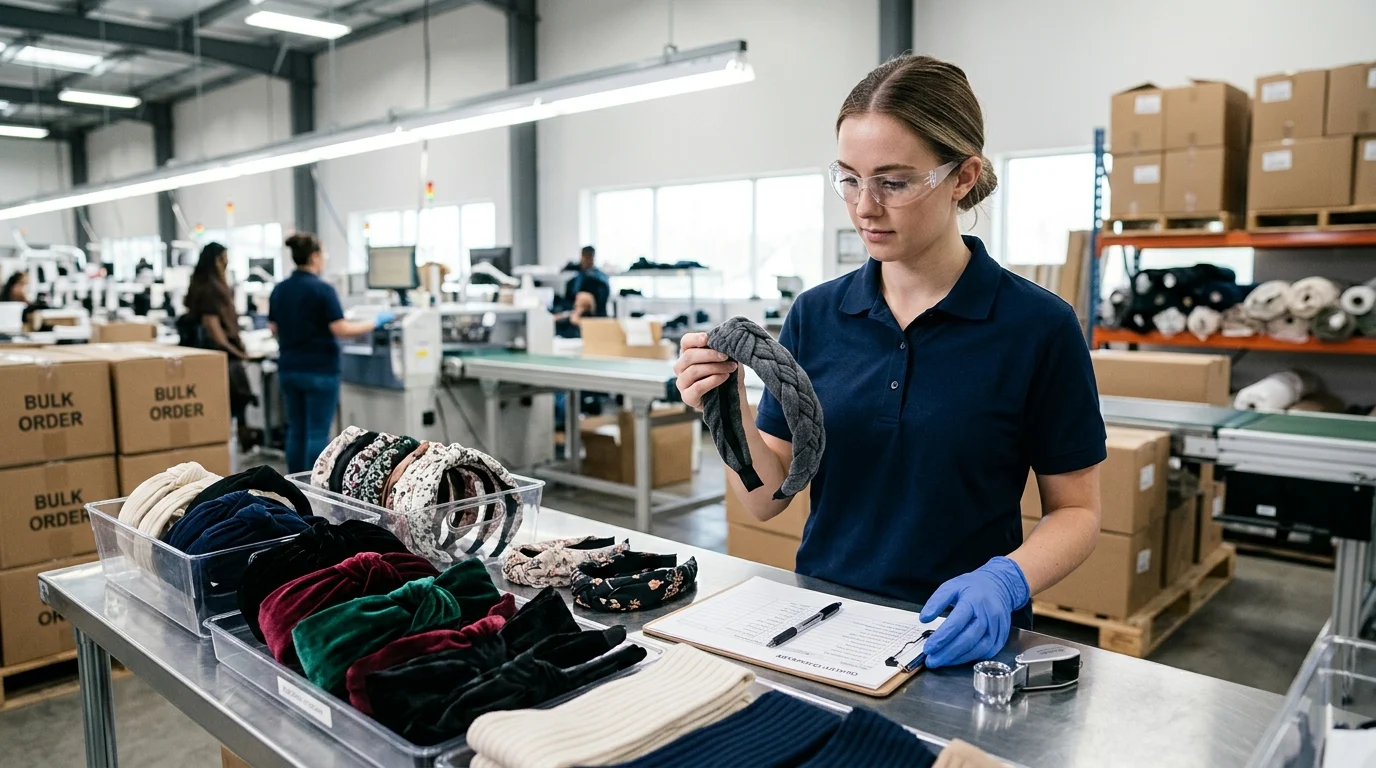
Why Headband Quality Control Matters for B2B Margins and Brand Risk
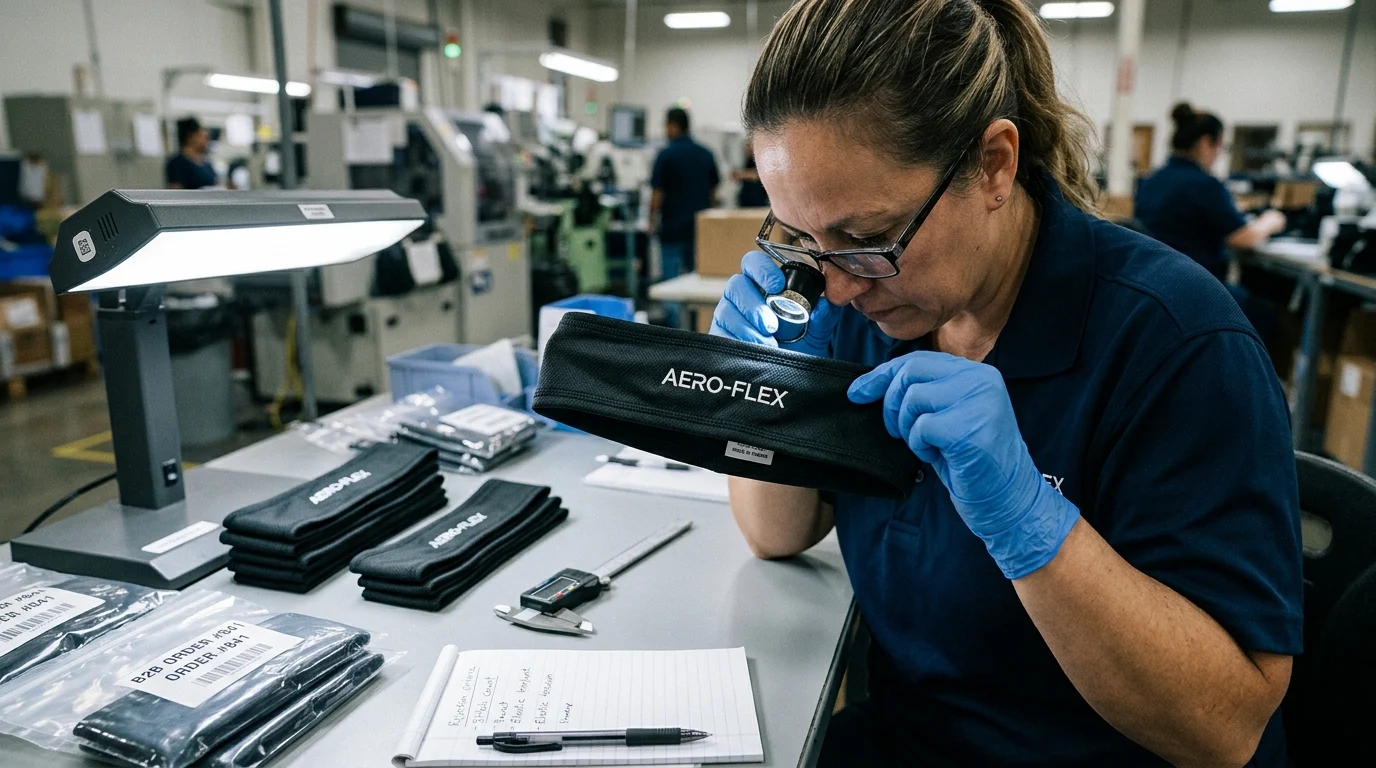
When I walk a factory floor, I see firsthand how easily a simple product can turn into a procurement nightmare. For B2B wholesale buyers, a headband often seems like just a basic loop of fabric. In reality, it’s an engineered textile product that sits directly on a customer’s skin, absorbs sweat, and must stretch thousands of times without losing its shape. If your quality control isn’t dialed in, that simple loop of fabric becomes a massive liability.
I always remind clients that quality control isn’t just about aesthetics; it’s about protecting your margins. When you’re ordering tens of thousands of units, a 5% defect rate doesn’t just mean losing 5% of your inventory. It means you’re paying freight, customs, and warehousing on literal garbage. Worse, if those defective units make it to your retail partners, the financial blowback can be severe.
Brand risk is the invisible cost of poor QC. In today’s hyper-connected retail environment, a batch of headbands that bleed dye onto a user’s forehead during a workout will result in viral negative reviews. Once your brand equity takes a hit, winning back consumer trust—and the shelf space of major distributors—is an uphill battle. Let’s break down exactly where these risks hide and how to mitigate them.
QC impact on returns, chargebacks, and complaints
When supplying big-box retailers or major e-commerce platforms, chargebacks are a constant threat. If your headbands arrive with incorrect barcode labels, polybags that rip, or sizing that falls outside agreed tolerances, retailers will hit you with hefty penalties. Beyond chargebacks, consumer returns eat directly into your net profit margin. High return rates trigger algorithm downgrades on digital marketplaces and can lead to delisting from physical retail channels.
Common factory-stage failures in headband production
In my experience, the most frequent factory-stage failures happen during cutting and sewing. Sizing inconsistencies are rampant—if the fabric isn’t tensioned correctly before cutting, the final headband might be an inch too tight. Other common failures include snapped elastic fibers (often caused by using the wrong needle size), poor colorfastness that leads to dye bleeding, and uneven stitching that causes the seam to unravel after the first wash.
What buyers should require before volume orders
Before you even think about wiring a 30% deposit for a volume order, you need a locked-in Pre-Production Sample (PPS). Never greenlight mass production without holding the PPS in your hands. Additionally, provide a comprehensive Tech Pack that outlines exact tolerances for measurements, seam types, fabric weight (GSM), and Pantone color codes. Finally, agree on an Acceptable Quality Limit (AQL) standard in writing so the factory knows exactly how you will judge the final shipment.
How to Evaluate Headband Materials, Construction, and Performance
When dealing with OEM Hairbands, evaluating the raw materials is your first line of defense. You cannot build a premium product out of sub-par yarn. Even the best sewing facility in the world can’t fix a fabric that fundamentally lacks stretch recovery or bleeds color the moment it touches sweat.
Evaluating construction requires looking at the product inside out. Turn the headband inside out and inspect the seams. Are they bulky? Are the thread tails properly secured? The way a factory finishes the unseen parts of a garment tells you everything you need to know about their overall manufacturing culture.
Performance testing should mimic real-world abuse. If you are importing athletic headbands, you need to know how the fabric reacts to friction, saline (sweat), and tension. This isn’t guesswork; it requires structured evaluation protocols.
Fabric weight, elasticity, seam strength, and colorfastness checks
Require suppliers to confirm fabric weight (GSM) using a circular fabric cutter and scale. For elasticity, conduct pull tests to ensure the band stretches to a specific length without the seams popping. Colorfastness is evaluated through dry and wet crocking tests—rubbing a white cloth against the dyed fabric to see if color transfers.
Comparing cotton, polyester, nylon, bamboo, and blends
| Material | Best For | Pros | Cons |
|---|---|---|---|
| Cotton | Casual/Fashion | Soft, breathable, cheap | Holds moisture, loses shape |
| Polyester | Athletics | Wicks sweat, holds color, durable | Can retain odors if untreated |
| Nylon | Premium Activewear | Extremely smooth, durable, great stretch | More expensive than polyester |
| Bamboo | Eco/Lifestyle | Ultra-soft, naturally antimicrobial | Slower to dry, higher cost |
Trim, logo application, edge finishing, and packaging consistency
Logos are a frequent failure point. Heat transfers can crack if the fabric stretches too much, while embroidery can cause irritation on the forehead if not backed properly. Edge finishing must be smooth—raw edges that fray will immediately trigger returns. Finally, ensure the packaging matches the premium nature of the product; a high-end nylon blend shouldn’t be stuffed into a flimsy, cloudy polybag.
How Factory QC Works from Incoming Materials to Final Inspection
To understand why your orders succeed or fail, you need to understand the lifecycle of a Headband Production Line. Quality control is not a single event that happens right before the goods are loaded onto a truck. It is a continuous, multi-stage process integrated into every step of manufacturing.
When auditing a factory, look for their adherence to strict Manufacturing Standards. A reliable partner operates with total transparency, allowing third-party inspectors to pull samples at any point in the production cycle. If a supplier tells you they only check quality at the very end, run the other way.
Catching a defect early saves time and money. Finding out that a fabric roll is the wrong color before it is cut costs almost nothing to fix. Finding out after 10,000 headbands have been sewn, packaged, and cartoned is a financial disaster.
Incoming material inspection and accessory approval
This is known as IQC (Incoming Quality Control). When the factory receives fabric rolls, elastic, and thread from sub-suppliers, they must inspect them. They should use light boxes to check fabric for weaving defects, holes, or color inconsistencies. Accessories like care labels and hangtags must also be verified against the approved tech pack before hitting the assembly line.
In-line QC checkpoints for sewing, sizing, and finishing
In-Process Quality Control (IPQC) happens directly on the sewing floor. Roving inspectors should pull units right off the sewing machines to check stitch tension and sizing. Because headbands are small and stretchy, operators can easily sew them too tight. Frequent in-line checks ensure that if a machine’s tension is off, it’s corrected after 5 bad units, not 500.
Final random inspection, AQL, and carton audits
Once production is 100% complete and at least 80% packed in cartons, execute the Final Random Inspection (FRI). Using standard AQL tables (typically AQL 2.5 for major defects and 4.0 for minor), inspectors pull a statistically significant sample size. They check the product itself, but also verify carton markings, barcode scannability, and gross weight to ensure smooth customs clearance.
Compliance, Testing, and Documentation for Headband Wholesale
Navigating the regulatory landscape is arguably the least glamorous part of wholesale sourcing, but it’s absolutely vital. Depending on where you are importing your headbands, you face a web of chemical, safety, and labeling regulations. Customs authorities don’t care if your product looks great; if the paperwork is wrong, your goods will sit at the port racking up demurrage fees.
Buyers who try to bypass formal testing to save a few hundred dollars often lose entire shipments to customs seizures. Furthermore, if you are selling B2B into major retail chains, their compliance departments will demand a paper trail. You need to have all documentation organized before the purchase order is even issued.
Different markets have different triggers. The EU is heavily focused on chemical safety, while the US places a strong emphasis on accurate fiber content labeling and consumer safety standards.
Chemical, labeling, fiber content, and safety requirements
For the US market, the FTC requires exact fiber content percentages, country of origin, and care instructions permanently attached to the textile. If selling into California, you must ensure compliance with Proposition 65 regarding restricted chemicals. In Europe, REACH compliance is non-negotiable, meaning your dyes cannot contain banned azo colorants or heavy metals.
Test reports and factory documents for retail channels
Major retailers (like Target, Walmart, or Sephora) will not accept headbands without certified third-party test reports. You will typically need to hire labs like SGS, Intertek, or TÜV Rheinland to conduct wash tests, flammability tests (if applicable), and chemical screenings. Keep these reports updated annually, as retail buyers will ask for them during vendor onboarding.
Compliance needs by market and order type
If sourcing medical or industrial headbands, you might face additional safety PPE requirements. Children’s headbands require strict adherence to CPSIA regulations in the US, mandating lead and phthalate testing. Always map out the specific compliance needs of your target market before finalizing the product spec with your factory.
Sourcing, MOQ, Packaging, and Logistics Questions for Buyers
You can engineer the perfect premium headband, but if the logistics and sourcing terms aren’t favorable, your cash flow will suffer. Sourcing headbands efficiently means balancing the factory’s need for volume with your need for flexibility and margin protection.
Always approach negotiations looking at the Total Cost of Ownership (TCO). A factory might quote a fantastic FOB price, but if their Minimum Order Quantity (MOQ) forces you to tie up all your capital, or if their packaging is so inefficient that you end up shipping mostly air across the Pacific, that “cheap” price becomes very expensive.
Packaging and logistics require precision. A headband is a low-volume, high-density product. You want to pack as many as safely possible into a master carton without crushing the retail packaging. Every cubic meter (CBM) of shipping space counts toward your landed cost.
MOQ, lead time, replenishment, and sample approval
Standard MOQs for premium headbands usually hover around 1,000 to 3,000 pieces per colorway, dictated mostly by the fabric mill’s minimum dye batch. Lead times typically range from 30 to 45 days after PPS approval. For fast-moving wholesale programs, negotiate replenishment lead times upfront—factories can often reduce repeat order times to 20 days if they hold greige (undyed) fabric in stock.
Packaging formats, barcodes, carton specs, and master packs
Retail-ready packaging is crucial. Whether it’s a header card, a recycled cardboard sleeve, or a frosted EVA zip bag, it must protect the product and display the UPC clearly. Master export cartons should be 5-ply corrugated cardboard to withstand rough transit. Limit master carton weight to 15kg (about 33 lbs) to prevent warehouse handling damage and ensure worker safety.
Shipping mode, Incoterms, carton utilization, and landed cost
Air freight is fast but destroys margins for cheap textiles; use it only for urgent samples or high-ticket premium athletic bands. Sea freight is standard. Always calculate your carton utilization to maximize space in a 20ft or 40ft container. Negotiate FOB (Free on Board) terms to maintain control over your freight forwarder, giving you clearer visibility into your true landed cost per unit.
Using a Headband QC Checklist to Compare Suppliers
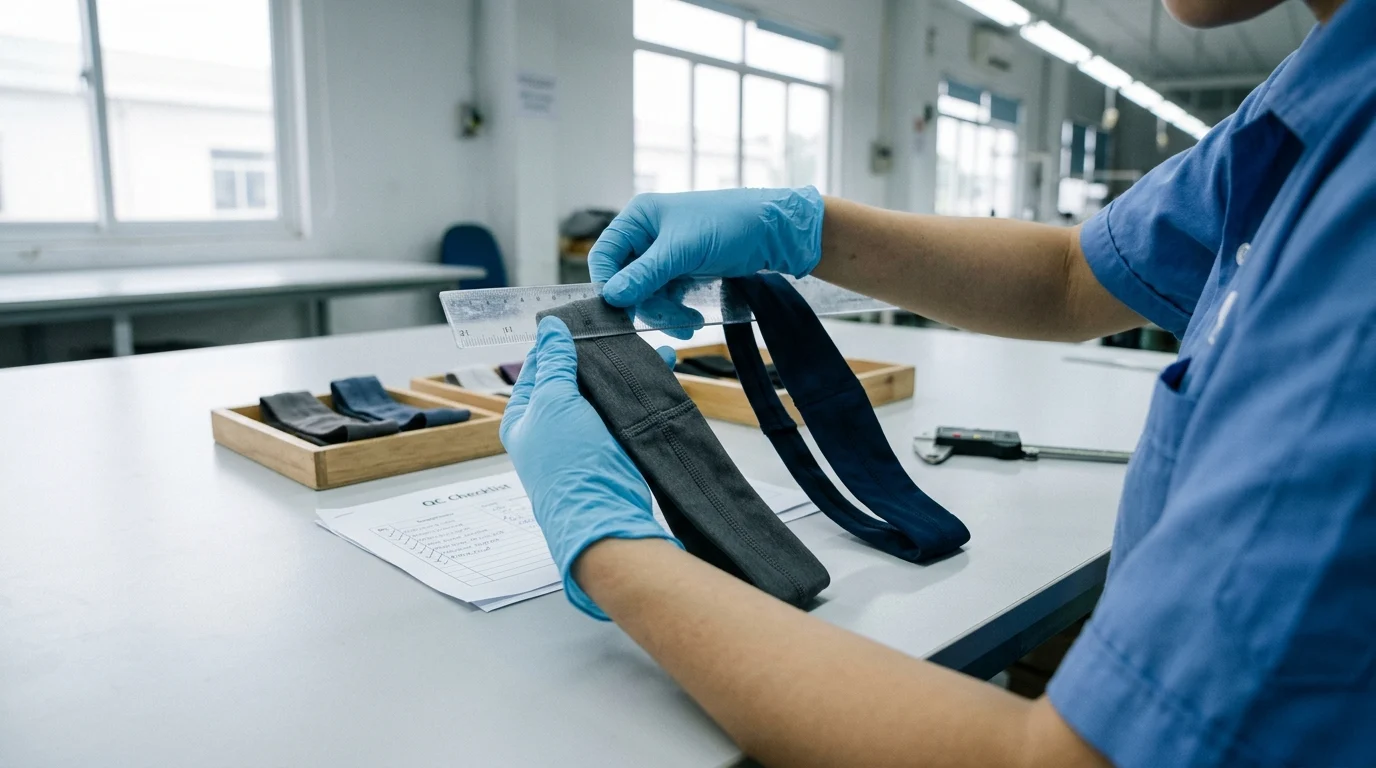
When sourcing a new supplier, you are essentially interviewing them for a long-term partnership. You cannot rely on profile pictures or slick sales pitches. Use a standardized QC checklist to objectively score and compare factories side-by-side.
This checklist removes emotion from sourcing. It forces you to look at their quality management systems, communication speed, and verifiable production capacity. If a factory scores poorly on the pre-production audit, it doesn’t matter how cheap their quote is—don’t use them.
Having a checklist also sets the tone with the supplier. When they see a structured, professional approach to quality control, they realize you are a serious buyer. They will naturally put their better operators on your production line and pay closer attention to your specs.
Supplier scorecard: quality system, communication, and capacity
Score suppliers on a scale of 1 to 5 in key areas. Do they have ISO 9001 certification? Do they communicate in clear English and respond within 24 hours? What is their monthly output capacity, and how much of it is already booked? A factory operating at 99% capacity is likely to rush your order, leading to quality drops.
Pre-production, in-line, and pre-shipment checklist items
Your checklist should be divided by stages.
- Pre-production: Are yarn specs verified? Are color lab dips approved under D65 light?
- In-line: Are sizing jigs being used on the sewing floor? Is needle policy enforced (finding broken needles before issuing new ones)?
- Pre-shipment: Does the final product match the PPS? Are carton markings correct? Did the shipment pass AQL 2.5 inspection?
Comparing factory capability, defect rates, and total cost
Don’t just compare unit prices; compare capability and historical defect rates. A factory quoting $0.85 per unit with a 5% historical defect rate and poor communication is vastly inferior to a factory quoting $0.95 with a 0.5% defect rate and stellar QC documentation. Factor the cost of managing the relationship and replacing defective goods into your final decision.
Key Takeaways
- Wholesale sourcing and supply-chain implications for Headband
- Specifications, compliance, and commercial terms buyers should validate
- Actionable recommendations for distributors and procurement teams