
Why Silk Print Scarf Promotions Will Drive B2B Growth in 2026
The reason is simple: a beautifully designed silk scarf bridges the gap between a promotional giveaway and a premium retail product. When you hand a client or an employee a cheap plastic gadget, it usually ends up in the trash. When you hand them a custom silk accessory, it becomes a wardrobe staple. This shift in buyer psychology is exactly why incorporating these items into your 2026 catalog is a strategic move for long-term growth. For distributors and importers, this isn’t just about selling a piece of fabric; it’s about selling an experience. High-end textiles offer excellent margin potential because the perceived value vastly outpaces the actual manufacturing cost, especially when sourced efficiently. Let’s break down exactly why this category is primed to drive your B2B growth over the next few years. Across the board, there is a massive uptick in demand for sustainable, high-quality corporate gifts. Wholesale buyers are reporting that their end-clients—whether they are luxury car dealerships, high-end cosmetic brands, or boutique hotels—want gifts that reflect their own brand prestige. Retailers are also looking for high-margin accessories to bundle with core products, while corporate channels are using silk scarves as part of executive onboarding kits and premium event takeaways. When you include Promotional Silk Products in a pitch, you immediately elevate the entire order’s average value. A client who might have spent $10 a head on cotton totes can often be upsold to a $25-$30 silk scarf because the leap in perceived value is exponential. Furthermore, a well-designed scarf acts as a walking billboard. Unlike a branded mug that sits on a desk, a vibrant silk accessory is worn in public, extending brand visibility far beyond the initial unboxing. The signals for 2026 are pointing heavily toward “quiet luxury” and sustainable sourcing. Importers should note that buyers are asking fewer questions about “how cheap can we get this?” and more questions about fabric longevity, eco-friendly dyes, and ethical manufacturing. Distributors who position their silk scarf programs to align with these premium, conscientious market signals will easily outmaneuver competitors still peddling race-to-the-bottom promotional goods. Before you start firing off RFQs to overseas suppliers, you need to understand the technical language of silk. Procurement in this category requires a bit more finesse than ordering standard cotton t-shirts. If you don’t know your momme weight from your weave type, you’re going to end up comparing apples to oranges when the quotes roll in. I always tell procurement teams to treat silk sourcing like buying fine wine—the raw materials and the finishing processes dictate the final price. A deep understanding of these specs won’t just help you negotiate better rates; it will protect you from receiving a bulk order of stiff, poorly printed fabric that your clients will reject. Let’s dive into the core technical specifications you need to master to build a successful wholesale scarf program. Silk quality is graded on a scale, with 6A being the highest quality long-strand mulberry silk. The weight is measured in “momme” (mm); for scarves, 12mm to 16mm is the sweet spot for a fluid drape, while 10mm is more budget-friendly but delicate. You’ll also need to choose a weave: Silk Twill offers a classic, structured feel with diagonal ribbing (think Hermès), while Silk Satin (Charmeuse) provides a high-gloss finish. For printing, digital printing dominates B2B due to its ability to handle unlimited colors and complex gradients, though traditional screen printing is still used for solid, vibrant color blocks. Customization is where you add real value. The hem is a major differentiator: machine rolling is cost-effective and fast, but a hand-rolled hem is the hallmark of a true luxury scarf. You can also customize the care labels to include your client’s logo, ensuring the piece feels like a bespoke Custom Logo Scarf rather than a generic blank. Don’t forget about custom placement prints versus repeating monograms; the design layout drastically affects the cutting and sewing process. When you reach out to a factory, your RFQ must be bulletproof. Always request the specific silk grade (e.g., 6A Mulberry), the exact momme weight, the weave type, the printing method, and the hem finish. Additionally, ask for the color penetration rate on the reverse side of the scarf—digital prints often have a lighter back, and you need to know if the factory guarantees at least 70-80% penetration to ensure the scarf looks good from all angles. It’s completely natural for a client to ask, “Why should we pay for silk when we can print on polyester for a fraction of the cost?” As a B2B distributor, you need to be armed with the right arguments. It ultimately comes down to the intended use case and the lifetime ROI of the promotion. While polyester, cotton, and modal blends absolutely have their place in the promotional products industry, they serve entirely different masters. If your client is outfitting a street team for a one-day festival, sell them cotton. But if they are trying to impress VIP clients or outfit high-end front-of-house staff, silk is the only logical choice. Here is how silk stacks up against the alternatives, and how you can guide your buyers to the right material for their specific campaign. Silk is undeniably more expensive upfront, but the margins are significantly wider. You might buy a poly scarf for $3 and sell it for $6. A silk scarf might cost you $15, but because of its luxury status, you can easily wholesale it to corporate clients for $40 or more. MOQs for digital print silk have actually dropped in recent years—many factories will do 50 pieces per design—making it highly accessible. Lead times are generally 3-4 weeks for production, similar to polyester, but the margin dollars you put in the bank are vastly superior. Silk scarves are the ultimate closer for high-end demographics. They are perfect for airline and hospitality uniforms, where a touch of Corporate Identity Fashion sets the brand apart. I also see massive success in the cosmetics and fragrance industries, where silk scarves are used as “gift with purchase” (GWP) items to drive larger basket sizes. Financial institutions and real estate brokerages are also prime targets for executive holiday gifting. The devil is in the details when you transition from a digital mockup to a physical wholesale order. I’ve seen beautiful designs ruined because the buyer didn’t understand how the artwork would translate to the physical dimensions of the fabric, or because the packaging made a premium product look cheap. Managing the operational specs, understanding your minimums, and getting the packaging right are the three pillars of a smooth procurement cycle. If you nail these, you eliminate 90% of the friction between your factory and your end-client. Let’s break down the logistical specifications you need to lock in before you ever wire a deposit. Standard square sizes are typically 50x50cm (neckerchief), 70x70cm, or 90x90cm (classic foulard), while oblongs often run 50x170cm. Remember that hand-rolling a hem will eat up about 1.5cm of fabric on each side, so your artwork needs a proper bleed area. Color tolerance is another crucial factor; silk absorbs dye differently than paper, so a 5-10% color variance from a Pantone swatch is standard in the industry. Always set this expectation with your clients early. Thanks to industrial digital printing, MOQs are highly manageable. Expect a standard MOQ of 50 to 100 pieces per design. However, never skip the sampling stage. You should always pay for a “strike-off” (a physical sample of the printed scarf) which usually takes 7-10 days. This allows you to verify the fabric weight, hem quality, and color accuracy before green-lighting a 1,000-piece production run that will take an additional 20-30 days. How the scarf arrives is just as important as the scarf itself. If you ship a Branded Silk Scarf in a flimsy polybag, you kill the luxury vibe instantly. For corporate gifting, magnetic closure rigid boxes or elegant envelope sleeves with custom foil stamping are essential. For retail distribution, flat packing with a branded belly band or a custom hangtag is often preferred to save on volumetric shipping weight. Finding a supplier on a B2B directory is easy; finding a true manufacturing partner is incredibly difficult. Silk printing is an art form that requires specialized machinery, pristine factory conditions, and strict quality control. A factory that primarily prints cheap polyester banners is not going to magically produce Hermès-level silk scarves just because you ask them to. I always recommend a rigorous vetting process. You need a supplier who understands international trade, communicates clearly regarding defect rates, and stands by their work when things go wrong. Here is my playbook for cutting through the noise and finding a silk supplier who will actually protect your margins and your reputation. Look for factories located in traditional silk hubs (like Hangzhou, China), as they have the local supply chain to source raw 6A silk easily. Ask about their QA systems: do they inspect the raw fabric before printing, and do they have a dedicated team checking for pulled threads and print ghosting after finishing? Export experience is non-negotiable; they need to know how to pack and label goods for the US or EU markets without you having to hand-hold them through the process. Start with a highly detailed RFQ (as outlined earlier). Once you narrow down to two or three suppliers, order a stock sample just to feel their fabric and hem quality. If that passes, pay for a custom strike-off with your client’s artwork. Only when the strike-off is approved should you issue the bulk PO. Finally, always hire a third-party inspection service to perform a pre-shipment inspection (PSI) based on AQL standards before the final balance is paid. Don’t just look at the bottom-line unit price. A supplier offering a scarf for $12 with a 10% defect rate and zero communication is far more expensive in the long run than a supplier charging $14 who guarantees a 99% pass rate and handles your custom packaging in-house. Weigh their flexibility on MOQs, their willingness to remake flawed samples, and their transparency regarding production delays. The fastest way to ruin a profitable wholesale deal is to have your goods seized at customs because of a labeling error or an unpaid duty. Silk, being a premium agricultural textile, is subject to specific trade regulations that you cannot afford to ignore. Managing the logistics of a silk scarf import isn’t just about booking a freight forwarder. It requires a proactive approach to compliance, understanding your tax exposure, and protecting the fragile goods during transit. Let’s look at the critical compliance and logistics steps you need to manage to ensure your goods arrive safely and legally. If you are importing into the US or EU, your scarves must comply with strict chemical regulations (like REACH in Europe) ensuring azo-free dyes are used. Furthermore, customs agencies are ruthless about fiber claims. If a label says “100% Silk,” it better be exactly that, or you face heavy fines. Care labels must be permanently affixed and accurately depict washing instructions, country of origin, and the exact fiber content percentages. Because silk scarves are incredibly lightweight and have a high value-to-weight ratio, air freight is usually the most logical shipping mode, allowing you to bypass the volatile ocean freight market. Ensure your supplier uses double-walled, moisture-lined cartons to prevent water damage or crushing. Be acutely aware of the HS code for silk scarves (typically under heading 6214) and calculate your landed cost including import duties, which can be high for textiles. Always buy on clear Incoterms, preferably FOB or FCA, so you control the freight forwarder. To mitigate risk, build a buffer of 10-14 days into your client’s delivery timeline. Establish a clear Acceptable Quality Limit (AQL) with your supplier before production begins—typically a standard of AQL 2.5 for major defects (like dye spots or unraveled hems). By setting these expectations in writing and utilizing pre-shipment inspections, you significantly reduce the chance of claims and costly air-freight remakes. Silk scarves offer a unique opportunity because they don’t have a strict anchor price in the consumer’s mind. Depending on the presentation and the storytelling, a silk scarf can be perceived as a $50 item or a $250 item. Here are the strategies I use to build healthy, sustainable margins when rolling out a new silk accessory program. Different channels require different pitches. For luxury retail and airline uniforms, focus on durability, washability (like using a heavier twill), and long-term brand consistency. For corporate events and executive gifting, position the scarf as high-end Marketing Merchandise that serves as a memorable keepsake. Tailoring your pitch to the specific ROI of the channel allows you to command a premium price without pushback. Never give a client just one option. Create a “Good” tier (10mm silk habotai, machine hem, polybag), a “Better” tier (12mm silk twill, machine hem, standard envelope), and a “Best” tier (16mm silk twill, hand-rolled hem, premium magnetic gift box). Most clients will naturally gravitate toward the middle or top tier, instantly increasing your average order value and margin. To ensure the program isn’t just a one-off, help your client launch the item internally. Provide them with high-quality lifestyle photography of the scarf being worn in various styles (tied on a handbag, worn as a neckerchief). Educate them on the story of the silk—how it was sourced, the craftsmanship of the hand-rolled hem—so they can pass that story on to the end recipient. When the end-user loves the product, the client will reorder year after year. As we wrap up, I want to leave you with a quick-reference guide. When you are juggling dozens of promotional categories, it’s easy to lose track of the specific nuances of silk procurement. This checklist is designed to be your final sanity check before you present a silk scarf program to a major client or sign off on a factory PO. Keep these core principles in mind, and you’ll navigate the 2026 promotional landscape with ease. To recap: expect MOQs around 50-100 pieces for digital prints. Sampling will take about 7-10 days, and bulk production will take 20-30 days. Add another 7-10 days for air freight. If your client needs a custom silk scarf in two weeks, you need to turn the job down or pivot to a domestic blank supplier, because rushing overseas silk production always ends in disaster. You are always balancing a triangle of fabric quality, packaging elegance, and your own profit margin. If a client has a strict budget, do not compromise on the print quality or the 100% silk claim; instead, drop the momme weight slightly (from 14mm to 12mm) or switch from a rigid box to a beautiful cardstock envelope. Protect the core integrity of the product above all else. Before you launch, ask yourself: Do I have the right vector artwork? Have I selected the correct weave (Twill vs Satin) for the client’s brand aesthetic? Is the packaging aligned with the perceived value we are trying to create? And most importantly, have I vetted my factory’s quality control processes? Answer these confidently, and your silk scarf promotions will undoubtedly drive massive B2B growth. Related reading: Branded Silk Scarf
Why Silk Print Scarf Promotions Matter for B2B Growth
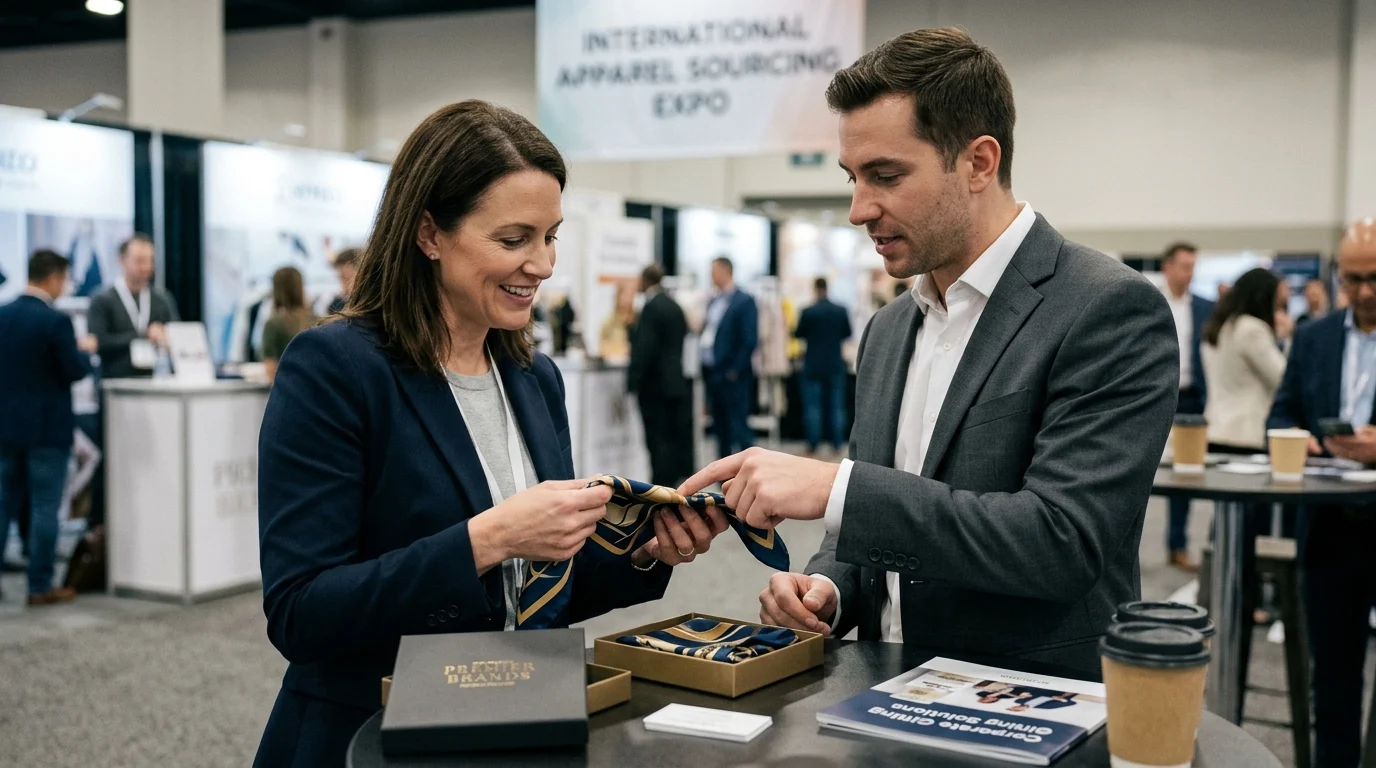
Demand trends across wholesale, gifting, retail, and corporate channels
How scarf promotions increase order value and brand visibility
2026 market signals for distributors and importers
Silk Print Scarf Basics for B2B Procurement
Fabric grade, momme, weave, print method, and finishing
Key customization options for wholesale programs
Core product data to request before quoting
Silk Print Scarves vs Other Promotional Accessories
Comparison with polyester scarves, cotton bandanas, and blends
Feature
100% Mulberry Silk
Polyester (Silk-feel)
Cotton / Bandana
Modal/Silk Blends
Feel & Drape
Superior, fluid, breathable
Static-prone, less breathable
Stiff, casual
Soft, slightly fuzzy
Perceived Value
Very High (Luxury)
Low to Medium
Low (Utility)
Medium to High
Print Quality
Exceptional detail/vibrancy
Good, but can look shiny
Matte, less sharp
Good, softer edges
Price Point
High ($$$)
Low ($)
Low ($)
Medium ($$)
Cost, perceived value, MOQ, lead time, and margin factors
Best-fit channels, customer profiles, and use cases
Specs, MOQ, and Packaging for Wholesale Orders
Sizes, hem types, print coverage, and color tolerances
MOQ, sampling stages, and production capacity
Packaging options including flat pack, gift box, and private label
How to Source the Right Silk Print Scarf Supplier
Factory capability, print consistency, QA systems, and export experience
Sourcing steps from RFQ to final inspection
How to compare suppliers on cost, risk, and flexibility
Compliance, Logistics, and Trade Risk Management
Dyes, labeling, fiber claims, and market requirements
Shipping mode, carton planning, duty exposure, and Incoterms
How to reduce delays, defects, and claims
How to Build Margin with Silk Print Scarf Promotions
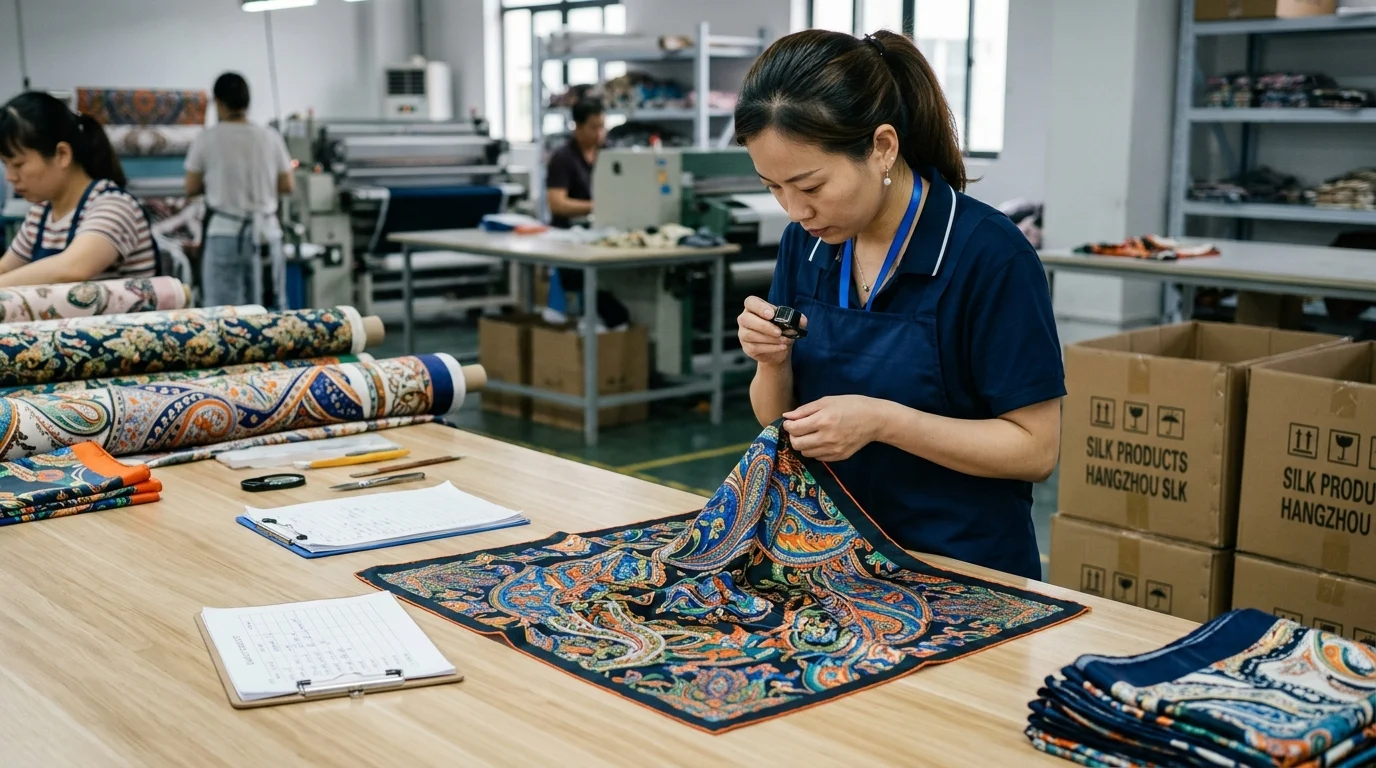
Channel strategies for gifting, retail, airlines, and events
Pricing with good-better-best tiers and bundles
Launch steps to improve ROI and reorder potential
FAQ and Buyer Checklist
MOQ, lead time, and sampling expectations
Balancing silk quality, print detail, packaging, and margin
Key decisions before launching a scarf program
Key Takeaways
Post time: Apr-13-2026