
TL;DR — The returns-side verdict
- Envelope closure reduces “pillow slips out” returns. The forgiving inner flap means the closure handles slightly oversized and slightly undersized hotel and home pillows without exposing the pillow.
- Hidden zipper reduces “pillow looks cheap” returns. The flush seam reads as a higher-end construction detail, which matters at the luxury price point where the customer is paying for the finish.
- The right closure depends on the dominant return reason in your channel. Mid-tier DTC and hotel procurement are usually lower-return on envelope. Luxury DTC and upscale-boutique hotel are usually lower-return on hidden zipper.
- Momme weight interacts with closure choice. Envelope typically runs at 19 momme, while hidden zipper benefits from 22 momme or higher to keep the zipper tape flush without puckering.
- Run a 50-piece test order of each closure in the same color and size, and compare return reasons over a 60 to 90 day window before committing to a single construction.
- A silk mill can produce both constructions on the same line. Lead time and MOQ structure are similar; the difference is in the cut-and-sew sequence, not the silk supply.
E-commerce brands that sell silk pillowcases usually make the envelope-versus-zipper decision once and live with the return-rate consequences for the next three years, because switching closures mid-collection resets the production line, the product photography, the size chart, and the customer review base. That is why the decision has to be made on data, not on which closure looks better in a hero photo. The relevant question is which closure produces fewer returns in the specific e-commerce channel the brand sells through, and the answer is rarely “both are the same.”
This article is the returns-focused comparison I share with e-commerce buyers who contact our mill about silk pillowcases. It is built around the two constructions we run on our Shengzhou production line — the envelope closure silk pillowcase and the pure silk hidden zipper pillowcase — with the broader factory tour serving as the production-side context for how both constructions are made. If you are choosing between the two for a new DTC launch, an existing hotel program, or an Amazon storefront refresh, the seven sections below will walk you through the failure modes, the return-reason mapping, and the channel-by-channel verdict.
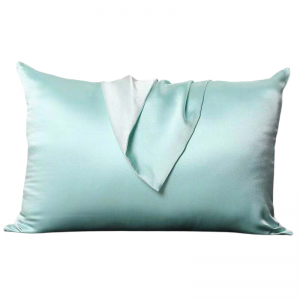 Envelope closure silk pillowcase, 19 momme mulberry silk, our default for hotel and mid-tier DTC orders. View envelope closure pillowcase →
The Returns Pattern E-Commerce Buyers See First
The first thing an e-commerce buyer notices when comparing the two closure styles is not the construction, the price, or the look in the photo; it is the return-rate distribution, and the two closures produce two completely different return-reason profiles. Once that pattern is visible, the closure decision usually resolves itself without further debate.
Envelope closure pillowcases tend to generate returns under one dominant reason code: “pillow slips out during sleep.” The closure is forgiving on the opening size, which is the strength, but the same forgiveness is the weakness when the inner flap is undersized or when the stitching at the fold loosens after a few wash cycles. The customer does not see a hardware failure; they see a pillow that worked its way out of the case, and they return the product as defective.
Hidden zipper pillowcases tend to generate returns under a different reason code: “closure hardware failure” or “looks cheap.” The zipper sits flush with the silk when it is correctly manufactured, which is the strength, but the same flush construction is the weakness when the slider is metal-on-silk, when the stitching tension is too tight, or when the zipper tape separates from the panel after a few wash cycles. The customer sees either a broken closure or a puckered seam, both of which read as construction defects.
The two return-reason profiles at a glance:
- Envelope closure dominant return: pillow slips out during sleep
- Hidden zipper dominant return: closure hardware failure or “looks cheap” finish
- Both closures share: color fading, momme misrepresentation, sizing mismatches, and seller-specific reasons
Envelope Closure Mechanics and Why It Forgives Pillow Size
Envelope closure works because the inner flap overlaps the opposite side of the opening by a generous margin, usually between 8 and 12 cm depending on the size of the pillowcase, which means the pillow corner is tucked under the flap instead of being held by a mechanical closure. This is the mechanical reason envelope closures forgive slightly oversized and slightly undersized pillows, and it is also the reason the closure is the default for hotel procurement.
The construction sequence is straightforward. The back panel of the pillowcase is cut slightly taller than the front panel, and the extra length folds over to form the inner flap. The fold is stitched along the side seams to lock the flap in place, and the overlap is the only thing holding the pillow inside the case. There is no hardware, no slider, and no zipper tape, which is why the closure is sometimes called “no closure” by hotel procurement teams.
The failure mode for envelope closure is at the stitching line. If the side seam is not reinforced, or if the inner flap is undersized for the pillow, the pillow can work its way out of the case during sleep. The fix is to specify a minimum flap overlap, a reinforced side seam stitch, and a momme weight that gives the fabric enough body to hold the pillow in place. A 19 momme mulberry silk is a common production point for envelope closure because it has enough body to hold the flap without adding bulk.
Hidden Zipper Mechanics and Why It Sits Flush
Hidden zipper closure works because the zipper coil is sewn into the seam allowance rather than on top of the fabric, which is why the closure sits flush with the silk panel from the outside and reads as a higher-end construction detail. The mechanical strength of the closure comes from the slider, the coil, and the tape, all of which have to be matched to the silk weight to avoid puckering. The care-label laundering energy efficiency claims that brands can pass on to consumers on the packaging are benchmarked against the ENERGY STAR laundering energy efficiency criteria.
The construction sequence is more demanding than envelope closure. The seam allowance has to be cut to the exact width of the zipper tape, the coil has to be sewn with a special hidden-zipper foot, and the slider has to be sized for the silk weight. A nylon coil zipper is the standard for silk pillowcases because the coil is flexible enough to sit in the seam without showing through the fabric. A metal slider is avoided on silk because the metal-on-silk interface is a known wear point that contributes to the “closure broke” return reason. The standardized test methods for silk fiber content, momme weight verification, and seam tensile strength are published under the ASTM textile testing standards.
The failure mode for hidden zipper is at the tape-to-fabric interface. If the stitching tension is too tight, the silk puckers around the seam. If the slider is metal-on-silk, the coil wears through the fabric after a few wash cycles. If the tape is too wide for the seam allowance, the zipper shows through the silk panel. All three failure modes are visible to the customer and all three generate a return. The fix is to specify nylon coil, plastic slider, hidden zipper foot stitching, and a momme weight of 22 or higher to give the silk panel enough body to hold the seam flat.
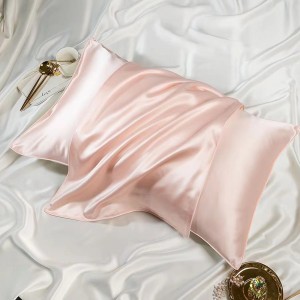 Pure silk hidden zipper pillowcase, 22 momme mulberry silk, our default for luxury DTC and upscale-boutique hotel orders. View hidden zipper pillowcase →
Five Failure Modes That Drive Returns In Each Style
The two closures produce two distinct failure-mode lists, and the failure modes are the operational vocabulary an e-commerce brand needs to read its own return data. Without the failure-mode list, the return reason codes look like noise; with the list, they map back to a construction decision.
| Failure Mode | Closure Type | Visible Customer Signal | Return Reason Code |
|---|---|---|---|
| Pillow slips out during sleep | Envelope | Pillow corner visible outside the case | “Defective” or “not as described” |
| Inner flap stitching loosens after wash | Envelope | Flap separates from back panel | “Quality issue” |
| Closure looks uneven or crooked | Envelope | Flap does not line up across the opening | “Looks cheap” |
| Zipper slider breaks | Hidden zipper | Slider separates from the coil | “Closure broke” |
| Silk puckers around the seam | Hidden zipper | Visible gathering around the zipper line | “Looks cheap” |
| Zipper tape separates from silk panel | Hidden zipper | Tape lifts away from the seam allowance | “Closure broke” |
| Metal slider wears through silk | Hidden zipper (only if metal) | Visible hole in the silk panel near the slider | “Quality issue” |
The two closures share the standard silk-pillowcase return reasons (color fading, momme misrepresentation, sizing mismatches), which is why the closure decision only matters when those standard reasons are not the dominant return trigger. When the closure-specific reasons dominate, the closure choice becomes the highest-leverage change the brand can make to its product page.
The Returns Math: Mapping Failure Mode to Return Reason
The returns math is the part of the conversation most e-commerce buyers want to skip, and it is also the part that decides whether the closure change pays for itself within a season. A closure change touches production, photography, copy, and review base, and the cost of that change is recovered only if the return rate on the dominant closure-specific reason drops by enough to offset the change cost.
The simplest way to run the math is to read the last 90 days of return reason codes for the current pillowcase SKU, identify the top three reason codes by volume, and check whether any of the top three are closure-specific. If “pillow slips out” or “looks cheap” is in the top three, the closure change is probably worth it. If the top three are color fading, sizing, or momme misrepresentation, the closure change will not move the needle and the brand is better off fixing the underlying issue first.
The second math is the sampling math. Run a 50-piece test order of each closure in the same color, and size, ship through the same channel to the same customer segment, and compare the return reasons over a 60 to 90 day window. A 50-piece test does not give statistical confidence, but it does give directional confidence, which is usually enough to commit to a single construction for the next production run.
Three-step returns math:
- Read 90 days of return reason codes for the current SKU and identify the top three reasons by volume.
- Check whether any of the top three are closure-specific (pillow slips out, looks cheap, closure broke).
- Run a 50-piece test order of each closure in the same color and size and compare the return reasons over a 60 to 90 day window before committing.
Which Style Wins for Which E-Commerce Channel
The channel-by-channel verdict is the part of the conversation that closes the decision, because the dominant return reason is usually a function of the customer segment rather than the closure itself. A luxury DTC customer and a hotel procurement manager are returning pillowcases for different reasons, even when the underlying product is the same.
| Channel | Recommended Closure | Typical Momme | Dominant Return Reason |
|---|---|---|---|
| Hotel procurement (mid-tier) | Envelope | 19 momme | Pillow slips out (housekeeping turnover) |
| Hotel procurement (upscale boutique) | Hidden zipper | 22 momme | Looks cheap (finish consistency) |
| Mid-tier DTC (Amazon, mid Shopify) | Envelope | 19 momme | Pillow slips out (size variance in home pillows) |
| Luxury DTC (boutique Shopify, Net-a-Porter tier) | Hidden zipper | 22 momme or 25 momme | Looks cheap (finish is the value proposition) |
| Wholesale to home textile retailers | Envelope | 19 momme | Mix of slip-out and finish |
| Wholesale to boutique hotel groups | Hidden zipper | 22 momme | Looks cheap (boutique finish standards) |
The table is directional, not absolute. A mid-tier DTC brand with strong photography and customer education around pillow sizing can run envelope closure at a much lower return rate than a mid-tier DTC brand with weak sizing copy, because the “pillow slips out” return is often triggered by the customer buying the wrong size in the first place. The closure is the backstop; the copy is the first line of defense.
Channel verdict in one sentence: Envelope for hotel and mid-tier DTC, hidden zipper for upscale boutique and luxury DTC. The closure is the backstop; the copy is the first line of defense.
Sourcing Both Styles From a Single Silk Mill
A silk mill that runs both constructions on the same production line is unusual in the trade, because most mills specialize in one closure or the other and treat the other as a custom order that bumps the lead time. Our Shengzhou facility runs both constructions as standard catalog offerings, because the cut-and-sew sequence is the only thing that changes between the two; the silk supply, the QC procedure, and the packaging are the same.
For an e-commerce brand that wants to sample-test both constructions, the operational sequence is straightforward. The brand requests a 50-piece test order of each closure in the same color and size. The mill ships the samples from the same silk lot, which means the momme weight, the color shade, and the silk hand-feel are matched across the two constructions. The brand then runs the samples through its normal e-commerce channel and compares the return reasons over the next 60 to 90 days.
The production order that follows the test order can then commit to one construction or keep both as catalog SKUs, depending on which return-reason profile the data supports. Keeping both as catalog SKUs is a useful strategy when the channel serves both mid-tier and luxury customer segments, because the brand can route the customer to the appropriate construction without forcing a single compromise.
Frequently Asked Questions
Which pillowcase closure reduces returns the most for e-commerce brands?
Envelope closure pillowcases typically reduce the “pillow slips out” return reason more than hidden zipper pillowcases, because the closure is forgiving on the opening size. Hidden zipper pillowcases reduce the “pillow looks cheap” return reason because the closure sits flush with the fabric. The right choice depends on which return reason is most common in the specific e-commerce channel. The fabric-level safety baseline that supports both closure constructions across the EU and US retail market is documented through the OEKO-TEX Standard 100 textile safety certification.
Do envelope closure pillowcases have a closure failure rate?
Yes. Envelope closures can fail at the inner flap if the flap is undersized or if the stitching at the fold is not reinforced. The failure mode looks like the pillow slipping out during sleep, which is the same behavior the closure is supposed to prevent.
Do hidden zipper pillowcases have a closure failure rate?
Yes. Hidden zippers can fail at the slider, at the stitching line, or at the zipper tape if the slider is metal-on-silk or if the stitching tension is too tight. The failure mode looks like the zipper tape separating from the silk panel, which is a hard failure and a hard return reason.
Which pillowcase closure is better for hotel procurement?
For hotel procurement, envelope closure is usually the better fit because housekeeping turnover is faster without a zipper, and the closure forgives slightly oversized or undersized hotel pillows. Hidden zipper is reserved for the upscale-boutique tier where the flush seam is a design signature.
Which pillowcase closure is better for direct-to-consumer e-commerce?
For DTC e-commerce, the answer depends on the price point. At the mid price point, envelope closure is usually lower-return because the “pillow slips out” reason is the dominant return trigger. At the luxury price point, hidden zipper is usually lower-return because the flush seam reads as a higher-end construction detail.
Can a silk mill produce both envelope and hidden zipper on the same production line?
Yes. A silk mill that runs both constructions uses the same mulberry silk fabric for both, with different cut-and-sew sequences for the closure type. The lead time difference between the two is usually a few days, and the MOQ structure is typically similar.
How should an e-commerce brand sample-test the two closure styles?
Run a 50-piece test order of each closure style in the same color and same size, ship them through the same e-commerce channel to the same customer segment, and compare the return reasons over a 60 to 90 day window. The return-reason distribution usually tells the brand which closure fits the channel.
Does the closure style affect the silk momme weight requirement?
Yes, slightly. Hidden zipper pillowcases usually run a heavier momme weight (22 momme or higher) because the zipper needs the fabric to have enough body to sit flush without puckering. Envelope closure pillowcases can run a lighter momme weight (19 momme is a common production point) because the closure does not depend on the fabric’s structural stiffness. The fiber-content identification methods that back the momme-weight certification on mulberry silk pillowcases are published under the ISO textile fiber analysis standards catalog.
Echo Xu — International Business Director, Wonderful Silk
Echo Xu is the International Business Director at Wonderful Silk, based in Shengzhou, Zhejiang — the heart of China’s mulberry silk industry. With 12 years of experience in silk trade and B2B procurement, she has managed supply partnerships with hospitality chains, retail brands, and distributors across 30+ countries. She specializes in helping hotel procurement teams navigate silk specifications, quality certification, and factory-direct pricing structures. When she is not on the factory floor overseeing QC, she is answering procurement RFPs — usually within 24 hours.
This article is for informational purposes for international B2B buyers of silk pillowcases for e-commerce, hotel, and wholesale channels. Closure-failure-rate data is drawn from Wonderful Silk factory QC records and from publicly available silk industry references. Always confirm specifications against the latest factory quotation before placing a purchase order.
Post time: Aug-24-2026