
Introduction
Selecting a manufacturer for large-scale education tenders involves more than comparing silk sleepwear prices. Institutional buyers need suppliers that can meet strict product specifications, consistent quality standards, realistic MOQs, and delivery schedules suited to boarding schools and university housing programs. This article explains how to evaluate silk pajama manufacturers with procurement requirements in mind, from fabric weight and durability to production capacity, compliance, and communication reliability. By the end, you will have a practical framework for narrowing supplier options, reducing sourcing risk, and preparing for smoother negotiations and order execution.
How Do I Set the Right Sourcing Strategy for Silk
When tackling an Education Tender for boarding school or university dorm apparel, sourcing silk sleepwear is not just about picking a luxurious fabric from a catalog. It requires a calculated strategy. Balancing high-end comfort with institutional durability ensures the garments survive frequent use without exceeding the procurement budget.
Setting the groundwork properly prevents costly issues during the production phase. Establishing a clear scope upfront avoids endless revisions and miscommunications down the line.
What should I define first: tender scope, product specs
Start by locking down the technical specifications before evaluating supplier profiles. For institutional use, flimsy 16 momme silk will not survive daily wear and tear. A strict minimum of 19 to 22 momme mulberry silk is essential. This specific weight provides the necessary tensile strength and actively prevents seam slippage over time.
Beyond fabric weight, define the Minimum Order Quantity (MOQ) early on. Most highly capable factories require an MOQ of 500 to 1,000 pieces per color for custom-dyed fabrics to ensure efficient production runs. If the requirement is only 100 pieces, the strategy must shift entirely toward off-the-shelf stock rather than custom manufacturing.
How do I compare silk sleepwear market options and pricing
Next, analyze the market landscape to understand supplier capabilities. When comparing a massive Wholesale factory against a smaller, specialized supplier, pricing and capabilities will differ wildly. For a standard 19 momme long-sleeve pajama set, expect a pricing band of $35 to $55 USD per unit, depending heavily on the complexity of piping, button quality, and finishing techniques.
Smaller suppliers might quote higher prices, while massive factories hit the lower end but demand much higher MOQs to offset their setup costs. Weigh these options carefully against the tender’s specific budgetary constraints.
Section Summary: To set the right strategy, lock in a 19-22 momme weight requirement, expect an MOQ of 500-1,000 pieces, and budget within a $35-$55 per unit price band. Comparing these baseline numbers ensures you strike the right balance between unit cost and long-term durability.
What Should I Check to Find Reliable Silk Pajama Manufacturers
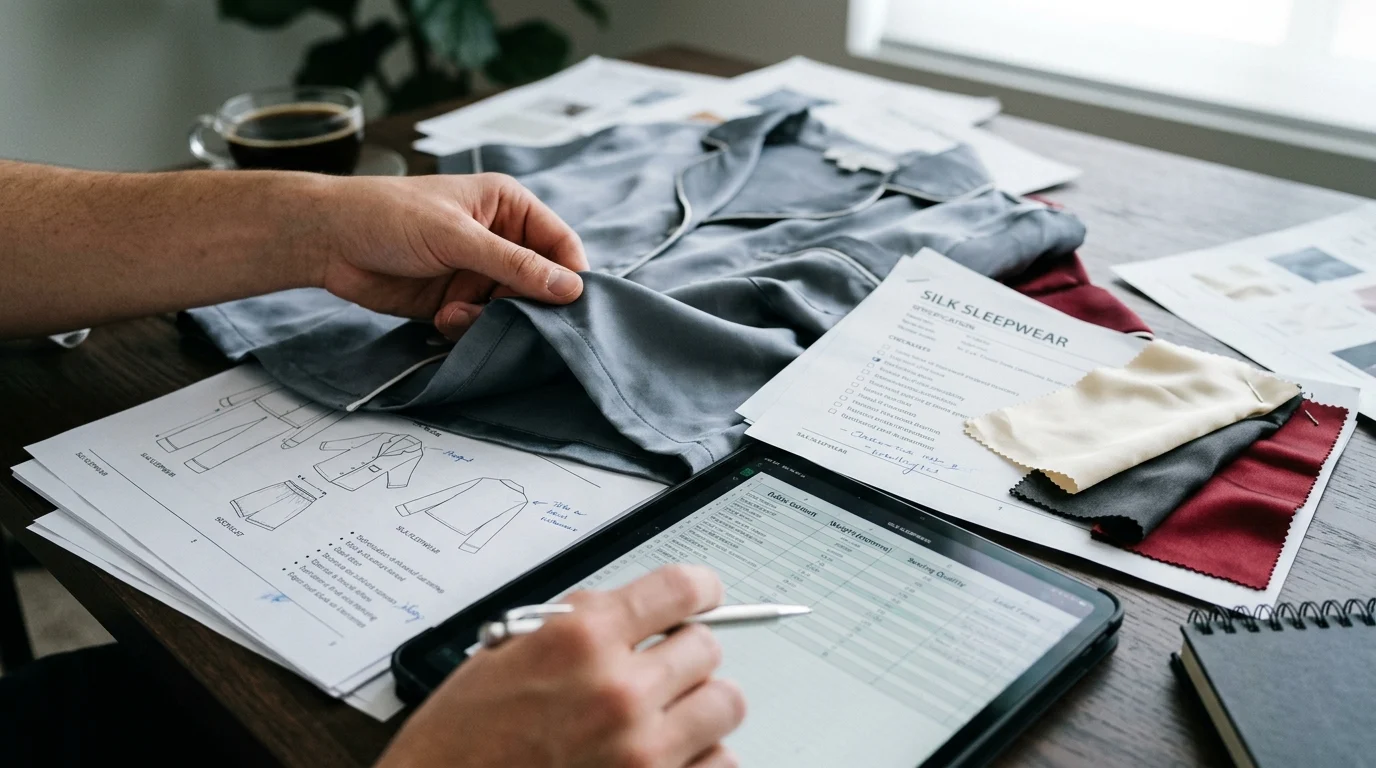
Finding a supplier online is easy, but identifying a reliable Silk Pajama Manufacturer capable of fulfilling a massive 5,000-piece education contract is challenging.
Vetting requires looking past glossy brochures and examining actual production floors and quality management systems. A beautiful sample means nothing if the factory lacks the discipline to replicate it thousands of times.
Which quality, compliance, and production controls matter most
Never compromise on compliance and quality control. For sleepwear worn daily, OEKO-TEX Standard 100 certification is non-negotiable to ensure no harmful dyes or chemicals contact the skin. Strict quality control metrics are also essential: a top-tier factory should confidently guarantee a defect rate of under 2%.
Furthermore, rigorously test for colorfastness to washing and rubbing. Anything below a Grade 4 colorfastness rating will fade quickly in institutional laundry settings, leading to immediate end-user complaints. A reliable manufacturing partner conducts inline inspections at every sewing station to catch issues early, offering a major advantage over workshops that only check garments at the end of the line.
How do I verify capacity, lead times, and sample consistency
Production capacity and timing are just as critical as the fabric itself. For a standard 5,000-unit tender, look for realistic lead times between 45 and 60 days. If a vendor promises delivery in 20 days, they are likely subcontracting the work to smaller, unvetted workshops, which compromises quality control.
Measure sample consistency meticulously. A reliable partner will deliver a pre-production sample in 7 to 10 days that matches the intended bulk run exactly, without cutting corners on French seams or binding.
Section Summary: Focus your vetting process on hard, verifiable metrics: demand a <2% defect rate, mandate Grade 4 colorfastness, and verify that their in-house capacity can genuinely handle a 45-60 day lead time for bulk orders without resorting to subcontracting.
How Do I Build a Vendor Comparison and Award Decision
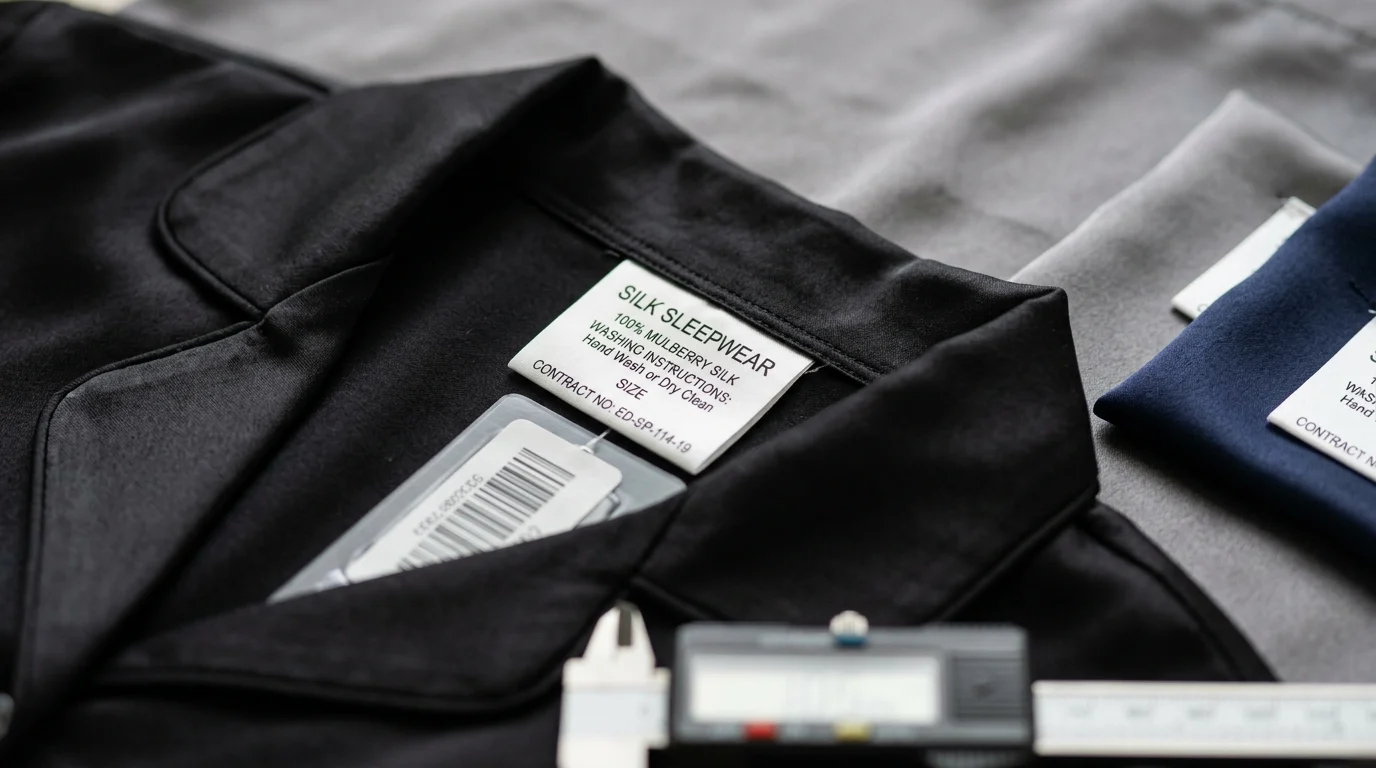
After evaluating physical samples and completing facility audits, establish a data-driven method to compare shortlisted vendors.
A large-scale award decision cannot be based on gut feeling or a friendly sales representative; it requires an objective scoring matrix that carefully weighs upfront costs against operational risks.
What comparison points should I put in a table
Build a comprehensive comparison table to lay out the raw data side-by-side. This makes it instantly clear to stakeholders who offers the best overall value and who is cutting corners.
| Vendor Profile | Fabric Weight | Unit Cost (USD) | Defect Guarantee | Bulk Lead Time |
|---|---|---|---|---|
| Vendor A (Integrated) | 19 Momme | $38.50 | < 2% | 45 Days |
| Vendor B (Premium) | 22 Momme | $46.00 | < 1% | 60 Days |
| Vendor C (Budget) | 16 Momme | $31.00 | < 5% | 30 Days |
Putting the numbers in a matrix highlights the trade-offs immediately. Vendor C might look incredibly cheap at first glance, but a 5% defect rate and thin 16 momme fabric make them a massive liability for institutional wear.
How do I turn the evaluation into a final decision
To turn this evaluation into a final, bulletproof decision, apply a weighted scoring system.
Key Takeaways
- The most important conclusions and rationale for SILK SLEEPWEAR
- Specs, compliance, and risk checks worth validating before you commit
- Practical next steps and caveats readers can apply immediately
Frequently Asked Questions
What silk weight is best for education tender sleepwear?
Use 19–22 momme mulberry silk. It offers better tensile strength and reduces seam slippage, making silk sleepwear more durable for boarding schools and dorm use.
What MOQ should I expect from a reliable silk pajama manufacturer?
For custom-dyed orders, expect about 500–1,000 pieces per color. If your tender needs only around 100 pieces, ask for stock fabric instead of full custom production.
Which certifications and tests should I request before ordering?
Ask for OEKO-TEX Standard 100, colorfastness results of at least Grade 4, and a written quality target below 2% defects. These are practical basics for daily-use sleepwear.
How can I verify a factory can handle a 5,000-piece tender?
Check that the factory can produce in-house with a realistic 45–60 day lead time. Be cautious of 20-day promises, which often signal subcontracting and weaker quality control.
Can CN Wonderful Textile provide pre-production silk pajama samples?
Yes—request a pre-production sample before bulk approval. It should arrive in about 7–10 days and match the final order in fabric weight, seams, piping, and finishing.

Post time: May-14-2026