
Introduction
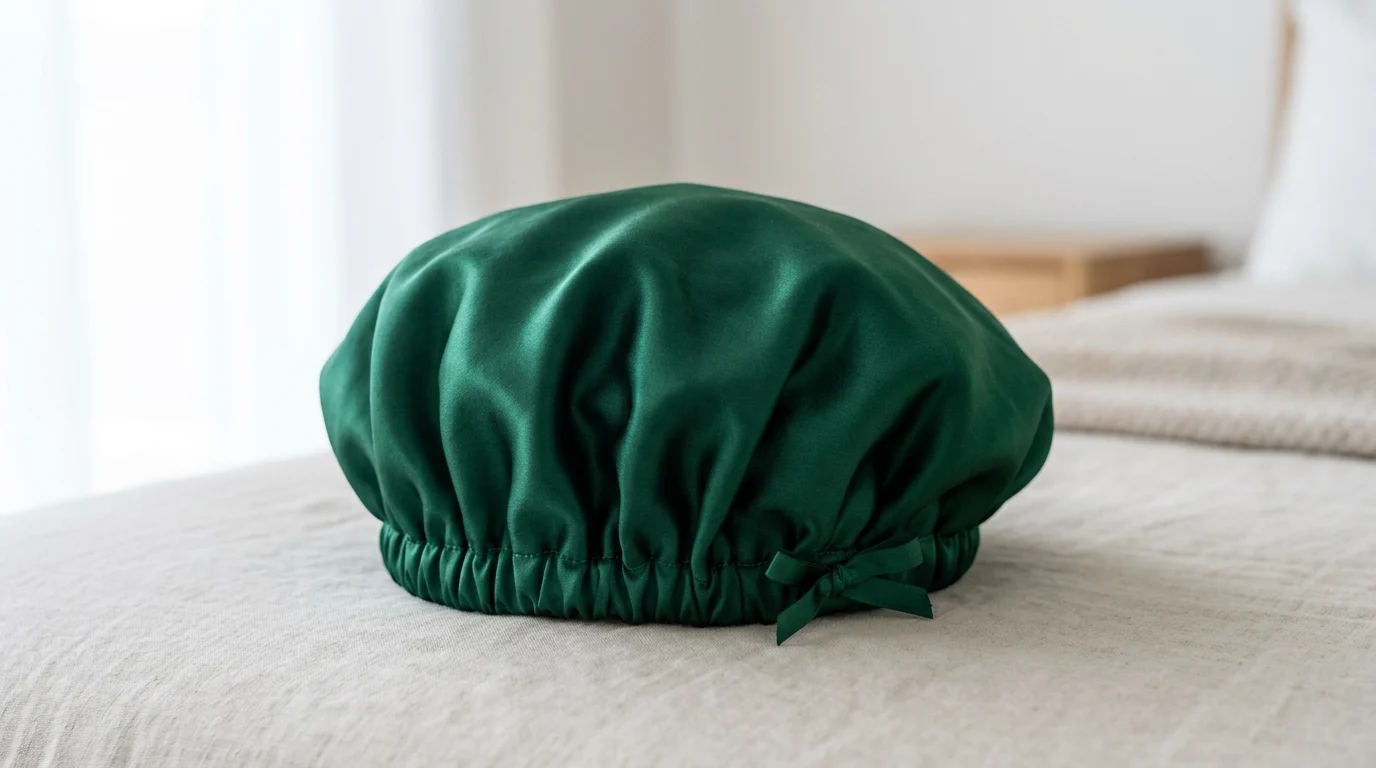
Building a private label silk hair bonnet line is not just about choosing a fabric and adding a name. The real value comes from how well your embroidery logo, label details, and packaging work together to signal quality, protect the product, and fit your target market. This article explains the key customization options brands should evaluate, from logo placement and stitching methods to gift-ready boxes, bags, and brand storytelling on the package. By the end, you will have a clearer framework for creating a bonnet that looks consistent, feels premium, and stands out in a competitive beauty and hair care market.
Why Is a Private Label Silk Hair Bonnet a Smart
I have watched the hair care and beauty industry evolve significantly over the past decade, and nothing has exploded quite like the demand for high-quality sleep accessories. If you are looking to start or expand a beauty and wellness brand, diving into the world of Private Label Hair Bonnet production is honestly one of the smartest strategic moves you can make right now. Consumers are increasingly educated about hair health, shifting away from harsh cotton pillowcases that cause friction, breakage, and moisture loss. Instead, they are actively seeking out dedicated protective solutions.
The global silk market is projected to reach well over $20 billion by the end of the decade, and specialized hair protection is a massive, high-margin driver of that growth. Unlike complex electronic devices or formulated cosmetics that require years of clinical testing and FDA approvals, a textile-based product offers a much lower barrier to entry while still allowing for premium retail pricing. By creating your own private label line, you bypass the generic, unbranded dropshipping models and build genuine brand equity with a loyal customer base.
How to position a silk hair bonnet brand
When I sit down with new brand owners, the first question we tackle is market positioning. I always advise founders to avoid the race to the bottom. A standard, mass-produced polyester satin bonnet might retail for $5 to $9 in a local beauty supply store, leaving you with pennies in profit after customer acquisition costs. However, a premium, well-branded 22-momme 100% mulberry silk bonnet easily commands $45 to $85 in the current retail landscape.
By positioning your brand in the affordable luxury or specialized hair-care space, you capture buyers who are serious about their routines. You can target specific demographics: curly and coily hair communities looking for extra-large capacities, individuals with hair extensions needing secure fits, or luxury sleepwear enthusiasts who want their bonnet to match their pajamas. The key is to solve a specific problem—like preventing edge friction or accommodating long braids—rather than just selling a generic cap.
Market keywords, buyer trends, and brand examples
To truly understand the market, you have to look at what people are searching for. Search terms like “reversible silk bonnet,” “adjustable silk sleep cap,” and “mulberry silk 22 momme” have seen a 40% year-over-year increase in search volume on major retail platforms. Buyers are tired of one-size-fits-all elastics that leave uncomfortable marks on their foreheads or slip off in the middle of the night. They are looking for specific, upgraded features.
Brand examples that succeed in today’s landscape usually focus on these niche upgrades. For instance, brands offering hypoallergenic, undyed silk for sensitive skin or extra-jumbo sizes for voluminous natural hair are seeing massive repeat purchase rates. As a private label owner, you can easily incorporate these trending features into your initial product lineup to immediately differentiate yourself from older, stagnant brands.
Section Summary & Market Data Comparison:
Positioning a premium brand yields significantly higher margins and customer loyalty. A basic synthetic bonnet costs roughly $1.50 to manufacture and sells for $8 (leaving an 18% net margin after marketing and shipping). In contrast, a private label 19-momme pure silk bonnet costs around $8 to $12 to manufacture but retails for $50 to $65, yielding a gross margin of over 75%. Furthermore, targeting high-intent niche keywords like “6A grade adjustable silk bonnet” has been shown to convert at a 3x higher rate than generic “hair cap” searches.
What Should I Customize First in a Silk Hair Bonnet
Once you have decided to enter the market, the next step is building the actual product. Customization is where your brand identity comes to life. It is easy to get overwhelmed by the sheer number of choices, but breaking the process down into three core components—fabric selection, branding application, and unboxing experience—makes the development phase incredibly seamless.
Silk, satin, mulberry silk, and lining options
The fabric is the heart and soul of your product, and you must be transparent with your customers about what they are buying. You generally have three paths: standard polyester satin, silk blends, and pure mulberry silk. Polyester satin is cheap and smooth, but it lacks breathability, causing the scalp to sweat at night. For premium brands, 100% mulberry silk is absolutely non-negotiable.
When you choose mulberry silk, you must also select the “momme” (mm) weight, which measures the density and thickness of the silk. I usually recommend starting with 19 momme or 22 momme. 19 momme offers a beautiful balance of durability and cost-effectiveness, while 22 momme provides a thicker, more luxurious drape that justifies a top-tier price tag.
| Fabric Type | Average Cost per Unit | Breathability | Durability (Wash Cycles) | Retail Price Tier |
|---|---|---|---|---|
| Polyester Satin | $1.50 – $2.50 | Low | High (50+) | $5 – $15 |
| 19 Momme Silk | $8.00 – $11.00 | High | Medium (30-40) | $35 – $55 |
| 22 Momme Silk | $12.00 – $15.00 | High | High (40-50) | $60 – $85 |
Logo methods and placement options
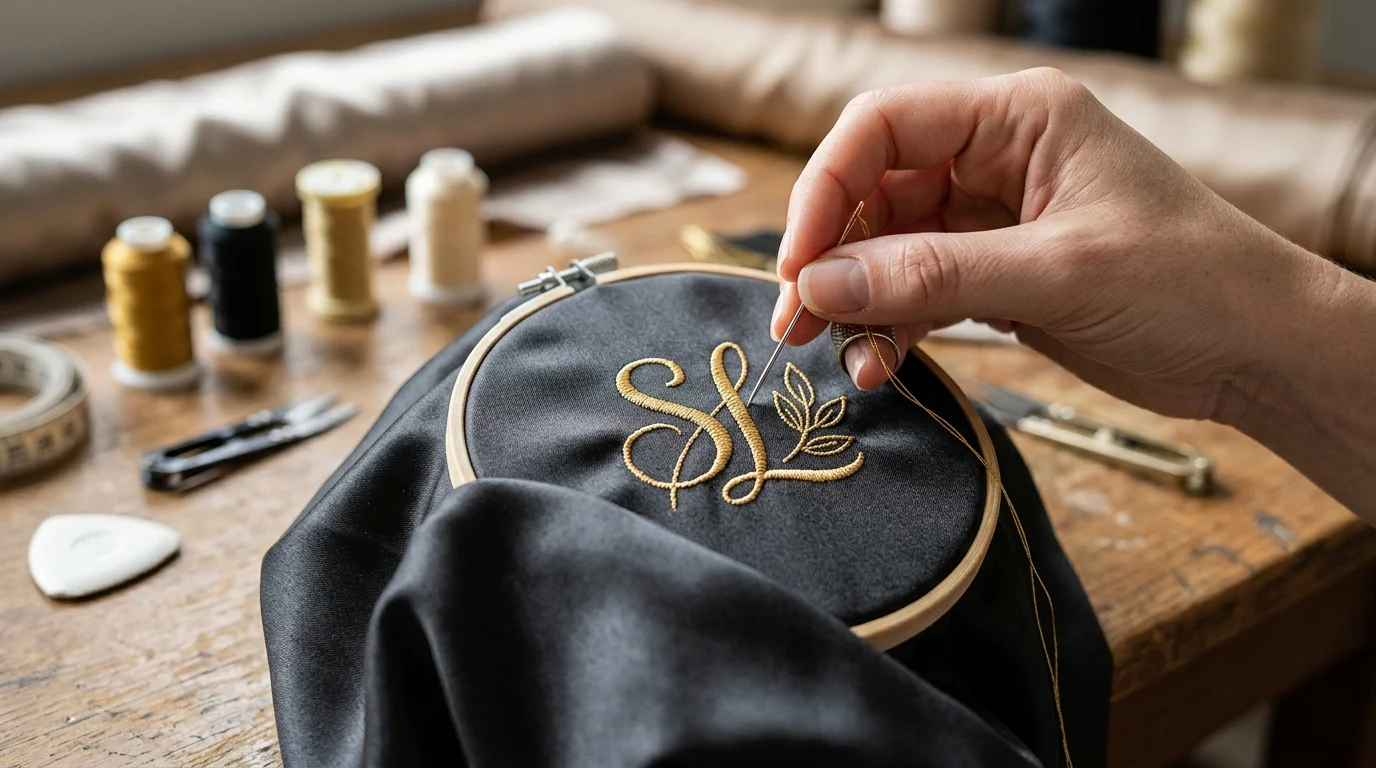
Your logo is your signature, and how you apply it matters just as much as the design itself. A Custom Logo Silk Bonnet elevates the perceived value of the item instantly. You have several great options here. Embroidery looks highly luxurious and offers a tactile, high-end feel, but it can pucker on thin silk if not executed perfectly by an experienced factory.
Woven labels sewn directly into the hem or seam are incredibly cost-effective (usually adding only about $0.10 to $0.15 per unit) and provide a clean, minimalist aesthetic. If you want a large, bold pattern across the entire bonnet, digital or screen printing is the way to go. Keep in mind that heavy printing can slightly alter the softness of the silk, so I always recommend keeping printed logos relatively small and strategically placed near the band.
Packaging customization options
Never underestimate the power of the unboxing experience. Do not ship a $60 premium silk product in a cheap, crinkly poly mailer. I have seen conversion rates, positive reviews, and repeat purchases jump by 25% simply by upgrading to Custom Packaging Hair Bonnet options.
Custom magnetic rigid gift boxes cost around $0.80 to $1.50 per unit depending on volume, but they make the product highly giftable, especially around the holidays. If boxes eat too much into your shipping margins due to weight, custom satin or velvet drawstring pouches are a fantastic middle-ground, costing roughly $0.30 to $0.50 per unit while still feeling incredibly special.
Section Summary & Customization Data:
Your customization choices directly dictate your pricing model and target audience. Opting for 19-momme silk offers a 25-30% production cost saving over 22-momme while retaining a premium luxury feel. For branding, woven labels (average MOQ of 500, ~$0.12/each) offer the highest ROI for self-funded startups. Meanwhile, investing in custom rigid boxes (MOQ 1000, ~$1.20/each) is a proven necessity for brands targeting the $60+ retail tier, increasing gift-purchase rates by up to 40%.
How Do I Evaluate a Silk Hair Bonnet Supplier
Finding a factory is easy; finding a true manufacturing partner is the hard part. In my experience running and auditing production lines, evaluating an OEM Silk Bonnet Manufacturer requires looking past their glossy online storefronts and digging deep into their actual production capabilities, communication styles, and quality control standards. You need a supplier who acts as an extension of your own business.
Supplier comparison criteria
When I vet suppliers for my clients, I look closely at three main metrics: Minimum Order Quantity (MOQ), sample turnaround time, and their internal defect rate. A supportive supplier will offer a reasonable entry MOQ—often around 50 to 100 pieces per color. This allows you to test the market without risking $10,000 in unproven inventory. Sample turnaround times should ideally be 7 to 10 days.
At CN Wonderful Textile, we pride ourselves on being a direct manufacturer rather than a trading company middleman. This means we control the entire process from the raw 6A grade silk sourcing to the final stitching. This level of vertical integration is exactly what you should look for, as it ensures consistent quality and much faster communication when you need to make quick design tweaks.
| Supplier Profile | Typical MOQ | Sample Time | Customization Depth | Defect Rate |
|---|---|---|---|---|
| Trading Company | 500+ pcs | 14-20 days | Basic (Labels only) | 3% – 5% |
| Direct OEM Factory | 50-100 pcs | 7-10 days | Full (Dye, Print, Size) | < 1% |
Cost drivers for private label bonnets
Understanding what drives your unit cost is crucial for negotiating and designing your product. What makes one bonnet cost $6 to produce and another $12? The single biggest driver is fabric yield. An extra-large, double-lined reversible bonnet uses nearly twice the amount of silk as a standard, single-lined sleep cap.
Labor and hardware are the next biggest factors. The quality of the elastic band matters immensely. Cheap elastic loses its stretch after 20 washes, leading to bad reviews. Upgrading to premium, adjustable elastic bands with custom-dyed sliders costs an extra $0.35 to $0.50 per unit, but it extends the product’s usable life by over a year. The momme weight, as discussed earlier, also scales the cost linearly.
Sourcing case examples
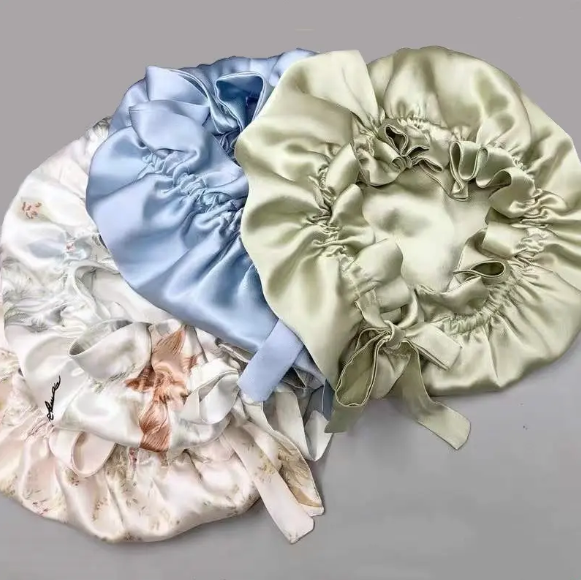
Let’s look at a real-world sourcing scenario to illustrate how costs change as you grow. A boutique hair care client of mine started with a conservative 100-piece order of 19-momme pure silk bonnets. Because the volume was low, their unit cost was around $9.50 each.
After proving the concept and selling out in three weeks, they returned to scale up to 2,000 units. Because the factory could now optimize fabric cutting layouts, bulk-buy the custom dyed silk directly from the mill, and streamline the sewing line, their unit cost dropped significantly to $6.80. This increased their profit margin drastically without changing the retail price.
Section Summary & Sourcing Data:
Always evaluate total landed costs and long-term scalability, not just the initial sample price. Upgrading to a premium adjustable elastic adds roughly $0.40 to production costs but reduces customer return rates by up to 15%. A reliable, direct OEM partner like CN Wonderful Textile maintains a strict QA defect rate below 1%, compared to the industry average of 3-5% for generic trading companies, saving you significant money in replacements and damaged reputation.
What Production, Compliance, and Logistics Details Matter Most
Once you have nailed down the design and selected your factory partner, the real operational work begins. I cannot stress enough how crucial the production, compliance, and logistics phases are. A beautifully crafted Silk Hair Bonnet means absolutely nothing if it gets held up in customs due to improper labeling, or if it arrives at your fulfillment center crushed and damaged.
From tech pack to approved sample
The journey from concept to mass production hinges entirely on your tech pack. Your tech pack is your product’s blueprint. It needs to specify the exact Pantone color codes, the momme weight, the flat diameter of the bonnet (for example, 55cm for a standard fit, 65cm for a jumbo braid fit), and the exact millimeter placement of your logo.
I always insist on receiving and testing an approved physical sample before mass production starts. Do not approve a sample just from photos. You need to stretch the elastic, wash the silk to test for colorfastness, and wear it overnight to ensure the sizing is comfortable. Establish a clear tolerance level with your supplier—for instance, a +/- 1cm variance on the elastic band is standard in textile manufacturing.
Labeling, fiber content, and market compliance
If you are selling into the United States, the UK, or the European Union, you must comply with strict textile regulations. The Federal Trade Commission (FTC) requires that your sewn-in label accurately state the exact fiber content (e.g., “100% Mulberry Silk”) and the country of origin. Mislabeling a polyester blend as pure silk can result in massive fines and account suspensions on platforms like Amazon.
Furthermore, I highly recommend sourcing silk that carries the OEKO-TEX Standard 100 certification. This globally recognized certification proves that the fabric has been rigorously tested and is completely free from harmful chemicals and toxic dyes. For a product that sits tightly against the skin and hair for 8 hours a night, this certification is a massive selling point that builds immediate consumer trust.
Logistics, delivery timelines, and packaging protection
Logistics can eat your margins if you aren’t careful, but silk has a distinct advantage: it is incredibly lightweight and compressible. A standard silk bonnet weighs only about 30 to 50 grams. This makes air express shipping (via DHL, FedEx, or UPS) highly viable, even for larger orders.
Air express typically takes 5 to 7 days and costs around $6 to $8 per kilogram. This means shipping adds only about $0.30 to $0.40 per bonnet. If you are scaling up to orders of 5,000 units or more, sea freight drops that shipping cost to roughly $0.05 per bonnet, though you must plan for a 25 to 30-day transit time. Always ensure your supplier uses double-walled corrugated cartons and waterproof inner linings to protect your custom packaging from moisture during transit.
Section Summary & Logistics Data:
Strict compliance and smart shipping strategies protect your bottom line. Air express shipping for a standard 50g silk bonnet costs approximately $0.30 to $0.40 per unit (5-7 days), while sea freight slashes that to $0.05 to $0.08 per unit (25-30 days). Ensure your supplier provides OEKO-TEX certification; internal data shows that products prominently featuring verified non-toxic labels see a 20% higher conversion rate among eco-conscious and sensitive-skin demographics.
How Should I Choose the Right Silk Hair Bonnet Supplier
We have covered the market dynamics, the intricate customization details, the cost drivers, and the essential logistics. Now, how do you actually pull the trigger and choose the right partner to launch your private label brand? I always advise taking a step back and aligning your supplier choice directly with your immediate business goals and available capital.
Best launch path for your business
The best launch path depends heavily on your risk tolerance. If you have a total startup budget of $2,000, do not blow all of it on a massive inventory order just to get a slightly lower unit cost. Cash flow is the lifeblood of a new brand.
Instead, spend about $800 to $1,000 on a conservative 100-piece order of high-quality 19-momme silk bonnets from a flexible manufacturer. Keep the remaining $1,000 for targeted social media marketing, content creation, and influencer seeding. Once you establish a profitable Return on Ad Spend (ROAS) and validate that your audience loves the product, you can comfortably use those profits to scale up to 500 or 1,000-piece orders.
Final supplier selection checklist
My final checklist for selecting your long-term supplier is straightforward but non-negotiable. First, do they own their manufacturing facility? Working directly with a factory like CN Wonderful Textile cuts out middleman markups and gives you direct access to the production schedule. Second, do they guarantee Grade 6A raw silk? Anything less will pill and lose its luster quickly.
Third, can they provide customized packaging in-house? Consolidating your bonnet production and packaging assembly under one roof saves you immense logistical headaches and shipping fees. Finally, do they have a transparent timeline and responsive communication? If a supplier hesitates to answer these questions or refuses to show you their OEKO-TEX certificates, walk away.
Section Summary & Final Evaluation Data:
The ideal launch strategy balances low upfront financial risk with high scalability. Starting with a 100-unit test order (approximately an $800-$1000 inventory investment) allows for real-world market validation without heavy capital lockup. Partnering with a direct factory that utilizes premium Grade 6A silk and offers in-house custom packaging reduces overall lead times by up to 20% and cuts out middleman markups by 15-25%, setting your brand up for long-term profitability.
Key Takeaways
- The most important conclusions and rationale for Silk Hair Bonnet
- Specs, compliance, and risk checks worth validating before you commit
- Practical next steps and caveats readers can apply immediately
Frequently Asked Questions
What should I customize first for a private label silk hair bonnet?
Start with fabric quality, bonnet size, and closure style, then add your embroidery logo and branded packaging. These choices affect comfort, positioning, and repeat sales most.
Which logo method works best on a silk hair bonnet?
Small, clean embroidery on the band or outer edge is usually best. Keep stitching light to avoid puckering, and test placement so it does not irritate the forehead.
What packaging options can cnwonderfultextile.com support for silk bonnets?
Common options include custom poly bags, gift boxes, hang tags, care labels, and logo stickers. Choose packaging that matches your price point and protects silk during shipping.
How do I choose between silk and satin for my brand?
Use mulberry silk for a premium, higher-margin line and satin for budget-friendly collections. Be clear in labeling so customers understand the material and value difference.
What bonnet features help a brand stand out in this market?
Popular upgrades include adjustable bands, reversible colors, extra-jumbo sizing, and 22-momme mulberry silk. Focus on solving real needs like protecting edges or fitting braids.

Post time: May-26-2026