
TL;DR: Provence boutique hotels competing in the luxury hospitality segment are elevating their turn-down service programs with custom silk pillowcases — a branded textile amenity that communicates attention to detail and guest comfort. Mulberry silk pillowcases (19-22 momme weight, 6A grade) offer the smoothness, temperature regulation, and hypoallergenic properties that luxury hotel guests expect from premium bedding. This article covers the silk grading system for hospitality procurement, the turn-down service integration strategy, the OEM program structure for boutique hotels sourcing direct from China, and the compliance requirements for hotel textiles sold in the European market. Echo Xu, International Business Director at Wonderful Silk with 12 years of silk trade experience, shares sourcing insights for hotel procurement teams.
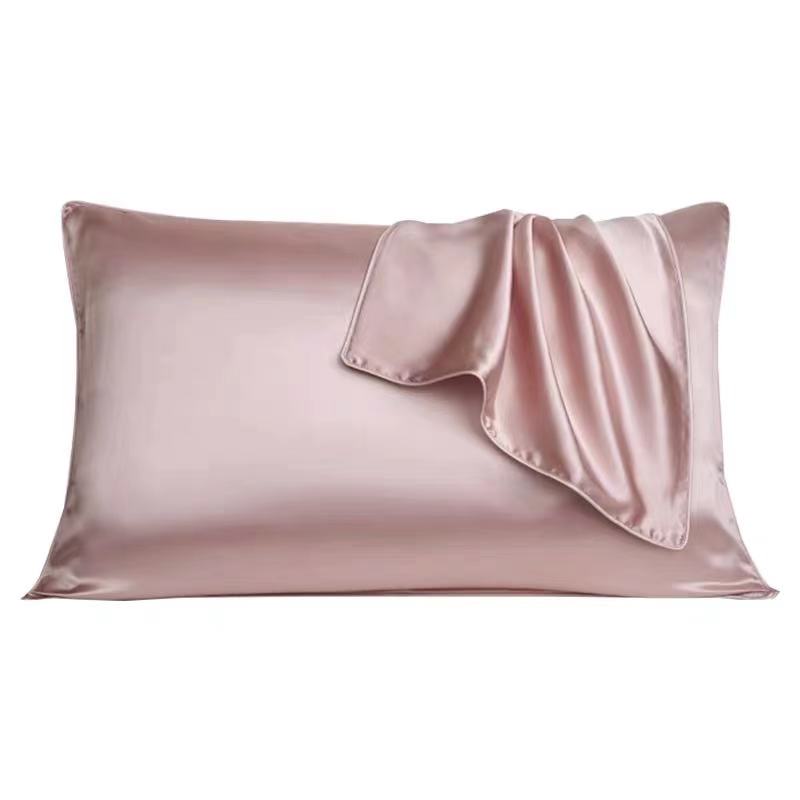
Custom mulberry silk pillowcase — the defining textile amenity for luxury boutique hotel turn-down service programs.
Why Silk Pillowcases Define the Turn-Down Service Experience in Boutique Luxury Hotels
As International Business Director at Wonderful Silk, I have worked with boutique hotel procurement teams across Europe who specify silk pillowcases for their luxury suite turn-down service programs. The decision to invest in silk pillowcases is never about the pillowcase itself — it is about the sensory experience that defines the luxury hotel stay.
In the boutique hotel segment — properties with 15-50 rooms where the room rate is €300-€1,200 per night — every guest touchpoint contributes to the property’s brand positioning and online reputation. The turn-down service is one of the few moments in the guest stay where the hotel delivers a deliberate, one-to-one service interaction directly in the sleeping environment. The textile choice at this touchpoint — the pillowcase visible when the duvet corner is folded back — communicates the hotel’s quality standard more immediately than any other bedding element.
Silk pillowcases deliver three distinct guest-experience benefits that boutique hoteliers in Provence have consistently validated through guest feedback. Temperature regulation: Mulberry silk’s natural protein fiber structure (fibroin) contains air pockets that insulate the pillow in winter and wick moisture away in summer — relevant for a region where summer temperatures reach 35°C and spring/autumn evenings drop to 8-12°C. The hotel guest experiences a pillow surface that feels neither warm nor cool regardless of room temperature. Hypoallergenic properties: Silk’s sericin coating naturally resists dust mites — a significant consideration for the 10-15% of European hotel guests who experience dust mite allergies that disrupt sleep quality. Hotels that highlight silk bedding in their room amenity descriptions report measurable improvement in sleep quality scores on online travel agency reviews. Hair and skin friction reduction: Silk’s smooth filament surface (compared to cotton’s twisted staple fiber structure) reduces friction against hair and facial skin by 40-60%, preventing the sleep creases and hair tangling that guests notice in the morning mirror.
Our silk pillowcase product line at Wonderful Silk includes hospitality-grade options in 19mm (lightweight), 22mm (standard luxury), and 25mm (premium weight) momme densities, with custom color matching and embroidery options for hotel branding programs.
Silk Grading for Hospitality Procurement: Momme Weight, Grade, and Fabric Construction
Procurement managers evaluating silk pillowcases encounter a grading system that differs fundamentally from cotton textile specifications. Understanding the grading parameters prevents specification errors that result in pillowcases that do not meet luxury service standards.
Momme weight (mm): Momme is the unit of silk fabric density — one momme equals 4.34 grams per square meter. Hospitality-grade silk pillowcases range from 19mm (entry luxury, 107 gsm) to 30mm (ultra-premium, 151 gsm). For boutique hotel turn-down service, 22mm (131 gsm) is the specification that luxury hotels most commonly select — it provides sufficient fabric weight for a crisp, structured pillowcase appearance that does not wrinkle visibly during use, while maintaining the drape and sheen that define silk’s visual character. Pillowcases below 19mm feel too lightweight for luxury perception — they wrinkle easily and the guest may perceive them as low-quality even if the silk is genuine. Above 25mm, the fabric weight adds cost (approximately 15-20% premium per momme step) with diminishing guest-perceived benefit. We recommend 22mm as the standard specification for boutique hotel programs, with 25mm for the premium suite tier.
Silk grade (A through 6A): The Chinese silk grading system (GB/T 1797-2008) rates raw silk from A (lowest) to 6A (highest) based on ten parameters including filament length uniformity, defect count, and cleanliness. Hospitality-grade silk pillowcases should specify 5A or 6A grade — these grades have the fewest filament breaks, resulting in a smoother fabric surface with no slubs or uneven texture. Grades below 5A exhibit visible surface imperfections that are acceptable for garments but not for luxury bedding where the guest’s face contacts the fabric directly. The grade is determined at the raw silk stage before weaving — a 6A-grade filature certificate from the silk supplier should accompany every hospitality shipment. We provide grade certificates with all hospitality-grade pillowcase shipments, specifying the grade level and the testing standard.
Fabric construction: Mulberry silk pillowcases for hospitality use should be woven in a charmeuse weave (satin weave with the weft face up for maximum sheen) or a crepe de chine weave (textured surface for hotels where a matte appearance is preferred). The charmeuse finish is the standard choice for luxury hotels — the 5-harness satin weave creates the smooth, reflective surface that guests associate with premium silk bedding. The thread count for 22mm charmeuse silk ranges from 400-600 threads per inch (TPI) depending on the raw silk filament denier — a specification that is inherent to the momme weight rather than an independently controllable variable as it is for cotton.
Dye and finish certification: Hospitality silk pillowcases destined for European hotels require OEKO-TEX Standard 100 certification (Class I — products for babies, the strictest classification for direct skin contact). The certification verifies that no harmful substances are present in the dyed and finished fabric — including azo dyes, formaldehyde, heavy metals, and pesticide residues. We maintain OEKO-TEX Standard 100 certification for our entire hospitality-grade production and include the certificate number on every hotel quotation.
Boutique Hotel Branding: Custom Embroidery and Color Matching for Turn-Down Service
The custom element of hotel silk pillowcases — the property logo or monogram embroidered on the pillowcase flap — transforms a standard textile amenity into a branded guest experience touchpoint. The embroidery execution determines whether the branding enhances or detracts from the silk’s premium character.
Embroidery placement: The standard placement for hotel pillowcase branding is on the inner flap (the fabric that folds inside the pillowcase opening) — visible when the duvet is folded back during turn-down service, but not in direct contact with the guest’s face during sleep. Some Provence boutique hotels choose a corner embroidery placement (the lower right corner of the pillowcase face) for photographic visibility in guest room reviews and social media posts. We advise that face-side embroidery should be kept small (3-4 cm diameter) to avoid interfering with the guest’s comfort and maintain the visual integrity of the silk surface.
Thread selection and stitch density: Silk-polyester blended embroidery thread is the standard choice for hotel branding on silk pillowcases — pure silk embroidery thread lacks the tensile strength to maintain stitch integrity through 50+ industrial laundry cycles. We use a 40-denier polyester embroidery thread matched to the pillowcase color using CIELAB spectrophotometric matching (ΔE < 1.0). Stitch density of 500-600 stitches per square centimeter produces a crisp, dense logo that reads clearly at the turn-down service distance without adding noticeable weight or stiffness to the pillowcase edge.
Color matching for boutique hotel branding: Provence boutique hotels typically specify pillowcase colors that align with their brand identity — lavender, sage, ochre, and dusty rose are common color palettes in the region. We match colors to the hotel’s approved Pantone or RAL reference using reactive dyes that penetrate the silk fiber structure (unlike direct dyes that coat the surface), producing color fastness ratings of 4+ for both lightfastness and washfastness per ISO 105. The color matching process takes 3-5 business days from the hotel’s color reference submission to the approved swatch.
OEM Program Structure for Hotel Bedding Sourcing from China
Boutique hotels sourcing custom silk pillowcases from China require a procurement structure that accommodates small-batch production (50-200 pillowcases per order) while maintaining the quality standards of large hotel chains. Our OEM program at Wonderful Silk is structured for this segment.
Minimum order quantity for hotel programs: Our MOQ for custom silk pillowcases with hotel embroidery is 50 pieces per color/embroidery design — sufficient for a 20-room boutique hotel with 2-3 pillowcases per suite plus a laundry rotation buffer. For hotels requiring only standard sizes (50×75 cm, 50×90 cm) without embroidery, the MOQ is 30 pieces per color. These MOQs are achievable for individual boutique hotels and multi-property groups placing combined orders.
Sample lead time: We produce pre-production samples in 5-7 business days from specification approval. The sample package includes one pillowcase in the approved color with the embroidery sample, a 10×10 cm fabric swatch for the hotel’s internal approval, and a color fastness test report. Samples are shipped by express courier — 3-5 business days to EU destinations. The sample approval stage identifies any issues with color matching, embroidery density, or fabric finish before production begins.
Production lead time: For an order of 50-200 pillowcases, production lead time is 15-20 working days from sample approval. The silk is woven from 5A/6A mulberry silk filament on order, dyed to the approved color, cut and sewn to the pillowcase specification, and embroidered with the hotel’s logo. We include an AQL 2.5 normal inspection per ISO 2859-1 covering: dimensions (tolerance ±5 mm), seam integrity (no loose threads or skipped stitches), embroidery quality (complete coverage, no puckering), and packaging condition (each pillowcase individually polybagged or in a branded cotton drawstring bag per the hotel’s specification).
Packaging for hotel rotation: Each pillowcase is individually packaged with a care instruction card (in French and English for Provence hotels) stating: hand-wash cold or dry-clean recommended, do not bleach, do not wring, iron at low temperature, store away from direct sunlight. For hotels that outsource linen maintenance to a commercial laundry service, we provide a technical washing specification sheet that the laundry service can reference to avoid damage from high-temperature washing or aggressive detergents.
Q&A: Hotel Procurement Considerations for Custom Silk Pillowcases
Q1: How many silk pillowcases should a boutique hotel order per suite?
A: For a luxury suite with two standard pillows and two European square pillows, we recommend eight pillowcases per suite — two sets of four (king/standard and square pillow sizes) for in-room use plus one laundry rotation set. For a 20-suite property, the initial order is 160-200 pillowcases. This quantity qualifies for OEM pricing and provides a 3:1 in-room-to-laundry ratio that ensures the hotel has clean pillowcases available even during peak occupancy periods.
Q2: How long does a silk pillowcase last in hotel service?
A: In commercial laundry service (30-40°C wash, gentle cycle, low-temperature drying, no bleach), a 22mm mulberry silk pillowcase maintains its sheen and structural integrity for 80-120 wash cycles — approximately 8-12 months in a boutique hotel with weekly linen change. Beyond this service life, the silk surface may begin to show subtle dulling and the fabric edges may exhibit fiber fraying. We recommend an 18-month replacement cycle for hotel silk pillowcases to maintain consistent guest experience quality.
Q3: Can silk pillowcases be laundered with standard hotel cotton bedding?
A: No. Silk requires separate laundering from cotton because cotton lint adheres to the silk surface during washing, dulling the sheen and creating a rough texture. Silk also requires a lower wash temperature (cold or warm, maximum 30°C) than cotton (60-90°C for hygiene). Hotels operating silk pillowcase programs should establish a dedicated silk laundry day or maintain separate silk washing equipment — typically a mesh laundry bag for each pillowcase that protects the fabric during the wash cycle and prevents tangling with other linens.
Q4: What is the cost range for a custom hotel-grade silk pillowcase?
A: For a 22mm mulberry silk pillowcase (6A grade) with single-color embroidery, the FOB China price ranges from €12-€18 per piece for orders of 50-200 pieces. The price depends on the momme weight (22mm vs. 25mm), the embroidery complexity, and the packaging specification. At a retail price of €60-€120 per pillowcase if sold in the hotel’s gift shop or through e-commerce, the procurement cost allows the hotel to offer the pillowcase as a retail amenity — guests who enjoy the pillowcase during their stay can purchase one to bring home, creating an additional revenue stream and extending the brand experience beyond the hotel stay.
Q5: What regulatory documentation is required for silk textiles imported into the EU?
A: The required documentation includes: OEKO-TEX Standard 100 certificate for the finished product material, REACH declaration confirming compliance with EC 1907/2006 (particularly for dye substances), customs declaration with correct HS code (6302.31 for bed linen of cotton — or 6302.39 for bed linen of other textile materials, depending on the customs classification), and fabric composition declaration (100% mulberry silk). We include these documents in our standard export package for European-bound shipments.
About the Author: Echo Xu is the International Business Director at Wonderful Silk (嵊州市华锦贸易有限公司), based in Shengzhou, Zhejiang — the heart of China’s mulberry silk industry. With 12 years of experience in silk trade and B2B procurement, she has managed supply partnerships with hospitality chains, retail brands, and distributors across 30+ countries. She specializes in helping hotel procurement teams navigate silk specifications, quality certification, and factory-direct pricing structures. Contact: Wonderful Silk YouTube
Complementing our pillowcase line, explore silk underwear and luxury silk pajamas wholesale programs. The OEKO-TEX Standard 100 certification provides independent verification of textile safety, and Mulberry Park Silks offers a reference point for premium-market silk pillowcase grading.
Post time: Jun-22-2026