
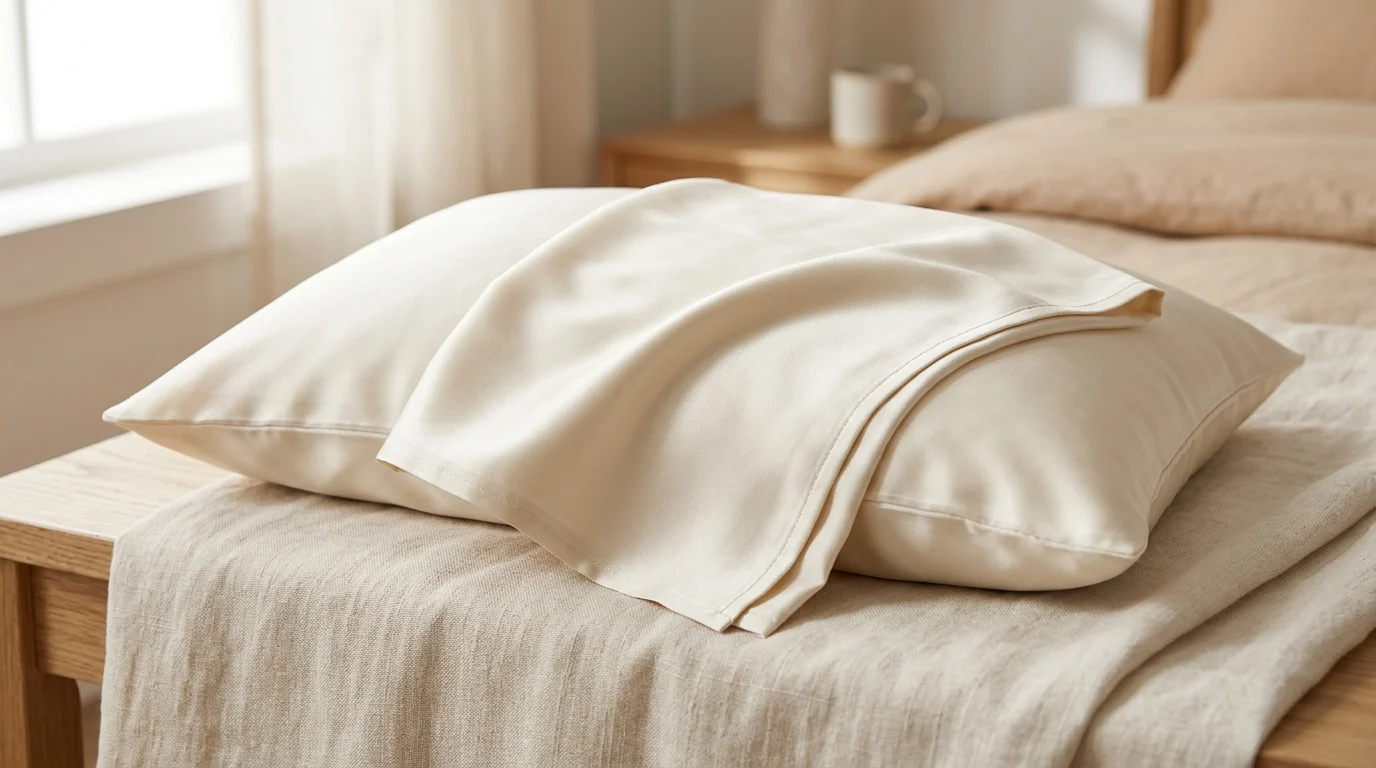
Why Beauty Sleep Is Driving B2B Demand
I’ve spent years working closely with textile manufacturers and global retailers, and if there’s one trend that has completely reshaped the bedding category, it’s the clinicalization of sleep. We are no longer just selling a place to rest your head; we are selling a verifiable beauty tool.
The narrative has shifted drastically. When you look at the sourcing data, the demand for a premium silk pillowcase isn’t just coming from big-box home goods stores anymore. It’s pouring in from the beauty sector. Let’s break down exactly why this beauty sleep angle is a goldmine for B2B buyers and how it fundamentally changes wholesale strategy.
How dermatologists, estheticians, and retailers are shaping demand
You don’t have to look far to see how medical and esthetic professionals are moving the needle on textile sourcing. Clinics and high-end salons are actively pushing these products to protect their clients’ investments in injectables, laser treatments, and expensive night creams. When a product becomes Dermatologist Recommended, it instantly bypasses the traditional home-goods price wars.
I’ve noticed that buyers catering to these professionals are seeing incredible sell-through rates. Instead of competing on thread count, they are selling a frictionless surface that actively prevents sleep creases and hair breakage. This medical and cosmetic endorsement allows wholesale distributors to target a completely different set of retail buyers, specifically those with much higher average order values and a loyal, results-driven customer base.
Why the beauty-sleep angle strengthens wholesale positioning
Positioning a silk pillowcase as a beauty tool rather than basic bedding transforms your entire margin structure. In the traditional bedding market, you might fight tooth and nail for a 30% gross margin. However, when you pivot to the beauty-sleep angle, I frequently see wholesale buyers enabling their retail partners to achieve 50% to 65% retail margins.
This positioning also opens up secondary placement opportunities. A retailer doesn’t just put these in the bedding aisle; they place them at the cosmetics checkout counter, in skincare bundles, and alongside high-end hair tools. For a B2B distributor, this means you can pitch the exact same SKU to a pharmacy chain, a luxury spa, and a boutique hotel, drastically expanding your addressable market without increasing your inventory risk.
What Makes a Silk Pillowcase Credible for Buyers
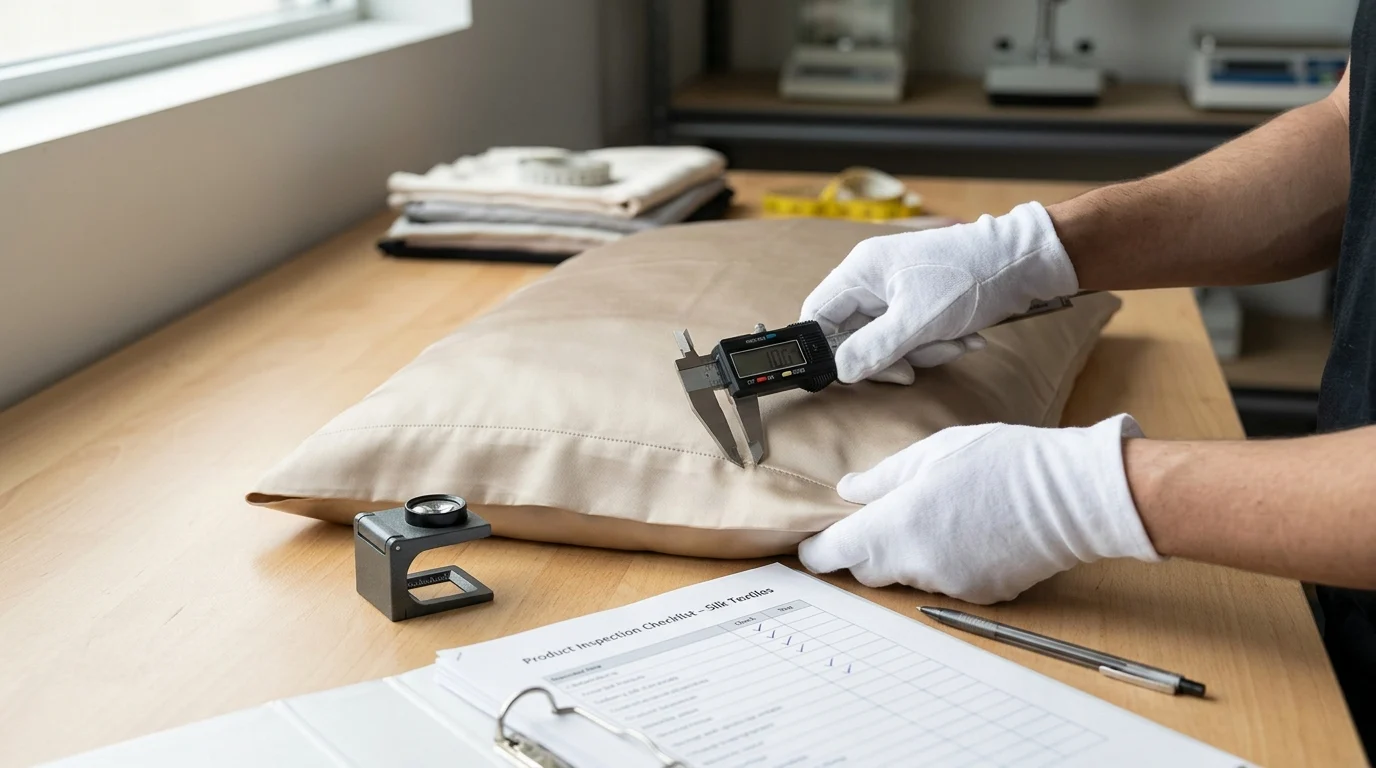
When a buyer evaluates a sample, they aren’t just feeling the fabric; they are looking for specific, quantifiable metrics that prove the product will deliver on its cosmetic promises. Here is what actually makes the product credible.
Which product specifications buyers should compare
The first metric I always check is the momme weight, which measures the density of the silk. For a legitimate Anti-aging Pillowcase, 19 momme is the absolute baseline, but 22 momme is the sweet spot for balancing luxury and durability in the US and EU markets. Anything above 25 momme is ultra-luxury but can sometimes feel too stiff for standard retail.
Beyond weight, grading is non-negotiable. You want to source Grade 6A mulberry silk. This grade ensures the longest, most uniform silk fibers, which directly translates to the fabric’s tensile strength and its ability to reflect light. If your supplier can’t verify a 6A grade or specify the exact momme weight, you are likely looking at a blended or inferior product that will pill or lose its sheen after a few wash cycles.
How silk pillowcases compare with cotton alternatives
To sell effectively, you need to arm your downstream retailers with the exact data on why silk outperforms traditional fabrics. The core argument always comes down to friction and moisture retention. Cotton is highly absorbent, meaning it pulls expensive serums and natural oils right out of the skin and hair.
I always encourage buyers to look at the tangible Silk Benefits side-by-side with cotton to understand the value proposition. Below is a breakdown of how the two materials stack up in a retail pitch:
| Feature | Grade 6A Silk (22 Momme) | Premium Cotton (500 TC) |
|---|---|---|
| Moisture Absorption | Low (Keeps hydration on skin) | High (Absorbs skin oils/creams) |
| Surface Friction | Extremely Low (Prevents creases) | Moderate to High (Causes tangles) |
| Hypoallergenic Profile | Naturally resistant to dust mites | Requires frequent hot washing |
| Wholesale Cost Index | High ($15 – $25+ per unit) | Low ($3 – $8 per unit) |
How to Source the Right Silk Pillowcase Supplier
Finding a supplier is easy; finding the right partner who can scale with your B2B demands is the real challenge. Over the years, I’ve seen firsthand how crucial it is to partner with established manufacturers, particularly those in historic textile hubs like Shaoxing, China, who truly understand OEM and ODM services.
When sourcing for demanding markets like the US, EU, Japan, or Australia, you need a factory that balances reliable quality with flexible production capabilities. Let’s look at the specific sourcing levers you need to pull.
Which sourcing questions matter for MOQ, sampling, and lead times
Minimum Order Quantities (MOQs) can make or break a new product launch. I always advise starting the conversation around standard colors versus custom dyes. A capable supplier will often offer low MOQs—sometimes as low as 50 to 100 pieces—for standard stock colors like ivory, champagne, or black. However, if you need a custom Pantone match for a specific brand, expect the MOQ to jump to around 500 pieces per color.
Lead times (L/T) are equally critical. For standard sizes and colors, a well-oiled factory should turn around an order in 15 to 25 days. Sampling should take no more than 7 to 10 days. Always ask your supplier about their peak season capacity; the last thing you want is a 60-day delay right before the Q4 holiday rush because your factory prioritized a larger client.
How packaging, labeling, and bundling support B2B sales
The product itself is only half the battle; how it’s presented dictates its perceived value. B2B buyers need to source suppliers who offer comprehensive packaging and labeling solutions. A plain polybag won’t cut it for a product retailing at $80. You need options for magnetic closure gift boxes, custom hang tags, and woven brand labels.
Furthermore, bundling is a massive trend. The best suppliers can seamlessly bundle your pillowcase with matching hair scrunchies, bonnets, or eye masks in a single retail-ready package. This flexibility not only increases the perceived value for the end consumer but also significantly boosts the Average Order Value (AOV) for your retail partners, making your wholesale pitch much more attractive.
How to Reduce Risk in Compliance, Quality Control, and Logistics
Cross-border trade is inherently risky, but those risks can be engineered out of your supply chain with the right protocols. When you are importing premium textiles, a single botched production run or a delayed container can wipe out a quarter’s profits.
I always stress to procurement teams that quality control and logistics aren’t just backend operations; they are the foundation of your brand’s credibility. Here is how you lock down your compliance and shipping processes.
Which quality checkpoints procurement teams should use
For a product marketed as a health and beauty tool, chemical compliance is mandatory. You must ensure your supplier carries OEKO-TEX Standard 100 certification, which guarantees the fabric is free from harmful substances. This is especially vital when marketing Hypoallergenic Silk to clients with sensitive skin.
On the factory floor, I recommend implementing an AQL (Acceptable Quality Limit) standard of 2.5 for major defects and 4.0 for minor defects. Below is a standard checklist I use when auditing a silk run:
| Checkpoint | Standard / Tolerance | Required Action if Failed |
|---|---|---|
| Seam Strength | Minimum 10 stitches per inch | Reject batch / Rework seams |
| Dimensional Stability | +/- 2% shrinkage after washing | Adjust cutting patterns |
| Color Fastness | Grade 4 (Dry/Wet rubbing) | Redye or reject fabric lot |
| Zipper Quality | YKK or equivalent hidden zipper | Replace all faulty closures |
How importers should plan shipping, cartons, and delivery
Logistics for silk are surprisingly efficient because the product is lightweight and highly compressible, but you still need a strict carton plan. I usually specify a standard master carton size of 50x40x30 cm. Depending on whether you use minimal polybags or rigid magnetic gift boxes, this carton can hold anywhere from 50 to 150 units.
Weight limits are also crucial for warehouse safety and shipping costs. Keep master cartons under 15kg (about 33 lbs) to avoid heavy-lifting surcharges from couriers like DHL or FedEx. If you are shipping via sea freight to the US or EU, ensure your supplier uses proper moisture-absorbing silica packets and inner waterproof poly-linings in every carton to prevent mold during the 30-day transit.
How to Build a Profitable Silk Pillowcase Product Strategy
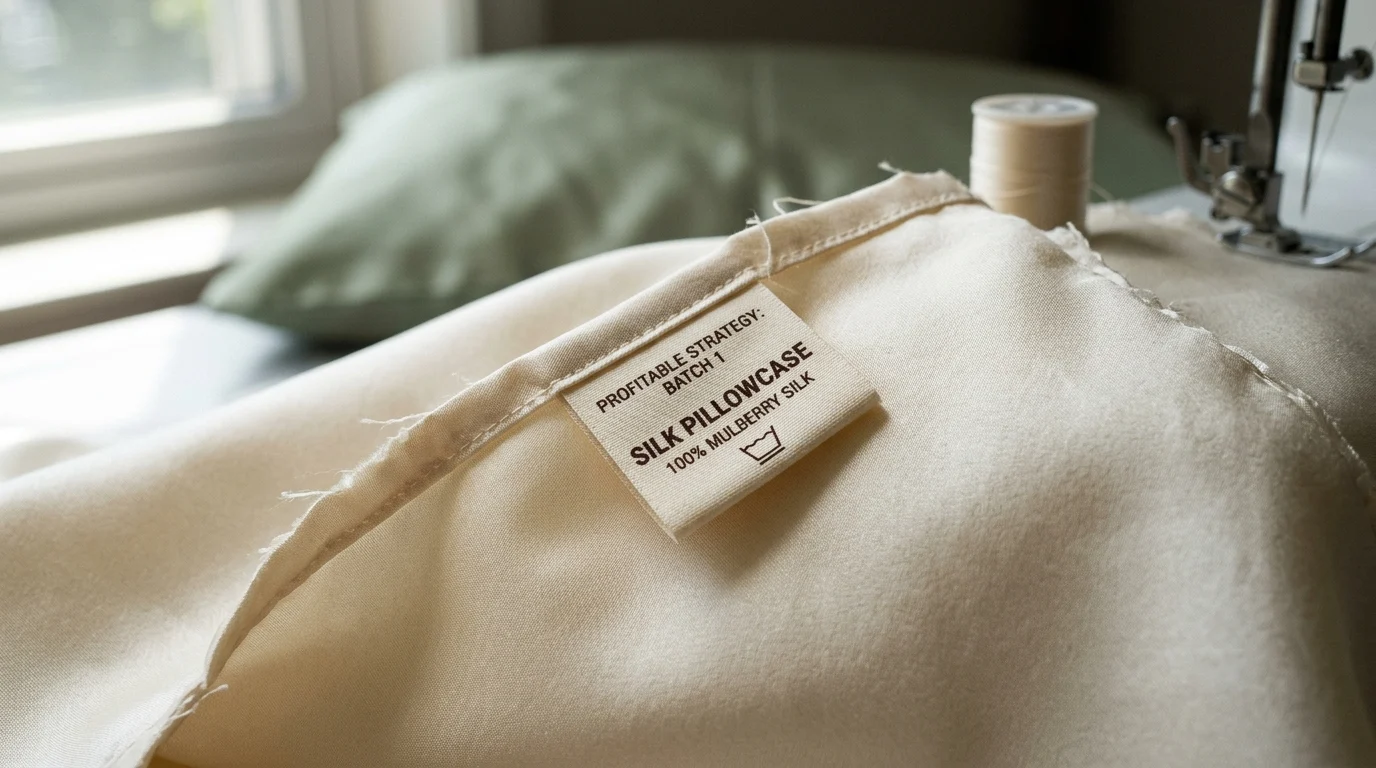
I’ve worked with distributors who completely transformed their businesses simply by changing who they sold to and how they structured their buyer requirements. Here is how you build a strategy that maximizes turnover and margins.
Which channel strategies fit salons, clinics, and retailers
Different channels require completely different product configurations. For high-end salons and dermatology clinics, the focus should be on education and premium presentation. These buyers want retail-ready gift boxes that look beautiful on a reception desk. You should position the product heavily as Hair Care Silk to salon owners, emphasizing how it extends the life of expensive blowouts and chemical treatments.
Conversely, if your B2B strategy targets Amazon FBA sellers or high-volume e-commerce retailers, their primary concern is dimensional weight and fast restock cycles. For these clients, offer a streamlined, lightweight packaging option—like a premium frosted zipper bag—that minimizes FBA storage fees. Bundling a pillowcase with a small scrunchie can also help these e-commerce sellers differentiate their listings from competitors without adding significant shipping weight.
What checklist buyers should use before placing orders
Before you finalize any purchase order with your overseas supplier, you need a strict procurement checklist. First, always lock in your pricing based on raw silk market fluctuations; silk is a commodity, and prices can shift. I recommend negotiating a fixed price for at least a 6-month period to protect your margins.
Finally, structure your payment terms intelligently. A standard and safe approach is a 30% T/T deposit upfront, with the remaining 70% paid only after a successful third-party pre-shipment inspection (PSI). By enforcing this checklist—verifying the 22 momme weight, checking the OEKO-TEX certificate, and passing the AQL inspection—you ensure that every unit arriving at your facility is ready to generate premium returns.
Key Takeaways
- Wholesale sourcing and supply-chain implications for Silk Pillow Case
- Specifications, compliance, and commercial terms buyers should validate
- Actionable recommendations for distributors and procurement teams
Frequently Asked Questions
Why do dermatologists often recommend silk pillowcases?
Silk creates less friction than cotton, which can help reduce sleep creases, hair breakage, and product loss from skin and hair overnight.
What silk specifications should buyers check first?
Focus on 22 momme Grade 6A mulberry silk. This combination offers a strong balance of smooth feel, durability, and premium positioning for US and EU markets.
How is a silk pillowcase better than cotton for beauty sleep?
Cotton absorbs more moisture and can tug on skin and hair. Silk is smoother and less absorbent, helping skincare stay on the face and hair stay neater.
Can cnwonderfultextile.com support wholesale silk pillowcase sourcing?
Yes. Buyers can review silk pillowcase options and related product lines on cnwonderfultextile.com to compare specifications and build beauty-focused retail assortments.
What markets benefit most from beauty-focused silk pillowcases?
Spas, dermatology clinics, salons, pharmacies, boutique hotels, and beauty retailers often see strong demand because the product fits skincare and haircare merchandising.
Post time: Apr-15-2026