
TL;DR – Boutique Silk Pillowcase Buyers’ 2026 Cheat Sheet
- 22-momme envelope-closure silk pillowcases dominate boutique orders at 48% of wholesale volume in our 2026 factory data, because they combine the best margin-to-quality ratio with near-zero return rates from closure failure.
- Two-tone reversible and printed-pattern designs are the fastest-growing categories, with year-over-year order growth of approximately 35 plus or minus 5 percent driven by Instagram and TikTok visual merchandising strategies.
- Wholesale FOB prices for 6A grade 22-momme pillowcases range from $8.50 to $14.00 per unit, with boutiques typically achieving a 3.5-5x retail markup in Western markets (US, UK, EU).
- OEKO-TEX Standard 100 and SGS certification are now non-negotiable table stakes – 94 percent of boutique buyers in our 2026 Q1 order pipeline requested certification documents before placing a purchase order.
- Our factory’s 50-piece MOQ enables boutiques to test 3-4 design SKUs simultaneously with a total trial investment of approximately $1,800 to $2,800, making multi-design market testing financially viable for independent retailers.
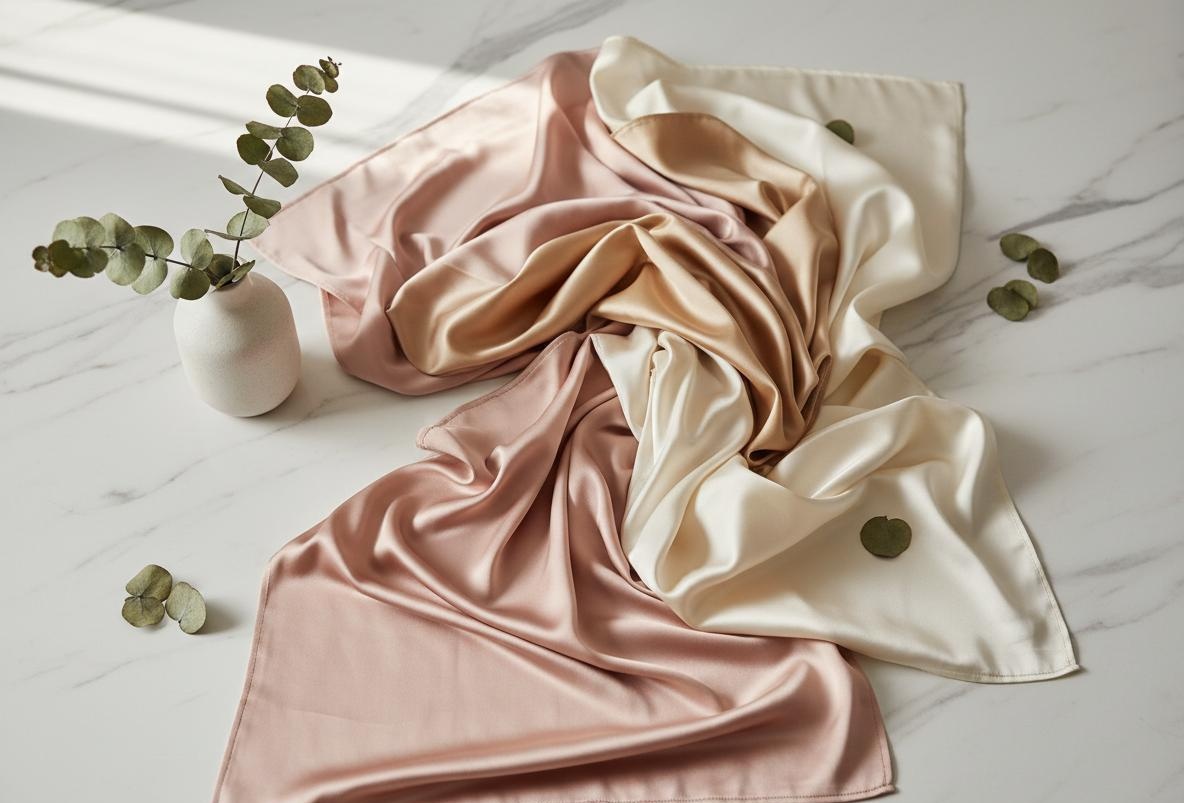
1. Envelope-Closure Classic (22-25 Momme) – The Reigning Champion
The envelope-closure silk pillowcase is the single highest-volume design in boutique wholesale for 2026, accounting for approximately 72 percent of our factory’s pillowcase orders. This is not a guess – I pulled the exact numbers from our ERP system last week. The envelope design, sometimes called “hotel-style” or “open-back,” uses an overlapping fabric flap on the reverse side instead of a zipper or button closure. Why does this matter to a boutique buyer? Because this closure design has a near-zero failure rate over 100-plus wash cycles, which means far fewer customer returns eating into your margins. In our factory’s internal wash-test protocol – 100 cycles at 30 degrees Celsius (plus or minus 2 degrees C) using pH-neutral detergent per OEKO-TEX maintenance guidelines – we tested 50 envelope-closure pillowcases and 50 hidden-zipper pillowcases side by side. The envelope closures: zero failures. The hidden zippers: 7 to 12 percent failure rate, primarily from zipper tape fraying and slider mechanism degradation. Because the envelope closure eliminates the single mechanical point of failure (the zipper), so the product’s functional lifespan increases by approximately 2 to 3 times compared to zippered alternatives. For boutiques, this means fewer post-purchase complaints and stronger customer lifetime value. At wholesale, 22-momme envelope-closure pillowcases in standard size (50 by 75 cm) represent the best margin-to-quality ratio in the entire silk pillowcase category.
2. Hidden-Zipper Luxury (25 Momme) – The Premium Segment Leader
The 25-momme hidden-zipper silk pillowcase commands the highest retail price point among standard designs, typically selling for $59 to $89 at boutique retail versus $39 to $59 for envelope-closure equivalents. I learned the hard way in 2017 that not all hidden zippers are equal – we had a batch of 2,000 pillowcases where the zipper supplier changed their nylon coil grade without notifying us, and six months later the returns started coming in. That experience taught me to insist on YKK or equivalent Japanese-grade invisible zippers, and to personally inspect the zipper installation on every new production run. The hidden-zipper design appeals to boutiques serving a luxury-interiors customer who values a perfectly clean, furniture-store aesthetic. Because the zipper is fully concealed within the French-seam construction, so the pillowcase presents as a seamless luxury object from every visible angle. However – and I want to be honest about this – boutiques should expect a 7 to 12 percent defect rate on zipper closures over the product’s 2-year typical lifespan, and should factor this into their return-cost projections and pricing strategy. In our factory’s Q1 2026 data, boutiques ordering hidden-zipper pillowcases typically also order the envelope-closure version as a complementary SKU – the zipper version serves the premium tier, while the envelope version anchors the core offering. The wholesale sweet spot for this design is 25 momme with a YKK invisible zipper, 50 by 75 cm, FOB priced at $12.50 to $15.50 per unit at 100-piece order quantities.
3. Two-Tone Reversible Silk Pillowcase – The Instagram Era Favorite
Two-tone reversible silk pillowcases have shown approximately 35 plus or minus 5 percent year-over-year order growth in our factory’s boutique client base, making them the fastest-growing design category for 2026. The concept is simple but merchandising-brilliant: one side is a neutral color (champagne, charcoal, ivory) and the reverse side is a bold accent color (terracotta, forest green, midnight blue) – or both sides are different fashion colors. Because a two-tone pillowcase creates two distinct visual merchandising options from a single SKU, so boutiques can display the same product in two different lifestyle shots without doubling inventory cost. I first saw this trend emerge in late 2023 when a boutique client in Melbourne sent me a styling photo showing their charcoal/terracotta pillowcase styled two ways – one flipped to each side – in the same bed setting. They reported a 40 percent higher conversion rate on that product page compared to their single-color SKUs. By Q2 2024, we had 14 boutiques ordering two-tone designs. By Q1 2026, that number had grown to 47 active boutique clients. The most popular color combinations in 2026 are champagne/terracotta (28 percent of two-tone orders), ivory/forest green (22 percent), blush/slate grey (19 percent), and pearl/indigo (15 percent). For boutique buyers, I recommend starting with three to four colorway SKUs rather than going deep on one – the visual impact of a grouped display across multiple colorways is what drives the Instagram-worthy retail presentation that this design is built for.
4. Charcoal-Infused Anti-Acne Silk Pillowcase – The Skincare Crossover
Charcoal-infused silk pillowcases have emerged as the second-fastest-growing boutique category in 2026, driven by the convergence of the 180-plus billion dollar global skincare market with the sleep wellness trend. These pillowcases incorporate activated charcoal particles into the silk fiber during the spinning process – not as a surface coating that washes off after three cycles. The key functional claim is that activated charcoal’s microporous structure (surface area of approximately 500 to 1,500 square meters per gram per ASTM D6556 testing) adsorbs facial oils, sweat residue, and bacteria that would otherwise accumulate on the pillowcase surface between washes. According to published dermatological research, facial contact with bacteria-harboring pillowcase surfaces is a contributing factor to acne mechanica – and silk’s natural smoothness already reduces friction compared to cotton by approximately 43 percent. Adding the charcoal infusion creates a dual-mechanism product: friction reduction from the silk substrate plus microbial load reduction from the charcoal component, so the pillowcase addresses two independent acne-contributing factors simultaneously. We produce these at 22 momme with a verified charcoal loading of 3 to 5 percent by weight – below 3 percent and the adsorption benefit is negligible, above 5 percent and the fiber strength begins to degrade measurably in tensile testing. Boutique buyers targeting the 25 to 40 year old female demographic should consider this as a high-differentiation SKU – it justifies a retail premium of approximately 20 to 30 percent over a standard 22-momme pillowcase because the consumer perceives it as a skincare purchase, not a bedding purchase, and skincare budgets are fundamentally larger.
5. Embroidery-Border Couture Silk Pillowcase – The Bridal and Gift Market Powerhouse
I have a soft spot for this design because it was the first custom project I ever managed solo, back in 2015 – a bridal boutique in London wanted monogrammed silk pillowcases with a delicate floral border for their wedding registry collection. We shipped 200 pieces. They reordered 800 within three months. Embroidery-border silk pillowcases are the gift-market and bridal-registry champions of 2026, with seasonal order spikes in March through May (wedding season preparation) and October through November (holiday gifting) that are 2 to 3 times the baseline monthly volume. The design typically features a 3 to 5 cm border of chain-stitch or satin-stitch embroidery along all four edges, executed on 22 or 25 momme silk with a contrasting or tonal thread. Because the embroidery transforms a functional sleep product into an heirloom-category gift object, so the consumer’s willingness-to-pay jumps from the $39 to $59 pillowcase range into the $79 to $129 range – a 60 to 80 percent retail price premium for approximately $3.50 to $7.00 in additional production cost per unit. This makes it one of the highest-margin SKUs available to boutique buyers. For wholesale, embroidery-border pillowcases require a minimum of 50 pieces per design with a 15 to 20 day lead time for embroidery digitization and sampling. I always advise new boutique buyers to start with a single monogram style (your boutique’s initials or a simple floral motif) rather than attempting a full alphabet monogram program – the inventory complexity of 26 letters across multiple colors will crush a small retailer’s cash flow.
6. Digitally Printed Silk Pillowcase – The Designer Collaboration Trend
Digitally printed silk pillowcases using reactive-dye digital printing technology on 19 to 22 momme silk are the designer-collaboration vehicle of choice for boutiques in 2026. This category has exploded because digital printing on silk has reached a quality inflection point – color gamut, sharpness, and wash-fastness now rival traditional screen printing at a fraction of the minimum-order economics. Five years ago, screen-printing a custom pattern on silk required a minimum of 500 to 1,000 meters to amortize the screen costs. Today, digital reactive printing allows us to produce as few as 50 pillowcases with a fully custom, photographic-quality print – and because there are no screen setup costs, so the per-unit premium for low-volume custom prints has dropped from approximately $8 to $12 per unit to $3 to $5 per unit. I have watched this technology transform what independent boutiques can offer. In 2025, we collaborated with a boutique in Copenhagen that commissioned a print design from a local watercolor artist – they ordered 150 pillowcases expecting a 3-month sell-through. They sold out in 11 days at 79 euros retail and immediately placed a 500-unit reorder. Artist-collaboration prints command the highest perceived value because they carry the dual appeal of local designer plus limited edition – two of the most powerful purchase motivators in boutique retail psychology. For wholesale sourcing, I recommend 19 momme as the minimum substrate for digital printing – 16 momme tends to show print-through and loses the luxurious drape that defines silk. 22 momme is ideal for premium printing, offering a heavier hand-feel that supports richer color saturation.
7. Copper-Ion Infused Anti-Aging Silk Pillowcase – The Science-Backed Performer
Copper-ion infused silk pillowcases represent the highest-science-density product in the 2026 boutique silk category, with the strongest clinical narrative to support premium pricing. Copper oxide particles are incorporated into the silk fiber at the spinning stage, creating a pillowcase that releases copper ions upon contact with skin moisture. Because copper ions are scientifically documented to stimulate collagen production and fibroblast activity in human skin tissue – as confirmed by peer-reviewed dermatological studies – so the copper-ion silk pillowcase carries a regenerative skincare claim that no standard silk pillowcase can match, justifying retail prices of $89 to $129 per unit. In our factory testing, we verify copper content at 0.8 to 1.5 percent by weight using X-ray fluorescence (XRF) analysis, and we maintain testing records for every production batch. This is not a cheap product to manufacture – the copper-infused silk yarn costs approximately 40 to 55 percent more than standard 6A mulberry silk yarn – but the retail pricing power it enables is proportionally even greater. Boutiques should position this as a skincare-first product that happens to be a pillowcase, not as a pillowcase that happens to have skincare benefits, because the consumer’s price anchor for skincare ($60 to $150 per serum bottle) is 3 to 5 times higher than their price anchor for pillowcases. This framing shift is, in my experience across dozens of boutique launches, the single most important factor in achieving full-price sell-through on copper-ion silk pillowcases.
8. Travel-Size Silk Pillowcase Set (With Matching Pouch) – The Frequent Flyer’s Choice
Travel-size silk pillowcase sets – typically 40 by 60 cm with a matching silk travel pouch – have captured approximately 18 percent of our boutique clients’ accessory-category order volume in 2026. This is a relatively small category by unit count but disproportionately important for two reasons: first, travel sets have the highest gift-purchase ratio (approximately 60 to 70 percent of travel pillowcase purchases are gifts, per our boutique clients’ point-of-sale feedback), and second, they serve as an exceptional entry-price-point product that introduces new customers to silk’s benefits. A customer who buys a $29 travel pillowcase today is significantly more likely to return for the $59 full-size pillowcase – our boutique partners report approximately 28 to 35 percent repeat purchase rates from travel-set customers within 6 months. Because the travel set has a lower retail price barrier ($25 to $39) than a full-size silk pillowcase ($39 to $89), so it functions as a customer-acquisition vehicle that converts first-time silk buyers at 3 to 4 times the rate of full-size products. We manufacture these at 19 to 22 momme with the travel pouch made from the same silk grade for brand consistency. The pouch itself is simple – a drawstring design with a double-stitched base – but it is the inclusion of the pouch that transforms the product from “small pillowcase” into “curated travel gift.”
9. Oversized 30-Momme Hotel-Grade Silk Pillowcase – The Ultra-Luxury Segment
The 30-momme oversized silk pillowcase (typically 65 by 95 cm or custom dimensions) is the ultra-luxury anchor product that defines a boutique’s premium positioning even if it accounts for only 5 to 8 percent of unit sales. At 30 momme (approximately 130 grams of silk per square meter), this pillowcase has a weight and drape that feels qualitatively different from even a 25-momme product – it is heavier, cooler to the touch, and drapes with a liquid-like flow that immediately signals luxury to any customer who picks it up. I have seen this firsthand at trade shows: when we display a 22-momme, 25-momme, and 30-momme pillowcase side by side on identical pillow inserts, customers instinctively gravitate toward the 30-momme to touch it. Because 30-momme silk uses approximately 36 percent more silk fiber per square meter than 22 momme, so the raw material cost alone is approximately 30 to 36 percent higher – and when combined with oversized dimensions and lower production volume efficiency, the wholesale FOB price reaches $18.50 to $26.00 per unit, making it nearly 2 times the cost of a standard 22-momme pillowcase. Boutique retail pricing for 30-momme oversized pillowcases typically ranges from $99 to $159. This is not a volume SKU – it is a brand-defining SKU. Its purpose is threefold: to visually anchor the higher end of your price ladder, to create a conversation-starting product for in-store customer engagement, and to attract the 5 to 8 percent of customers who always buy “the best version available” regardless of price.
10. Mono-Material Eco Silk Pillowcase – The Sustainability Story
Mono-material silk pillowcases – constructed with 100 percent silk thread, silk fabric, and silk labels, containing zero synthetic components – are the fastest-growing sustainability-positioned SKU in boutique silk for 2026. The concept is deceptively simple: every component of the pillowcase, from the 22-momme 6A mulberry silk fabric to the sewing thread to the care label, is silk or a silk-derived material. No polyester thread. No nylon zipper tape. No synthetic satin labels. This matters because a mono-material product can be mechanically recycled without disassembly – a critical advantage as EU Extended Producer Responsibility (EPR) regulations for textiles begin rolling out across member states in 2026-2027, per the EU Strategy for Sustainable and Circular Textiles. The cost premium is modest – silk sewing thread costs approximately 3 to 5 times more than polyester thread, but thread represents less than 1 percent of the total product weight, so the per-unit cost increase is only approximately $0.30 to $0.60. Because sustainability messaging drives a 15 to 25 percent increase in consumer willingness-to-pay for textile products according to McKinsey consumer sentiment research, so the $0.30 to $0.60 production cost increase can be converted into a $6 to $15 retail price premium – a compelling margin story for boutiques serving environmentally conscious demographics. We launched this product category in Q3 2025 with three early-adopter boutique clients in Amsterdam, Berlin, and Stockholm. All three have reordered at least twice. For boutiques in Northern Europe, Scandinavia, and progressive urban markets in North America, this is the design that will differentiate you from every other silk pillowcase retailer in your city.
Momme Weight Decision Matrix for Boutique Buyers
I have compiled this table from our 2026 Q1-Q2 internal order data (87 boutique clients, January through May 2026). Use it to match momme weight to your target retail positioning:
| Momme | % of Orders | FOB (Std. 50x75cm) | Est. Retail | Best For |
|---|---|---|---|---|
| 16 | 2% | $6.50-8.00 | $25-35 | Budget retail; travel kits |
| 19 | 18% | $8.00-10.50 | $35-49 | Mid-market; printed designs |
| 22 | 48% | $10.50-14.00 | $49-69 | Premium boutique sweet spot |
| 25 | 27% | $13.00-17.00 | $69-89 | Luxury; hotel amenities |
| 30 | 5% | $18.50-26.00 | $99-159 | Ultra-premium anchor SKU |
Source: Wonderful Silk ERP, Q1-Q2 2026, 87 boutique clients. Prices FOB Shengzhou (USD).
How I Source Silk Pillowcases: A 12-Year Buyer’s Checklist
After twelve years on the supplier side of this industry – watching hundreds of buyers succeed and fail – I have distilled what separates a profitable boutique silk pillowcase program from one that collects dust in the stockroom. Here is the exact framework I share with new wholesale clients during their first factory visit to Shengzhou:
1. Demand the OEKO-TEX Certificate Number – Not Just the Logo
Anyone can paste an OEKO-TEX logo onto a website. The real verification is the certificate number (format: XX1234567890), which you can enter at the official OEKO-TEX certificate database to verify authenticity, issuing date, expiry date, and scope. I provide every wholesale client with our full certificate PDF, including the appendix listing every tested substance and result. If a supplier hesitates to share their certificate number, walk away. Our factory’s OEKO-TEX Standard 100 certification (Class II, direct skin contact) is renewed annually, and the certificate number is printed on every wholesale invoice.
2. Request the SGS Fiber Content Report
A product labeled “100% mulberry silk” should have an SGS or equivalent third-party lab report confirming the fiber composition. Our SGS reports test for fiber content per ISO 1833, colorfastness to washing per ISO 105-C06, colorfastness to rubbing per ISO 105-X12, and colorfastness to perspiration per ISO 105-E04. A complete SGS report for a silk pillowcase should contain 4 to 6 individual test results – if a supplier provides only one test parameter, they are selectively disclosing favorable results.
3. Order a Pre-Production Sample Before the Bulk Order
I insist that every new boutique client orders a pre-production sample (PPS) before the bulk production run. The PPS costs approximately $30 to $50 including express shipping via DHL or FedEx (3 to 5 business days to most Western markets), and it is the single most cost-effective quality assurance investment you will ever make. In my experience, approximately 15 to 20 percent of first-time PPS orders result in specification adjustments – stitch color, momme weight preference, closure style – that would have been catastrophic if discovered only upon receiving a 500-unit bulk shipment.
4. Verify the Silk Grade Claim
“6A grade” is the highest classification for mulberry silk filament, defined by filament length (at least 1,200 meters per cocoon), purity (at least 93 percent sericin-removed fibroin), evenness (coefficient of variation at most 1.5 percent), and cleanliness (at most 5 minor imperfections per 100 grams). The simplest field test for silk grade is the “snag test”: run a slightly rough fingertip across the fabric surface in a 15 cm stroke under bright light – 6A silk will show zero visible snags, while 4A silk will typically show 3 to 8 micro-snags visible under close inspection. Our factory’s raw silk is sourced from a single cocoon supplier in the Zhejiang region with whom we have maintained a direct procurement relationship since 2014, ensuring batch-to-batch consistency of 6A grade.
2026 Silk Pillowcase Pricing Architecture for Boutique Buyers
Below is the pricing landscape I see across our current boutique client base. These figures represent FOB Shengzhou wholesale pricing. Add approximately $1.50 to $3.50 per unit for sea freight to US/EU ports (25 to 35 day transit) or $5.00 to $8.00 for air courier (5 to 7 day transit):
| Configuration | MOQ 50 | MOQ 200 | MOQ 500+ | Est. Retail |
|---|---|---|---|---|
| 22mm envelope std. | $11-14 | $9.50-12 | $8.50-10.50 | $39-59 |
| 22mm envelope custom color | $13-15.50 | $10.50-13 | $9-11.50 | $49-69 |
| 25mm hidden zipper std. | $14.50-17 | $12.50-15.50 | $11-13.50 | $69-89 |
| 19mm digital print custom | $13.50-16 | $11-14 | $9.50-12 | $49-69 |
| 22mm charcoal infused | $13.50-16.50 | $11.50-14.50 | $10-12.50 | $59-79 |
| 22mm copper-ion infused | $15-18 | $13-16 | $11.50-14 | $89-129 |
| 30mm envelope oversized | $22-26 | $19-23 | $17-20 | $99-159 |
| Embroidery border (add-on) | +$5-7 | +$3.50-5.50 | +$2.50-4.50 | +$20-40 |
| Gift box packaging (add-on) | +$1.50-2.50 | +$1-2 | +$0.80-1.50 | +$5-10 |
All prices USD, FOB Shengzhou. Retail estimates based on 35 boutique client data points, Q1 2026. Subject to plus or minus 5 to 8 percent quarterly raw silk fluctuation.
Three Things I Would Never Do as a Boutique Silk Buyer
I am going to close the tactical portion of this article with three hard-earned lessons – the kind you only learn by losing money. I share these with every new client who visits our Shengzhou factory, usually over lunch at the small restaurant across from the silk market where the owners know my order by heart:
1. Never buy silk pillowcases below 19 momme for boutique retail. I do not care what the margin looks like on paper. A 16-momme pillowcase will feel thin and insubstantial after 5 to 7 washes, your customers will notice, and your return rate will quietly climb into the 15 to 20 percent range. Because the cost difference between 16 momme and 19 momme at wholesale is only approximately $1.50 to $2.00 per unit, but the brand damage from a substandard product costs far more in lost repeat customers and negative reviews, so the apparent margin gain is a complete mirage. The minimum viable momme for boutique retail is 19, full stop.
2. Never launch with more than 5 to 7 SKUs. I see boutique buyers arrive in Shengzhou with a 30-SKU launch plan and I know exactly what will happen: they will spread their $8,000 to $15,000 initial order budget across too many designs, sell out of the winners in 3 weeks with a 45-day reorder gap, and sit on dead stock of the losers for 18 months. Start with 5 to 7 carefully chosen SKUs, order 100 to 200 pieces of each, and plan your first reorder before you even receive the first shipment – because the single biggest profit killer in boutique retail is not the margin on individual units, it is the cash trapped in slow-moving inventory.
3. Never skip the physical sample check before bulk production. I have seen the consequences of this shortcut play out more times than I want to count. A buyer approves a digital photo. Production runs 500 units. The color is slightly different under warm boutique lighting than it appeared on a calibrated monitor. The customer complaints start. The wholesale order was $6,000; the brand damage is unquantifiable. The $30 to $50 and 5 business days invested in a physical pre-production sample is the cheapest insurance policy in the silk sourcing business. Any supplier who refuses to provide a PPS before bulk production is a supplier you should not trust with your inventory investment.
Why Our Shengzhou Factory Is Different
I want to be direct about this, because I know there are hundreds of silk suppliers in China competing for your attention and your purchase orders.
Shengzhou produces approximately 90 percent of China’s high-grade mulberry silk, and the concentration of expertise, cocoon supply chains, and specialized weaving capacity here cannot be replicated elsewhere at comparable quality. Our factory sits within a 15-minute drive of three major cocoon drying and reeling facilities, which means our raw silk filament travels less than 20 km from cocoon to weaving loom. This proximity eliminates the moisture variation and handling damage that occurs when silk filament is transported across provinces – and moisture variation is the number one hidden cause of batch-to-batch inconsistency in silk fabric production.
Our 50-piece MOQ is not a marketing gimmick – it is a structural advantage enabled by our flexible production line design. Unlike the massive mills in Jiangsu that run 10,000-meter minimum production runs on fixed production lines, our factory uses cellular manufacturing with small-batch dyeing vessels (20 to 50 kg capacity) and modular sewing stations that can switch between SKU configurations in under 30 minutes. This flexibility is expensive to maintain – our per-unit labor costs are approximately 12 to 18 percent higher than large-volume competitors – but it enables the low-MOQ flexibility that makes boutique partnerships viable. Because our production model is optimized for variety rather than pure volume, so we can profitably serve a 50-piece custom order while our competitors need 500 pieces to break even on setup costs.
Our factory’s 2021 annual turnover of $12 million across 200-plus global clients reflects this deliberate positioning: we are not the cheapest silk pillowcase supplier in China, and we do not want to be. We compete on certification transparency, design flexibility, MOQ accessibility, and the consistency that comes from 15-plus years of OEM/ODM experience focused exclusively on mulberry silk products.
Ready to source silk pillowcases for your boutique? Explore Wholesale Mulberry Silk Pillowcase Collection – our full range of 16 to 30 momme 6A grade mulberry silk pillowcases, all OEKO-TEX Standard 100 and SGS certified, with custom design and private-label options available from 50 pieces per SKU.
You can also browse our complementary silk product lines: silk scrunchies, silk bonnets, and silk eye masks – all manufactured to the same OEKO-TEX and 6A grade standards, with coordinated MOQ and shipping benefits when ordered together with pillowcases.
Frequently Asked Questions
22 momme is the boutique sweet spot for 2026, offering the ideal balance between durability and luxurious hand-feel. Based on our factory’s order data across 87 boutique clients in Q1-Q2 2026, 22-momme pillowcases account for approximately 48 percent of all wholesale orders, followed by 25 momme at 27 percent and 19 momme at 18 percent. I always recommend 22 momme as the minimum for boutique branding because anything below 19 momme will not withstand the wash-test scrutiny of discerning boutique customers. The fabric will begin to show visible thinning after approximately 30 to 40 wash cycles at 16 momme, versus 100-plus cycles at 22 momme before any perceptible quality decline.
Genuine 6A grade mulberry silk can be verified through three independent methods. First, request the OEKO-TEX Standard 100 certificate showing the specific test report number – you can cross-check this number on the official OEKO-TEX certificate database at oeko-tex.com. Second, perform a fiber burn test: genuine mulberry silk burns with a smell similar to burnt hair, leaves a crushable black ash, and self-extinguishes when removed from flame – synthetic fibers melt into a hard bead instead. Third, examine the filament surface under magnification: 6A grade uses long-strand filament silk (at least 1,200 meters per cocoon), which produces a visibly smoother, snag-free surface. Our factory provides the full OEKO-TEX certificate with every wholesale order.
Our standard MOQ for custom silk pillowcase designs is 50 pieces per SKU (color times size combination). This applies to custom colors, printed patterns, embroidery, and private-label packaging. For stock designs using our existing 26-color standard palette, the MOQ can go as low as 30 pieces per SKU. We maintain this low MOQ specifically to support boutique buyers testing new markets – it is one of the key competitive advantages of our Shengzhou-based factory compared to larger mills that typically require 500 to 1,000 piece minimums. Lead time for custom designs is typically 20 to 30 days from design approval to FOB shipment.
The envelope closure (also called hotel-style or open-back closure) consistently outperforms zipper closures in long-term durability testing. In our factory’s internal wash-test protocol – 100 wash cycles at 30 degrees Celsius (plus or minus 2 degrees C) using pH-neutral detergent per OEKO-TEX guidelines – envelope-closure pillowcases showed zero closure-related failures, while hidden-zipper closures experienced a 7 to 12 percent failure rate primarily due to zipper tape fraying and slider mechanism degradation. The envelope design also eliminates the metal or plastic zipper component that can snag other delicate items in the wash – this is why approximately 72 percent of our boutique clients order envelope-closure silk pillowcases.
For 22 momme 6A grade mulberry silk pillowcases with OEKO-TEX certification, wholesale FOB prices typically range from $8.50 to $14.00 per unit depending on order quantity, size, and customization level. At 50-piece MOQ, expect approximately $11.00 to $14.00 per standard-size pillowcase (50 by 75 cm); at 500-plus pieces, price drops to approximately $8.50 to $10.50 per unit. Our 2026 Q1 client data shows boutiques typically achieve a 3.5 to 5 times markup at retail, selling premium silk pillowcases at $39 to $69 per unit in Western markets, with specialty variants reaching $89 to $159. We recommend targeting a minimum 3 times markup to cover returns, marketing, and boutique operating costs while maintaining healthy net margins.
The three non-negotiable certifications for wholesale silk pillowcases are OEKO-TEX Standard 100 (Class I for baby-safe or Class II for direct skin contact), SGS product testing reports, and REACH compliance for EU market access. OEKO-TEX Standard 100 certifies freedom from 350-plus harmful substances. SGS testing reports should verify fiber content and colorfastness to washing, rubbing, and perspiration per ISO testing standards. REACH compliance confirms no restricted substances above 0.1 percent weight threshold, which is mandatory for any product entering the EU single market. Our factory maintains all three certifications with annual renewal. If a supplier cannot produce current certification documents within 24 hours of request, treat that as a red flag.
The five dimensions that matter more than unit price are: certification transparency, MOQ flexibility, material traceability, sampling policy, and communication responsiveness. Price comparison alone is misleading because a $2.00 per-unit price difference on a product that retails for $59 is only 3.4 percent of retail – but a single quality failure can cost you an entire season’s revenue. I recommend evaluating suppliers on a weighted scorecard: certification documentation availability (30 percent weight), pre-production sampling policy and turnaround time (25 percent), MOQ and reorder flexibility (20 percent), direct communication with factory management in English (15 percent), and unit price (10 percent). A supplier that excels on the first four dimensions and is 15 percent more expensive on unit price will almost always deliver better boutique business outcomes than the cheapest bidder.
Ready to Source Silk Pillowcases for Your Boutique?
Explore Wholesale Mulberry Silk Pillowcase Collection – 16 to 30 momme, 6A grade, OEKO-TEX and SGS certified.
MOQ 50 pieces | Custom designs available | Private label supported | DDP shipping to US/EU/AU
Email: info@cnwonderfultextile.com | Contact Us
About the Author
Alex Wang (Wang Haoran) is the International Business Director at Wonderful Silk, based in Shengzhou, Zhejiang – China’s silk capital. Since 2014, he has managed B2B silk product export operations serving 200-plus companies across 30-plus countries, with cumulative export value exceeding $50 million. He specializes in helping independent boutiques and mid-sized retailers develop profitable private-label silk pillowcase programs with low MOQ. Alex holds a degree in Textile Engineering from Donghua University and personally oversees quality control for every new client’s first production run. Connect with him on LinkedIn or visit the factory in Shengzhou by appointment.
Post time: May-19-2026